
Amygdala
directed by Maria Hatzakou
Greece. 2021. 22 min.
Two sisters challenge their relationship during a hot summer night.
by Jesse Knight
Most sisters argue. Some even fight. And then there’s Anna and Melina.
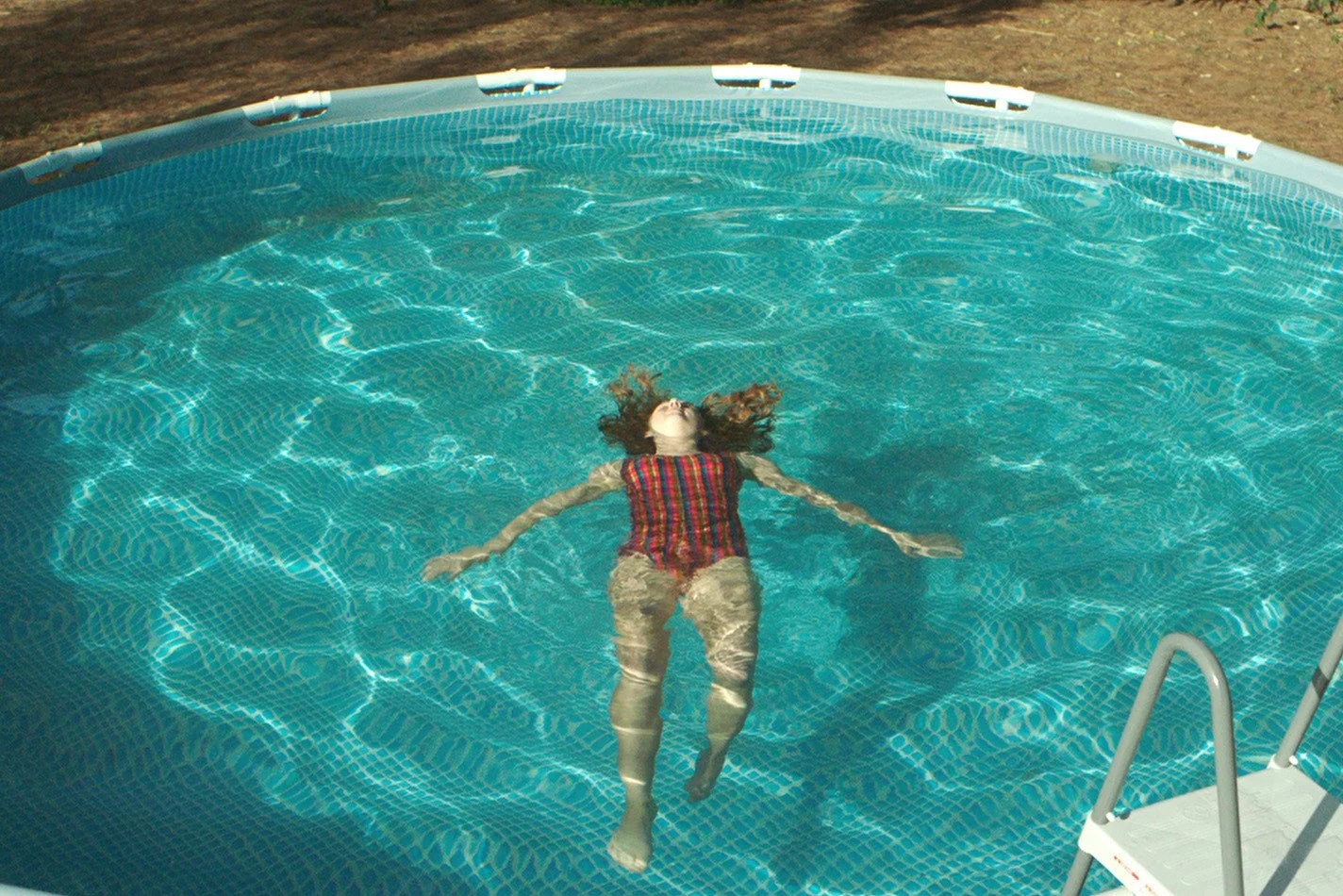
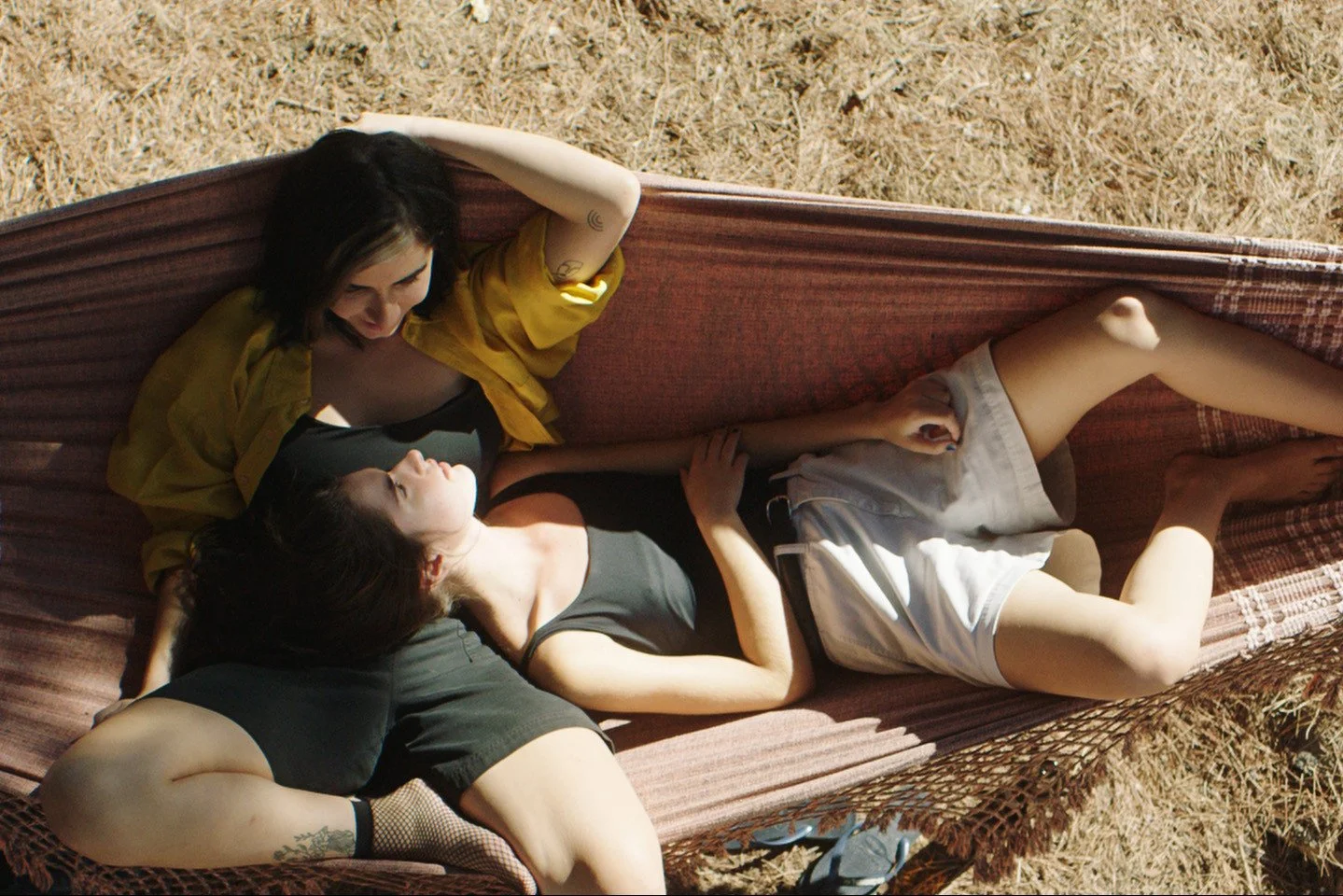
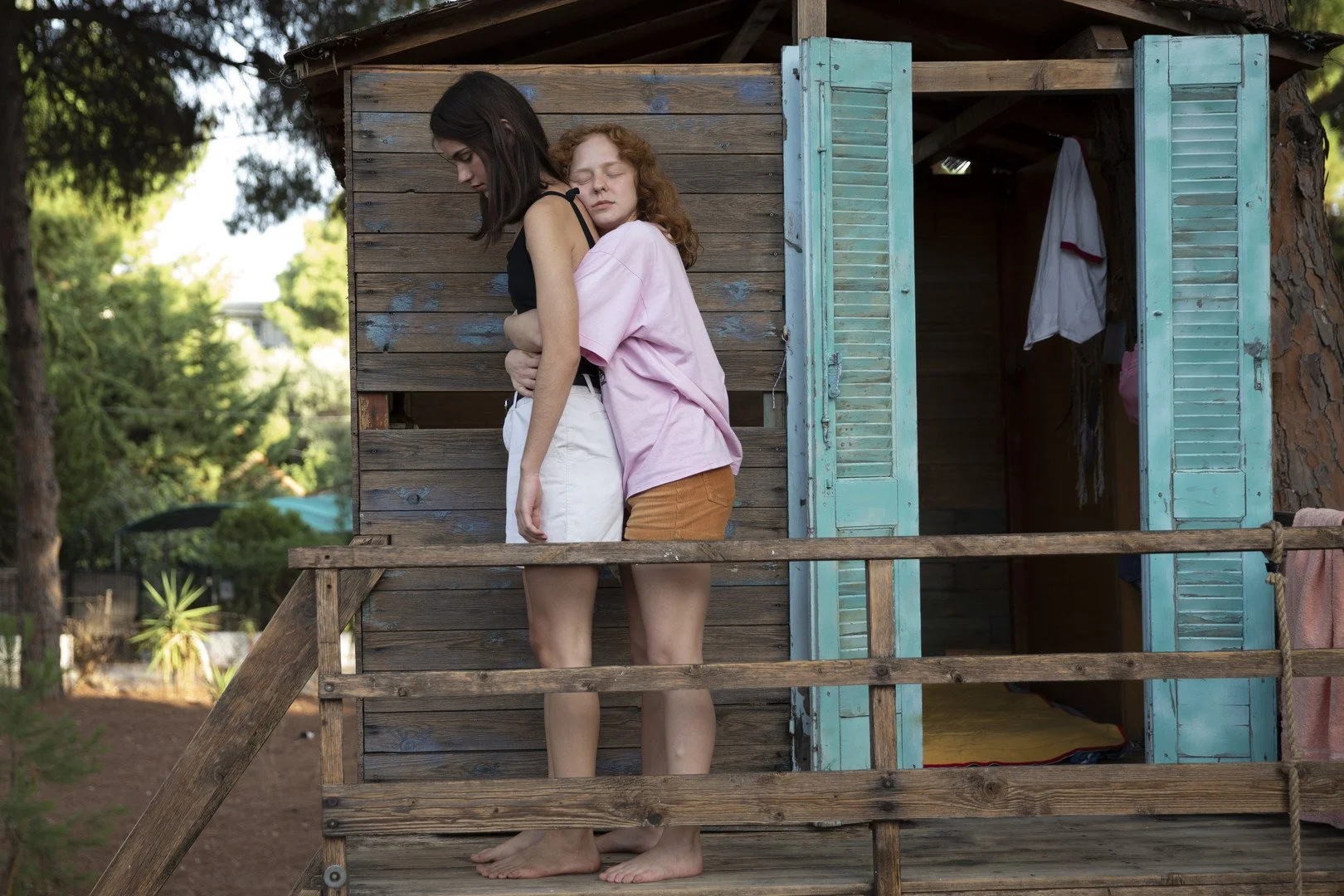
Summer is ending and stickier than ever as Anna, the older sister, throws a party to celebrate her birthday and looming departure for college. Her crush, Mary, is invited. Her younger and adoring sister, Melina, is not. Tensions rise and risk reaching a fever pitch as it gradually becomes clear that inseparability is not always reciprocated.
After producing films for cinematic sages such as Athina Rachel Tsangari and Yorgos Lanthimos, writer/director Maria Hatzakou veered into telling stories of her own. Swirling genre and upending realism (and roaring killer soundtracks featuring songs from her own electro pop rock duo, Someone Who Isn’t Me), her films never shirk intricately drawn characters, whose struggles and emotional splatter are achingly recognizable and relatable.
What inspired the film and why was it important for you to make it for the first film that you directed, because it was the first, right?
Writer/director Maria Hatzakou: It was the first, yeah. It’s a funny story. I had this image of two sisters, and the younger sister says to the older sister, “I wish everybody would die and it was just the two of us in the world.” That’s how it started. I thought of writing a script around this idea, and of course because I'm a horror fan, I wanted to include horror elements. I reached out to Alki [Papastathopoulos, writer/director of Honeymoon] and I asked them to direct it.
So they were the director in the beginning for the short, and then one day Alki comes to me and they say, “Listen, you wrote it and I think that you should direct it,” and I said, “No no no, I’m very scared.” They said, “Okay, I’m dropping out. You do it on your own.” So that was a big push for me. I never knew that I could direct up until that moment.
I built the script around this image that I had, and I knew that I wanted to set it in a place of my childhood. This place [where we] shot, it’s in the suburbs of Athens, and it’s a very typical summer house that all of us have spent our summers at one point in our lives. I wanted to place it there, and that’s how the whole idea started.
“I remember that once I talked to a psychotherapist who told me that, ‘Whatever big changes you make in your life, a massacre has to happen. People have to die inside of you so that you can go on.’ So that was the idea behind this film.”
So you never intended to be a director in addition to writing and producing?
I think I was afraid. I started as a producer and then I got very annoyed by the directors and all their egos. I got really tired. I decided to become a director for myself and a producer for myself so I don’t have to deal with others. Slowly I started writing first and then I jumped into directing, and now I cannot stop. I’m obsessed with it. Especially shooting. When you’re shooting the film, it’s the best thing in the world. I think editing and the rest is a bit more awkward because then you have to deal with something that’s kind of done and then you have to show it to others. But the shooting I love.
Was there a moment while shooting when it clicked for you? When you realized, ‘Oh, I'm a director now. This is what I want to do.’?
When the shooting finished, because I couldn’t believe that I would pull it off, and there were four or five shooting days, so it was very quick. When I finished it, I said, “Okay, now I think I can be a director.” Since then I’ve done three short films, and actually the fourth one I am editing right now. So I’ve done them very fast. I’ve done four in like five years. It’s been a great experience so far.
You always cast such captivating actors. What’s your casting process?
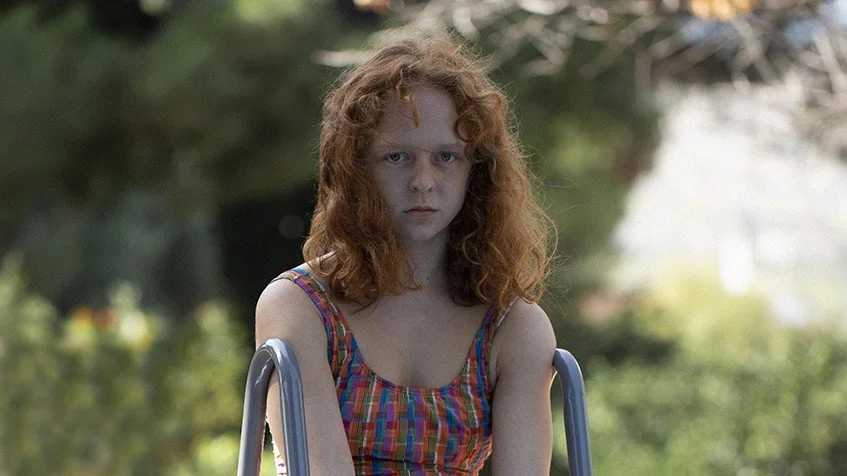
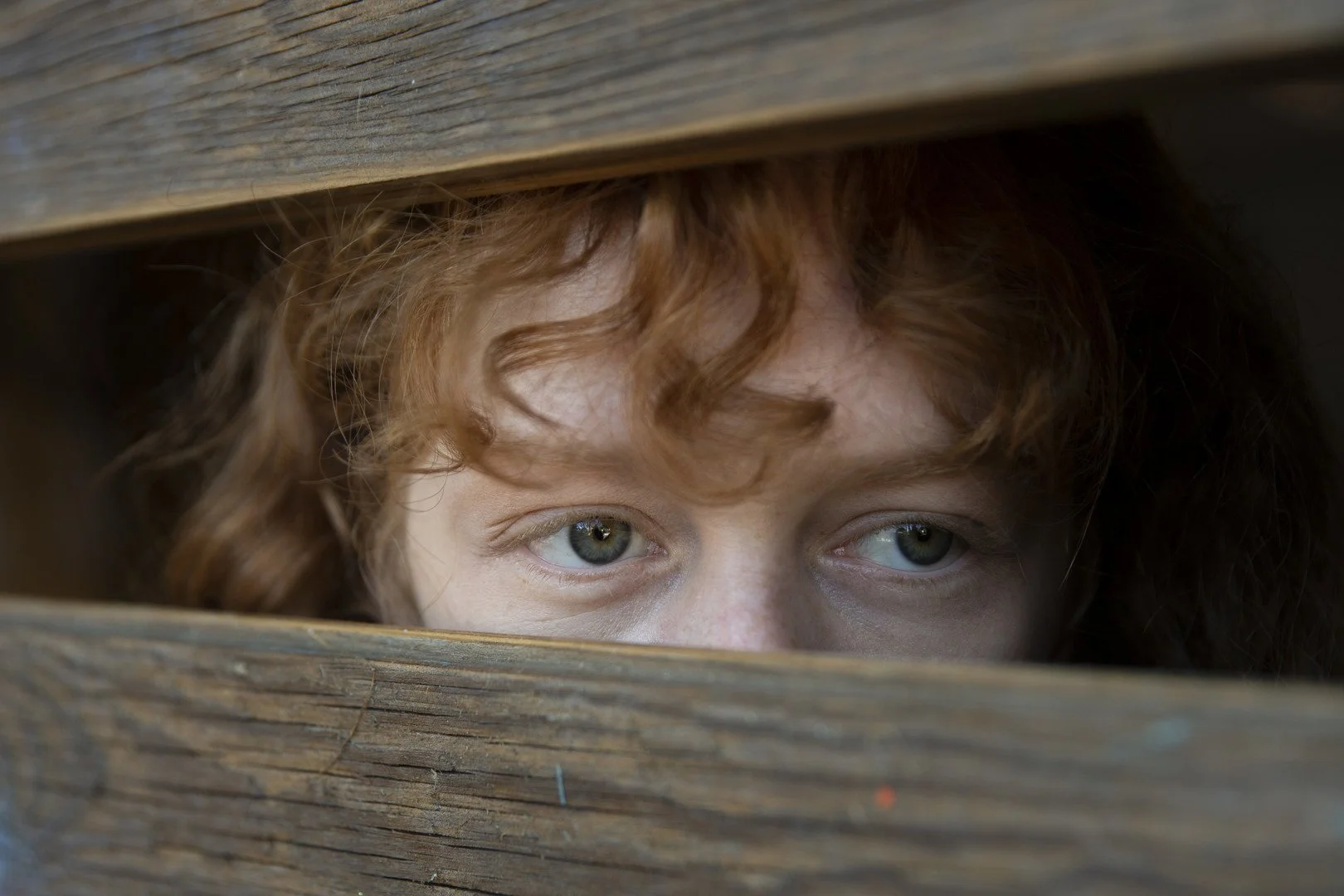
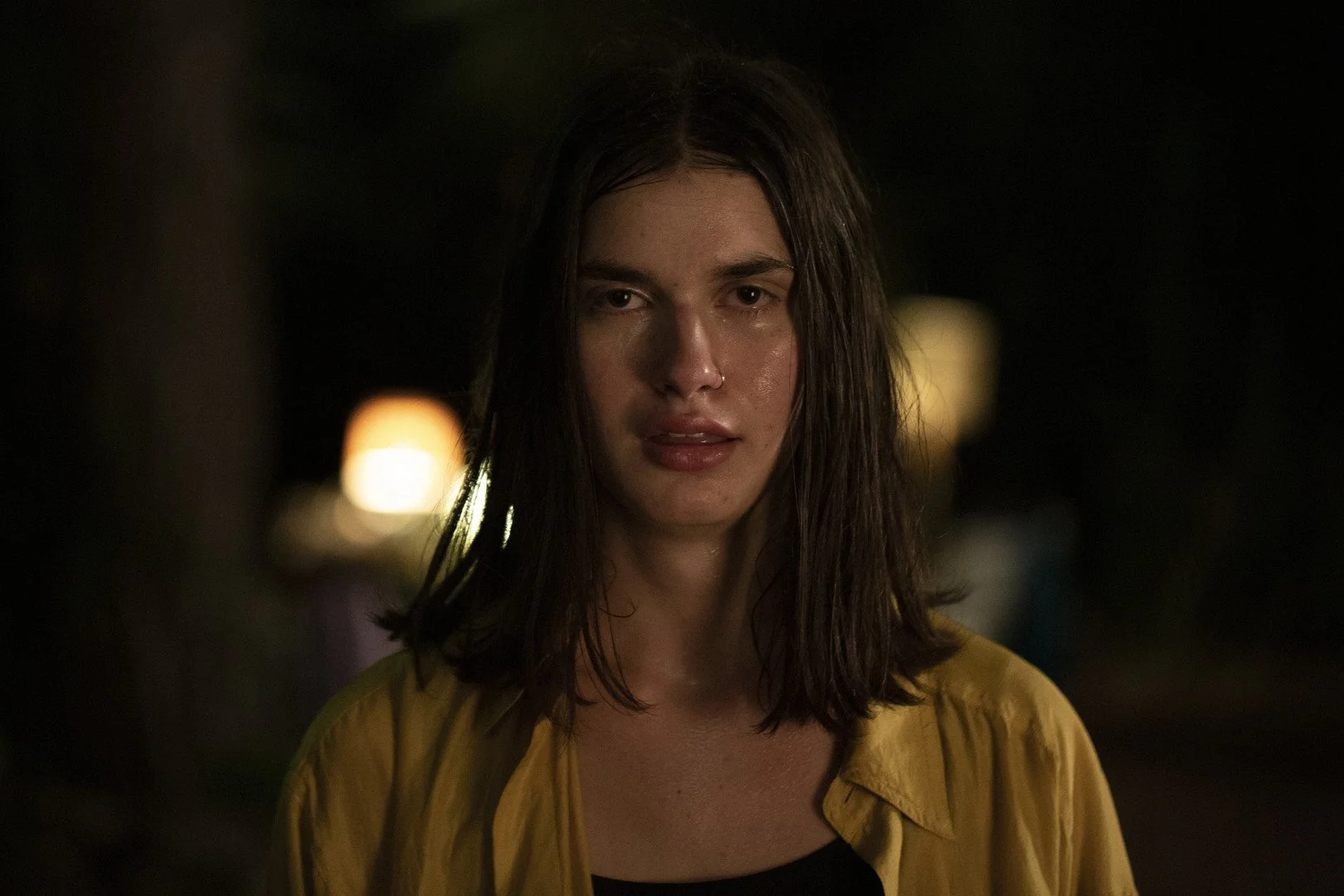
I have an obsession with faces. In Amygdala, [Panayiota Yiaglithe who plays Melina], the younger sister, the redhead one, is someone I’ve known since she was 12 or 13. She’s the niece of one of my friends. As she was growing up, she became a dancer. A friend of mine told me, “You have to see her now, how she’s becoming.” I saw her and thought, “Oh, that’s it.” The feature film I’m writing now, she’s one of the lead actresses. And [Donna Petropoulou, who plays Maria], she was not an actress then, but after Amygdala she decided to study. She went to acting school and now she’s an actress. She’s just starting now. Again, I saw a lot of actresses for [my new short] Starflyer, but then I ended up [casting] the same face [Petropoulou]. I’m obsessed. I get obsessed with faces.
I’m crazy about the soundtrack. And so happy you put out a cassette. I have mine right here. Who are Someone Who Isn’t Me?
It’s two of us. It’s Marilena [Orfanou] who writes the music for all of my films. She’s a great composer. We started writing a soundtrack for a feature film that was never used, and while we were writing that we realized we had tons of songs and we said, “Why don’t we create a band and just release them?” That’s how the band [Someone Who Isn’t Me] was born.
Music and cinema for me are very close forms of arts. I really, really love [music]. I’m not a composer. I only play drums, and now I’m learning the guitar. But Marilena, we always work together. I don’t ever want to use any other composer in my life. We have a very close collaboration. We like the same things. We have a studio here in Athens which we share. It’s kind of half production office, half studio, where we also practice. That’s where we watch films and create the music and record everything. So, it’s an ongoing process. We really love soundtracks, especially ‘80s ones. Every time we make a film, we discuss beforehand what kind of music we’re going to write, and we also like to create pop songs that can exist on their own apart from the movie.
I'm curious what ‘80s soundtracks you both like.
I love Betty Blue, for example. I love Miami Vice. I totally love it. I love everything that David [Lynch] and [Angelo] Badalmenti have done. Badalmenti is a huge inspiration. We also like a lot of John Carpenter’s music. I’ve seen him live as well. He’s a huge inspiration. Marilena also studied classical music, so she has a deeper knowledge of music. She incorporates more classical stuff into the soundtracks.
You’ve worked with a lot of really terrific filmmakers, like Athina Rachel Tsangari and Yorgos Lanthimos. I’m curious what influence working with them had on you as a director.
I don’t know. You tell me. Listen, we’ve done a lot of movies and up to a point it was fun, but then I got a little bit tired with the “Greek Weird Wave.” I really think that there were only a few directors that could handle this “Weird Wave” and then it started being like a copycat for other films. I didn’t want to do that. But I don’t know. Am I doing “Greek Weird Wave”? I don’t know. I have no idea if I’m influenced.
The “Greek Weird Wave” label to me is kind of like how shoegaze bands reject the term “shoegaze.” But still, it does describe a very specific style. Was the “Weird Wave“ something that happened accidentally? Like these filmmakers were labeled without intending to build a movement?
I think that Yorgos Lanthimos kind of created [it] without knowing. When he did Kinetta, his first film, I mean this guy is kind of amazing because he was friends with Athina, and Athina was a producer at the time for him and he just went up to her and said, “I want to make a film, like a Tsai Ming-liang film,” and she said, “Okay, let’s go and do it.” So they made it and then it became successful. And after, Dogtooth got the [Prix Un Certain Regard] award in Cannes and he got an Oscar® nomination, which is amazing. I think everybody wanted to have that success, so that became a form that people used for their films.
The difference with Yorgos’s films [is] he touched the audience, and to me that is the key. I mean, festivals are great and I love them. I was a programmer myself for many years. I lived my whole life in festivals, but at the end of the day I’ve shifted as I was growing up, and I want to make a film that the audience can really understand and touch. That’s I think Yorgos’s success.
I love [Athina Rachel Tsangari’s] Attenberg. It’s really special. And sweet. There’s nothing really that weird about it.
It’s amazing. It’s the best film I think I’ve produced. We went through hell to shoot it. It was so difficult. We had many difficulties, but we managed to make it, and it was a labor of love, really.
“Whenever I try to write something that has realism in it, I immediately turn it into something metaphysical, and it gives me the freedom to say what I want to say through a genre that’s also fun. Also, there are no limits to this genre, so I think it liberates me. And I don’t want to forget the fun part.”
All of your films, or at least the first three, all lean on genre, horror and thriller and sci-fi elements. Why is that important to you to package them that way?
I grew up with ‘80s horror films and David Lynch. The first movie that I remember watching in a cinema thinking, “Wow,” was Wild at Heart by David Lynch. And then I was obsessed with Twin Peaks. Horror films, I think they’re stuck in my personality. Whenever I try to write something that has realism in it, I immediately turn it into something metaphysical, and it gives me the freedom to say what I want to say through a genre that’s also fun. Also, there are no limits to this genre, so I think it liberates me. And I don’t want to forget the fun part. Especially in Europe, they have a huge problem with genre films. People are very snobbish around genre films. I really want to change that.
There’s a snobbishness in the U.S., too. In your films, the genre elements seem secondary to characters and emotions and story. I think a lot of European filmmakers, especially, strike that balance really well. I don’t know if that’s a response to snobbishness or how genre films are perceived, but there’s a lot of substance in them.
It’s a little bit of both. For example, I don’t like films where there’s just violence for fun. That I cannot stand. There has to be some story underneath it that makes me feel something. I think that the genre element is always secondary to the story, for sure. I would never make a horror film just for the sake of violence, let’s say, or blood or something like that. So the idea behind it was [to have] a realistic story, and then give it this kind of elevated element. Because I cannot really work in realism. I hate realism. We live every day this horrible life and whatever is happening around us. I need a little bit of magic to elevate the stories.
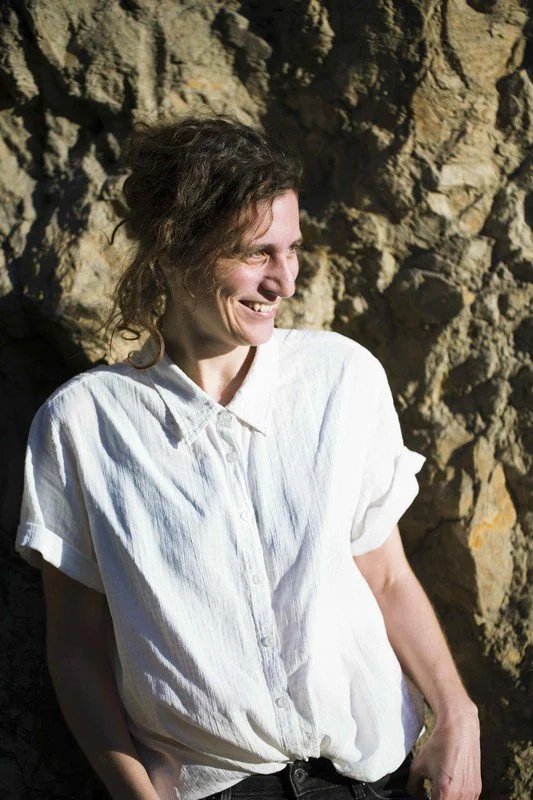
Maria Hatzakou is a film writer/director, producer, and musician based in Athens, Greece. She holds a BA in Film and Video (London College of Printing) and joined the film industry by working extensively as a film programmer for the Athens International Film Festival (2000-2004), and the Thessaloniki International Film Festival (2005-2008).
In 2007, she started working as a producer at Haos Film, a pioneering filmmaker-run production and post-production studio based in Athens. Maria has collaborated with director Athina Rachel Tsangari on a number of projects. ATTENBERG, her first producer credit, premièred in main competition at the Venice Film Festival. In 2012, she produced Tsangari’s THE CAPSULE, which premièred at dOCUMENTA(13) in Kassel, and went on to screen in competition at the Locarno, Toronto and Sundance Film festivals. In 2013, she produced 24 FRAMES PER CENTURY, (Tsangari’s sci-fi short for the Venice Film Festival’s commemorative anniversary project VENEZIA 70 — FUTURE RELOADED) and in 2014, CHEVALIER, which won Best Film at the BFI London Film Festival.
In addition to her work with Tsangari, she has collaborated with a number of directors and artists. She co-produced Yorgos Lanthimos’ ALPS, which premièred in main competition at the 2011 Venice Film Festival, as well as produced DIGGER (Georgis Grigorakis) which opened at the Panorama section at the Berlinale 2020.
In 2011, she was selected for the European Film Promotion’s “Producers on the Move” forum as part of the Cannes Film Festival. She is also a Sundance Institute, an Oxbelly, and a Midpoint Alumna.
She is the drummer of the female duo Someone Who Isn’t Me.
In 2021 she founded her own production company, MERRICAT. Its credits include Maria’s first foray into writing and directing with the short film, AMYGDALA. The film has a successful worldwide festival run. Her second short film 7Hz (2024) had its world premiere at the International Competition-Brussels Short Film Festival. Her third short, STARFLYER, had its world premiere at the Palm Springs International ShortFest (2026), and she is in the last stages of post-production of her fourth short TALKING HEADS.
She is currently developing two feature films, MANI BITCH, and the STARFLYER feature.