

In Lieu of Flowers
directed by Jessie Posthumus
Canada. 2025. 8 min.
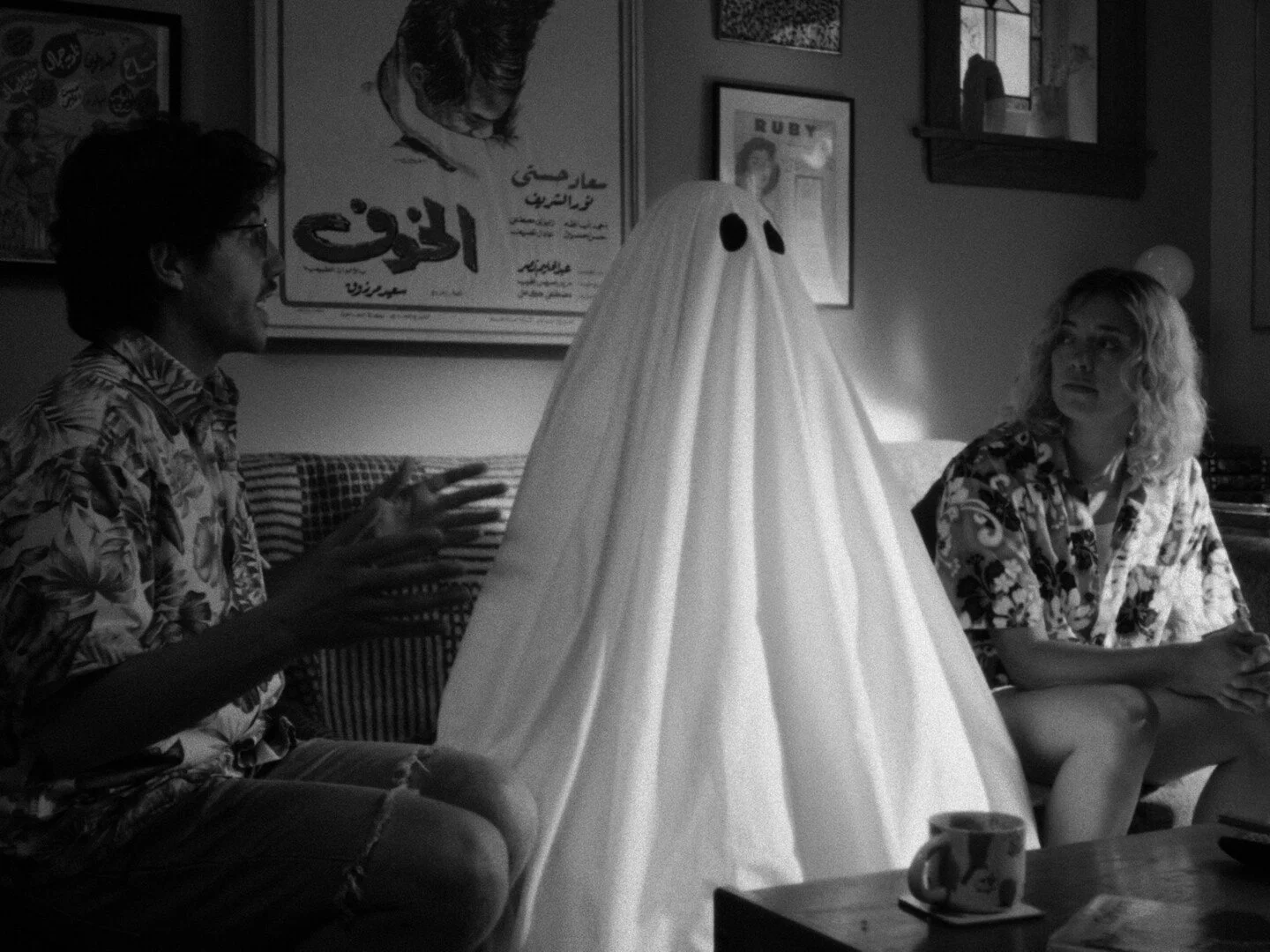
On the morning of her father’s Hawaiian themed funeral, Matisse wakes up to find a ghost in her apartment.
by Jesse Knight
Boundlessly empathetic Toronto-based filmmaker Jessie Posthumus can’t help but find cracks of light in darkness. Through their lens, deficiencies become advantages, the disenfranchised are empowered, and in the fantasy comedy In Lieu of Flowers, real grief opens the door to a rumpus room of escape and catharsis.
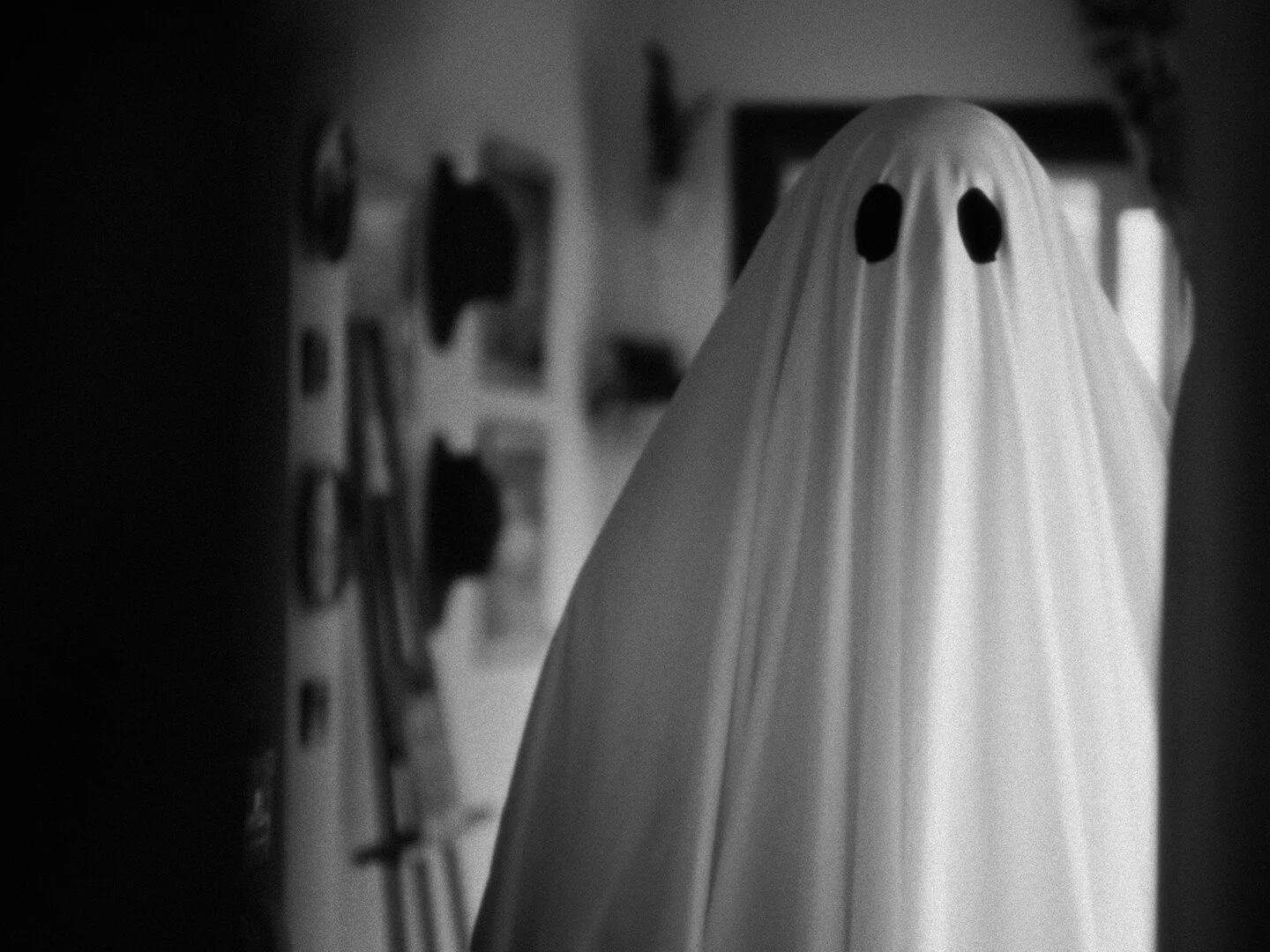
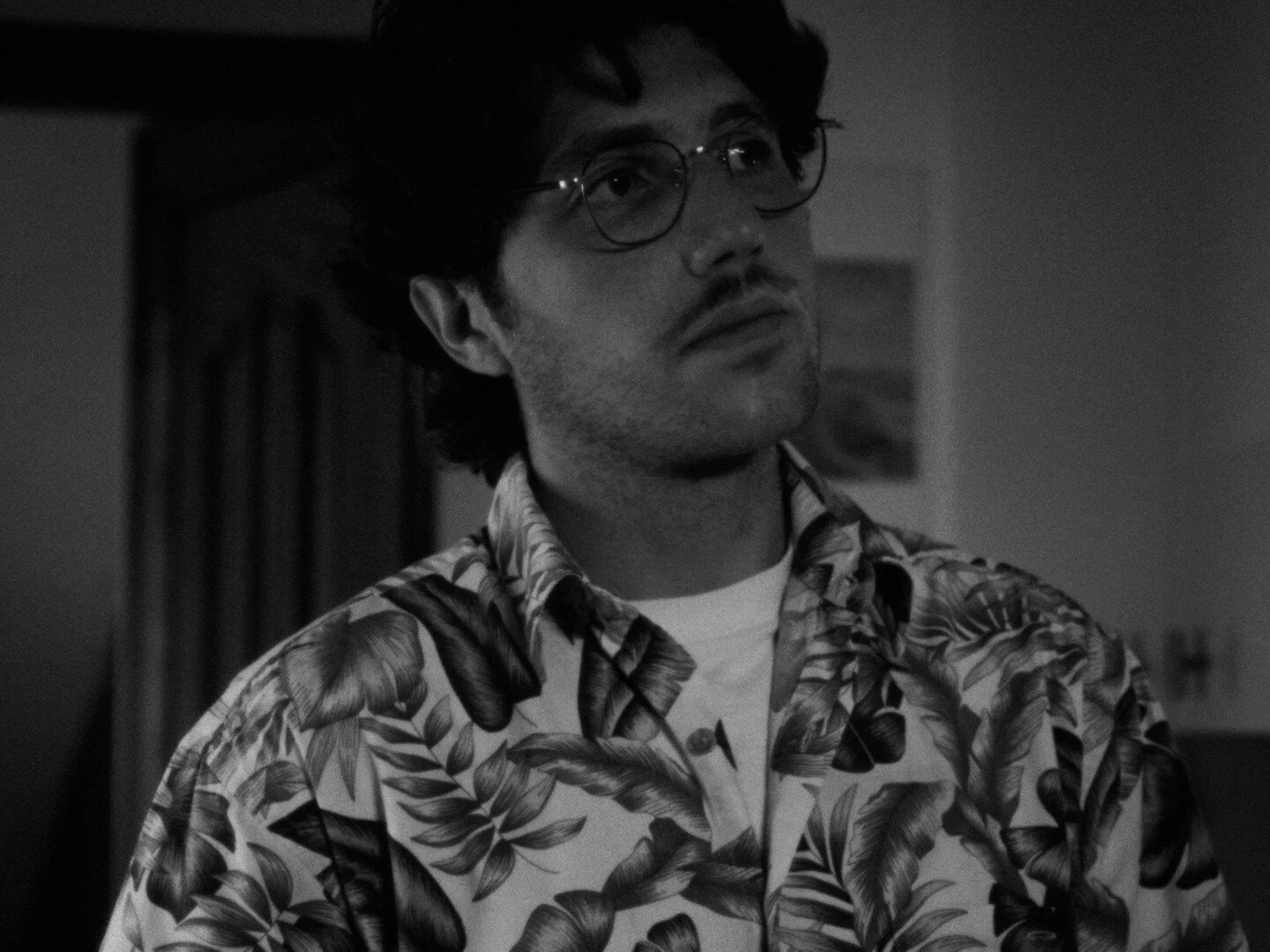
The Ghost visiting Matisse (Matisse ApSimon-Megens) is a figure under a white bedsheet, with dark blots for eyes, lumbering around the apartment Matisse shares with her hapless boyfriend (Talal Itani). Matisse can’t prove it’s her dad, who’s just passed, returning to offer the final goodbye he wasn’t able to in life, but that doesn’t stop her from hurling herself into the wishful fantasy.
Anything can be a sign from beyond if receptive to the possibility. Finding presence in absence is an emotionally Herculean task, but worth the reward if one is willing to embark on the search.
Let’s start with talking about the dedication at the end of the film. Who is Eugene?
Writer/director Jessie Posthumus: He’s my stepdad. He passed away in 2024, after his birthday. I had really bad insomnia after that for a year almost. But it was really bad through the winter. And it was kind of unexpected. But then I talked to people who had dead dads, and it was a common thing. They couldn’t sleep after. And it wasn’t necessarily that I was thinking about him all night, it just started this pattern that I couldn’t break out of. I was really sad, and I already had a few projects on the go, but obviously wasn’t super motivated to work on them. Then one night when I couldn’t sleep, I just started writing this script. I had been to a shorts block in Toronto that I found really depressing, and I thought, “I’m depressed, yes, but how can I create something that’s fun for myself to work on but doesn’t feel like I’m addressing grief?” And my friends were all super down to just make something that we hoped would be cheap and easy and fun. There was no open casting process or anything. It [stars] two of my best friends. It was one of my friend’s first time acting in a short, and he’s always wanted to. Everyone was just super down. And obviously there was guilt-tripping. I was like, “I’m really sad. My stepdad died. Will you be in my movie?” Which was very effective.
I mean, you can use that for a long time.
Totally. I’m still milking it.
“It’s hard for me to make something without caring so much.”
I feel like it’s rare to be able to authentically create something that’s playful and charming yet coming from a sad situation and real loss. Why was striking that balance important to you here?
I guess it kind of had to be that way. And it totally felt kind of strange the whole time because, like I said, I was trying to make something that was fun, but it was coming from a real place of grief. There were a lot of different versions of it. I think there were versions where we pushed the comedy more and it never felt true to how I was feeling. I felt it kind of cheapened the reason I was making it. It’s hard for me to make something without caring so much. So that just felt like the honest way to tell this silly story.
I was listening to Le Ren before this because I really like the karaoke song in the movie and I wanted to hear the recorded version. The rest of it is a little too sad country for this early in the morning.
Yes, totally.
But really good. If you have a karaoke sequence in a movie, especially in a short, the song has to be perfectly chosen. What was it about this one for you?
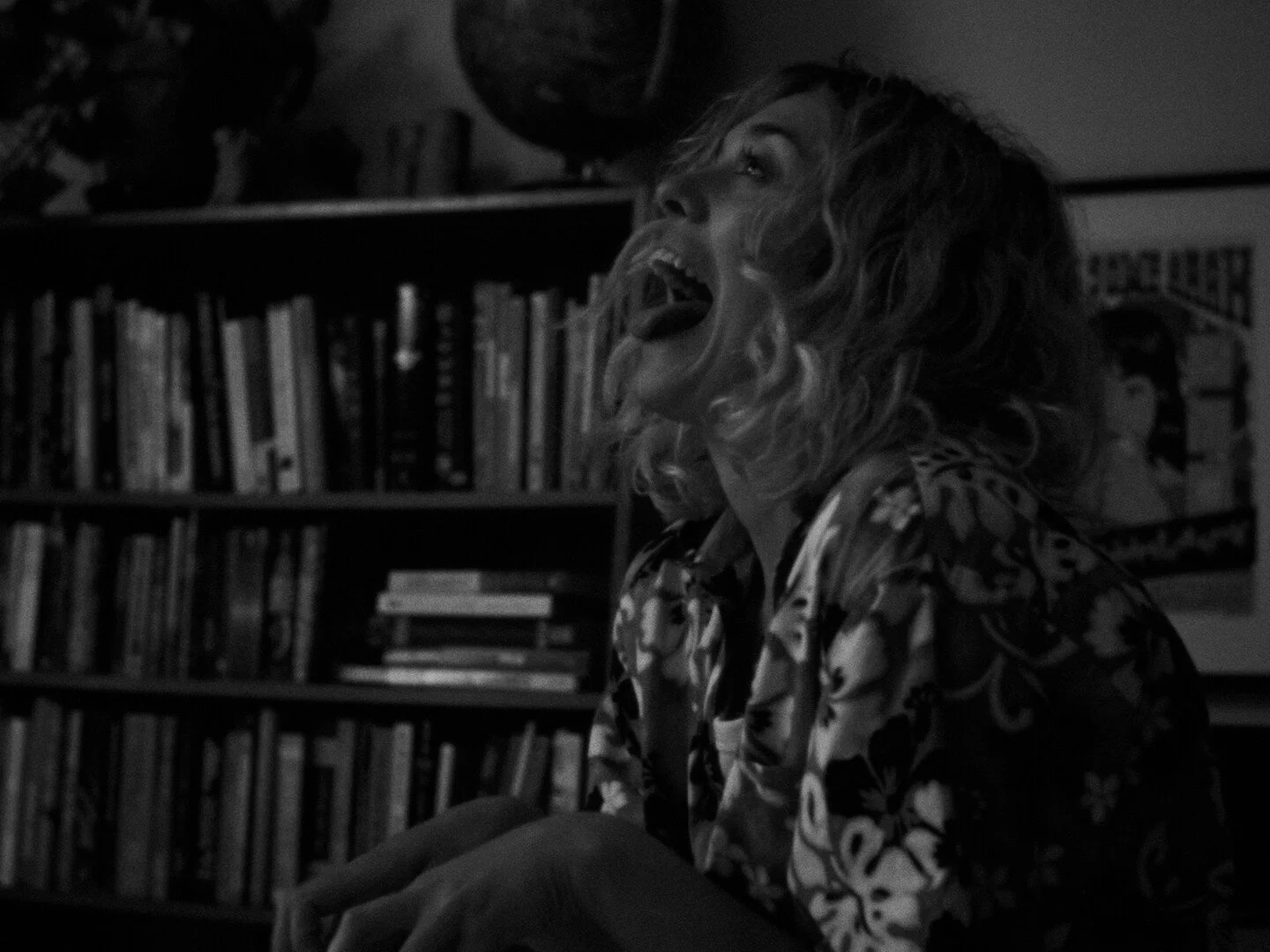
My god, discovering that song was amazing. We were going through so much Toronto and Montreal music because it was like, “Okay, this has to be someone we can DM on Instagram.” My friend Matisse pulled up that song, and she was like, like you said, “Her other music is pretty sad, but this one is a real banger.” I was so excited to hear it. It had to be really fun. We had a few other options, but that song was perfect.

“The film is a comedic take on our ability to find meaning in simple moments after the death of a loved one. [It’]s about saying goodbye in whatever way you know how, and how to laugh at your lowest.”
When you’re making a film rooted in real grief, and you’re going through all the processes of writing, shooting, editing, and then releasing it, you’re immersed in it for so long. How does all of that kind of inform or change or maybe help, in a way, the grieving process?
That’s an interesting question. It’s hard to say how much it helps. It felt very helpful to me, the process of making the film. Like I said, it felt like a way to channel my grief into something productive, which… Is that good? Is it good to be productive? But it was. It felt good to me. It felt like I can be talking about him in a way that feels exciting. It’s like tying him to this thing that I love doing. So, keeping him alive through the process was great. And in the edit as well. Writing it was very cathartic. Production is so fast-paced. Even on a low-budget, overall chill set, you’re coming up with solutions constantly, and then when you’re editing, again you’re sitting with it for so long, and I was back to feeling more emotional about the whole thing. I think once the film ends, then I’m done. This chapter is done. I did what I needed to do. And I was very aware that I don’t know if the best version of this film can be created while I’m in this state of mind. Maybe a better version of this story would exist in five years when I had time to really reflect. But it was so necessary to do it right away. Because normally we wait for grants. We try not to self-fund anything if we can help it. And it’s an amazing thing that we have these grants, but it takes six months to find out if you got it or not, and sometimes you didn’t get it. This wasn’t something I wanted to sit with for a long time because it felt like adding to the grief pile more than helping me work through it. We came up with the idea in December and we shot it in May. For me that was pretty fast.
Have you considered what a version now would look like?
I feel like it would be less sweet and funnier, probably. It’s not something I’ve totally thought of, I just know that that reflection can help. It would be a different film.
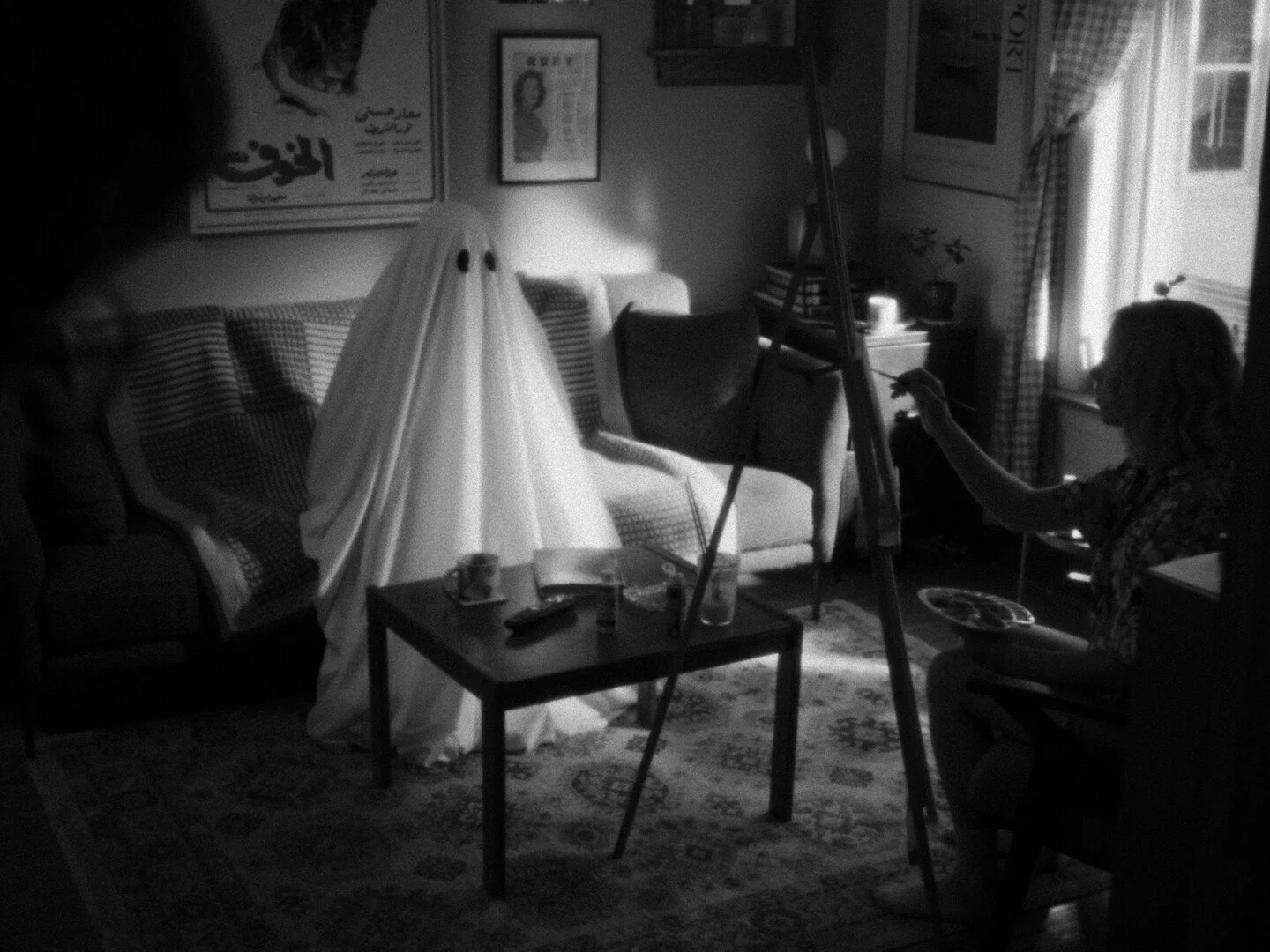
The Ghost itself is such a simple design, with the white sheet and eyeholes. Was that always the idea, to keep it as basic as possible?
I think so. The whole concept was born out of this joke of this Halloween costume ghost, of someone seeing something that someone else doesn’t see. We were talking a lot about looking for signs; that feeling when someone has died, or in any other situation, but you are looking at something and seeing something that other people don’t see because you need it to be that way, just searching for meaning. My stepdad, after he died, had given all of my siblings and I these cardinal Christmas ornaments that we opened on Christmas day. He’d already passed away, but he picked them all out, and now it became a thing. Whenever we see a cardinal, that’s him saying hello. And unless you’re in that position, it feels so silly, you know? It’s really easy to roll your eyes at it. So I think I’m coming at it from two perspectives: whatever you need, and also just trying to use whatever you see in the world to help yourself.
Jessie Posthumus is a writer/director whose films blend poetic realism, empathy, and humour. Their work has screened at festivals including Palm Springs ShortFest, Hot Docs, Fantasia, Frameline, and VIFF.
Jessie recently wrapped their debut feature, ROCKET FUEL, supported by Telefilm Canada and Ontario Creates and produced by Edge Entertainment. They hold a BFA in Film Studies from Toronto Metropolitan University, where they are currently pursuing an MFA in Scriptwriting and Story Design.