
Light Can’t Escape
directed by Tim Sharp
Australia. 2024. 11 min.
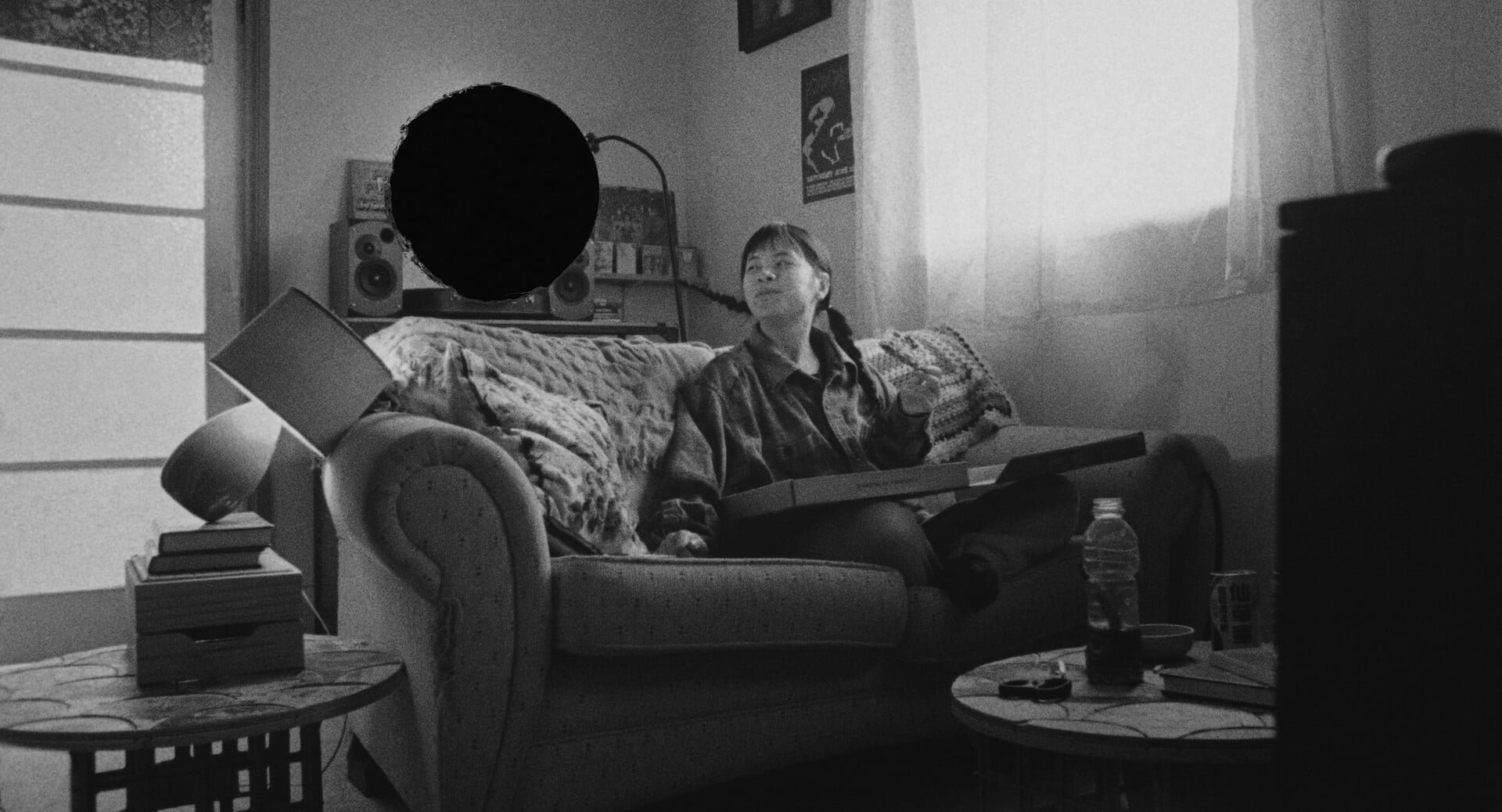
Harriet's disaster of a life gets a lot weirder when she discovers a black hole in her apartment.
by Jesse Knight
There is no crisper breath of fresh air while watching a film lately than a palpable sense of handmade wizardry. When you can plainly glean the obsessive nature of a filmmaker delighting in bringing a vision to life with sullied, calloused, constantly fiddling hands. “You have to do it for real as much as you can,” writer/director Tim Sharp tells me. “But you suffer through it when you do it.”
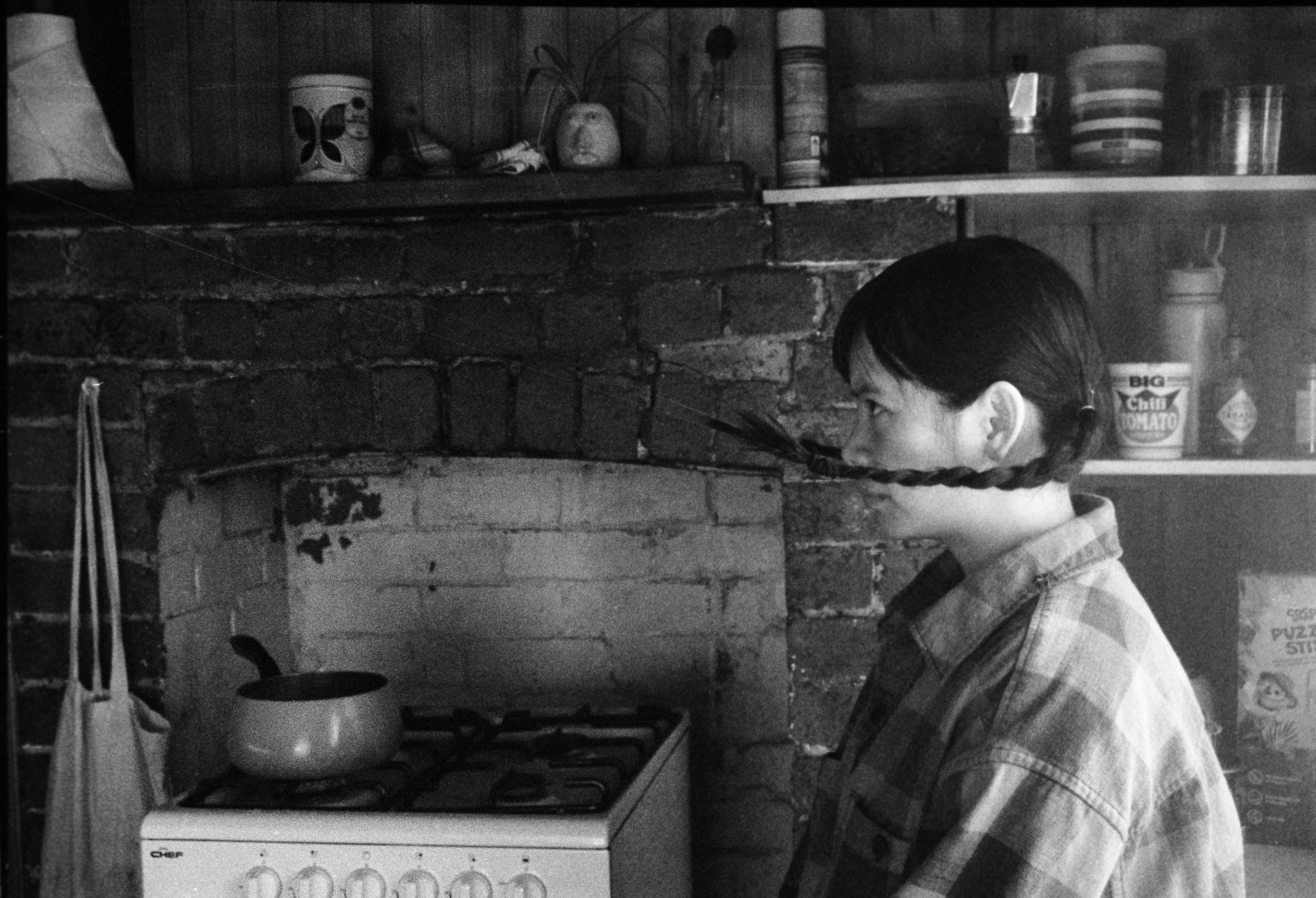
Shot on 16mm black & white, Light Can’t Escape offers up images so crunchy you can practically feel the flakes and shards on your tongue as crumbs dust your leather skirt. In it, back-breaking practical effects and carpal-tunneling puppetry bring to life the unlikeliest friend an eviction-facing misfit can have: a literal black hole.
Raucous yet poignant and fully embracing a type of punky DIY ethos that feels increasingly like an ancient myth, the film is a rallying cry against all iterations of fascistic takeover. A constellation of middle fingers in all directions. It’s as satisfyingly rebellious as it is sincere and heartfelt, which today seems like one of the most rebellious acts possible.
There’s so much going on in Light Can’t Escape, I’m curious what was the initial inspiration? Was it the idea of the black hole itself, or did it come from somewhere else first?
Writer/director Tim Sharp: I was trying to think about times in my life when there have been chaotic elements, and in retrospect thought, “Oh, I've been working at the baseline of stability.” I was in a totally, weirdly messed-up space at the time, and my head was in a million different places, but I was so blind to it because that was my situation. The chaotic thing comes into my life and I think, “This is such a pain. This is a headache. What am I dealing with?” But afterwards I think actually there was a real blessing in what it brought to me in terms of creating a new perspective. It was a feeling about chaos and living in a state of chaos, but being blind to it and then having a new chaotic element come in that makes you reevaluate where you are. That kept focusing down for me in terms of: what is chaos to me? What is that feeling? For me, a black hole became a part of it. This element or this idea that not only do things go into it and they disappear, but it actually distorts reality around it.
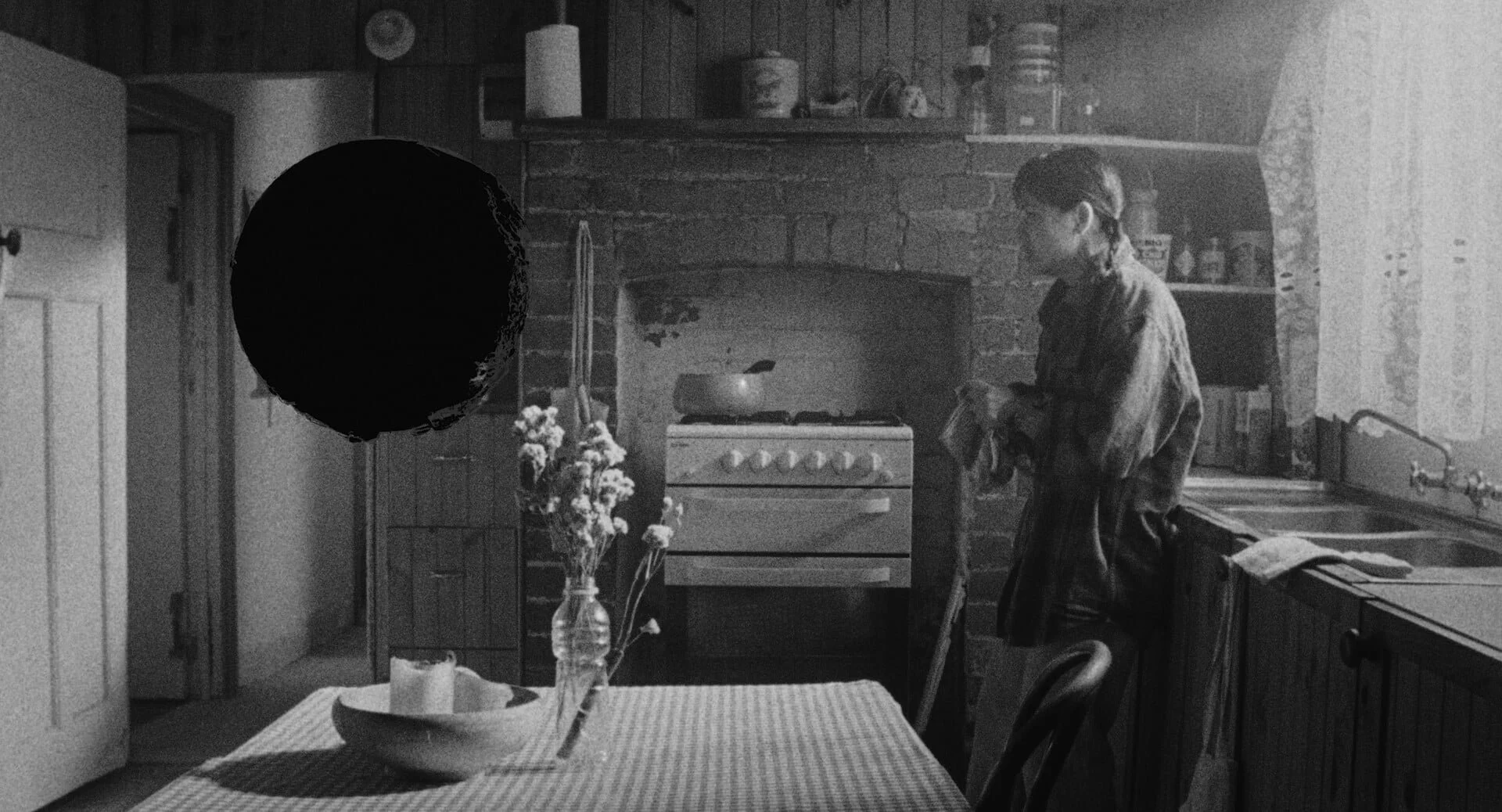
“I really wanted to do something with a black hole. Not a physically real black hole, but almost like the idea of a black hole. But done in a way where the black hole is also a character, not just a symbol for something.”
I've always been drawn to elements of the cosmic, but I'm never very interested in doing something that’s scientifically accurate. It's more the concepts and ideas that I'm the most drawn to. I really wanted to do something with a black hole. Not a physically real black hole, but almost like the idea of a black hole. But done in a way where the black hole is also a character, not just a symbol for something. I wanted it to express this feeling, have it exist in this world, have these characters react to it, and whatever ideas flow out of that will be what happens.
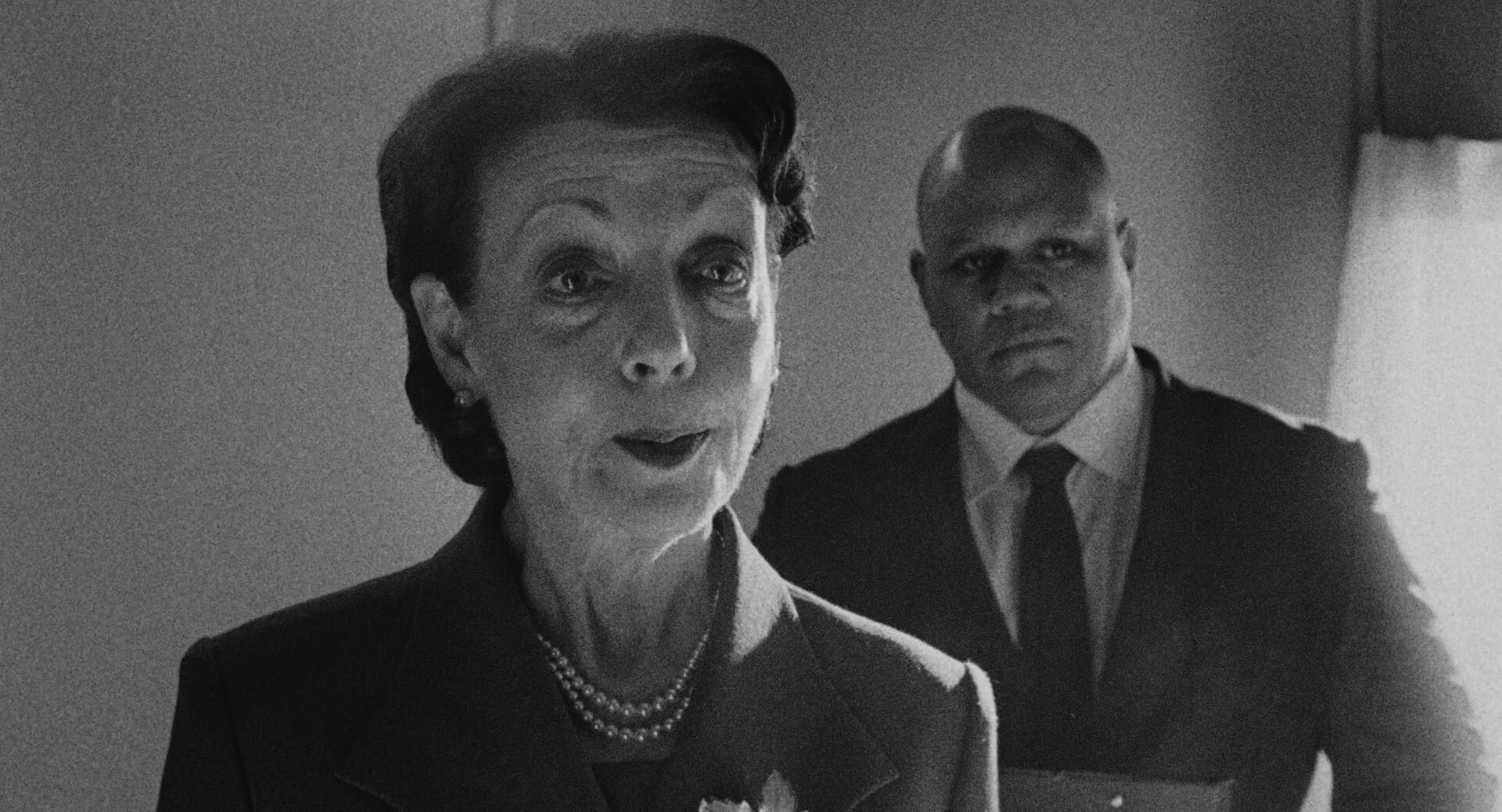
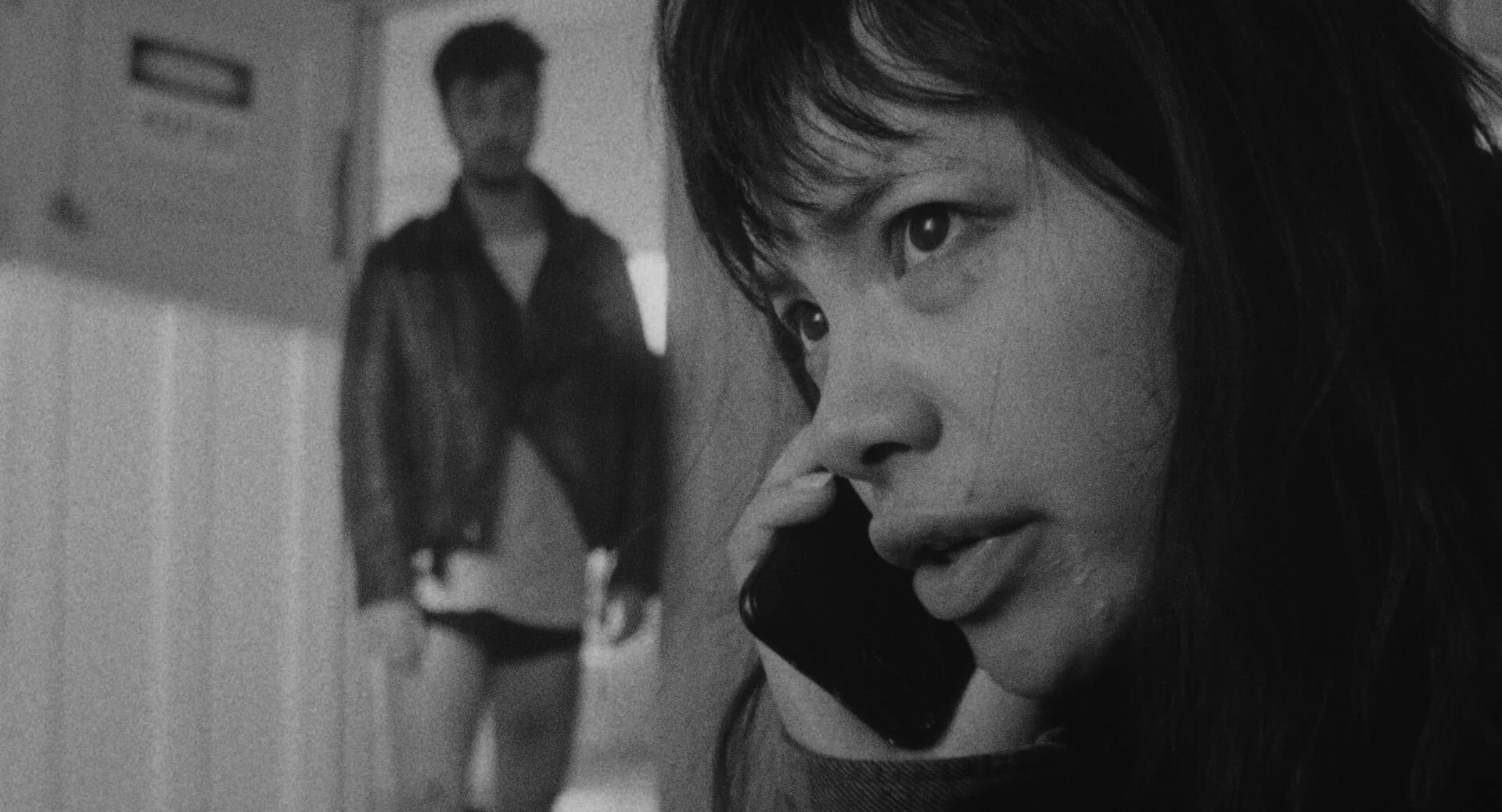
I've noticed a throughline in some of my films is housing insecurity and living in a state of precarity. That's something that I've become very interested in exploring dramatically and narratively from different angles. Light Can’t Escape is my tragicomic perspective on this. I'm very interested in the idea of home and what it does to us psychologically to not have that stability of home. Obviously it's a bit cartoonish in the way that I've done it—with the real estate agent—but it was something that I wanted to explore because conceptually in my own life I have lived in a state of not having a place that was my own for quite a long time.
“I don’t ever want my characters to be completely cartoonish. I think there is a real depth, even to comedy, that can come out when you have characters who seem to have an existence outside of the movie, who have their own lives and desires and wants.”
It’s really impressive how well you meld all these different genres, balancing the cartoonish and comedic with humanity and heart.
I'm not a super purist when it comes to genre. I like to see a film or experience a story that uses the elements of genres but doesn't just execute them. I'm most interested in when there are rules and ideas about genres, but there’s a blending happening, a shifting. The most interesting thing for me is if you're able to take an audience on a journey and they're able to stick with it and they’re able to still see that emotional throughline with the characters. I don't ever want my characters to be completely cartoonish. I think there is a real depth, even to comedy, that can come out when you have characters who seem to have an existence outside of the movie, who have their own lives and desires and wants, because I think that’s what we respond to when we see it. I always find those to be the more enriching experiences. When I approached this one, there are obviously elements of the absurd and the comedic, but there's a depth and a realism to Harriet and how she feels. It's funny because I had moments, even in the edit, thinking, “Am I pushing too hard having these more serious moments?” On reflection, I think the movie really needs that to work. I think you need that depth of her character to really feel the stakes of who she is, how she reacts to this absurd situation. And when we come to that ending, there is a real response emotionally to it and it isn't just, “Well, that was a fun, goofy ride.” You carry something out of the movie with you, as well.
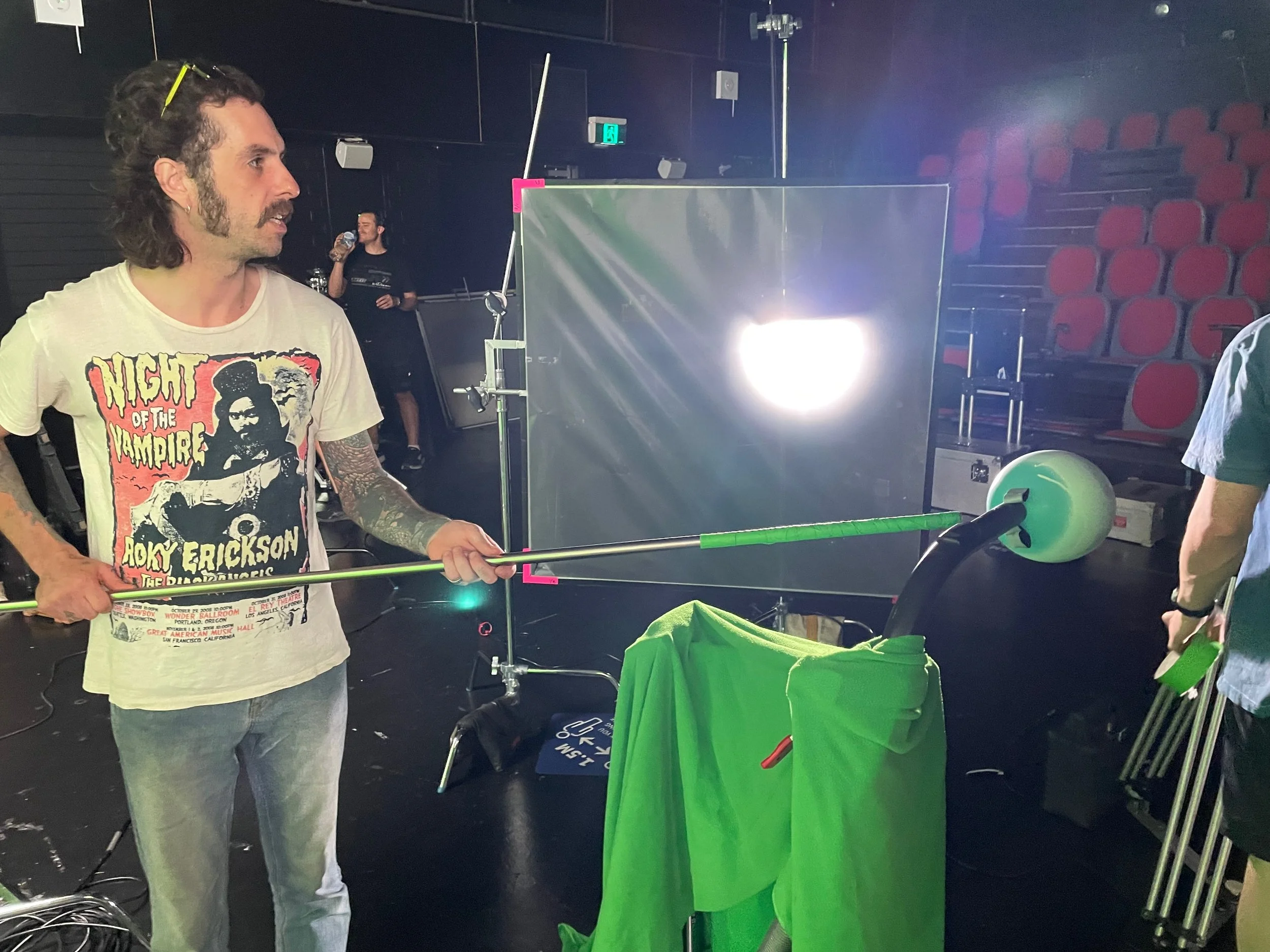
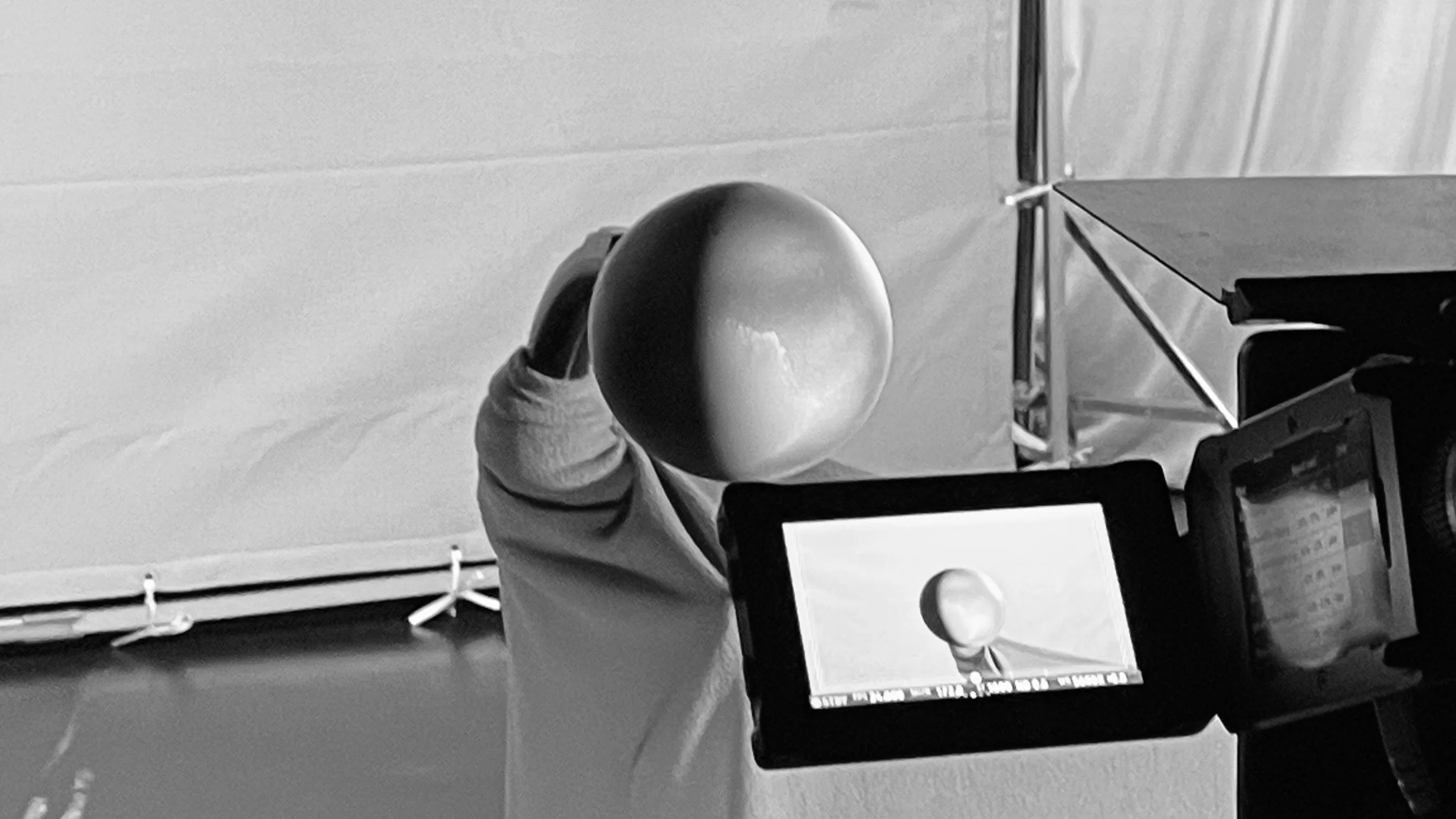
I always appreciate when practical visual effects are used and integrated into real-world environments, like they are here, and done so well. It makes it all look so much more believable.
I actually come from a background of visual effects. I worked at a bunch of visual effects houses when I was living in Canada. I was very fortunate to have that opportunity working on bigger movies. I formed some strong opinions about visual effects. I've become a real stickler for the tangible. Approaching the visual effects for this film, I had a really strong sense of [how] it's not going to look quote unquote “real.” That doesn't even really mean anything in movies. I know people have different opinions about that, but all movies are constructed, or all movies are fiction and fantasies. What matters to me is if there's an effect that feels real to the world of that movie. A bad effect is when something doesn't feel real for the movie they're trying to make. For this movie, it was about texture and grime, these dirty and chaotic elements around these characters, so the effects had to reflect that. It was about doing it in a way that feels like it has a physicality. It was quite a process figuring all that out.
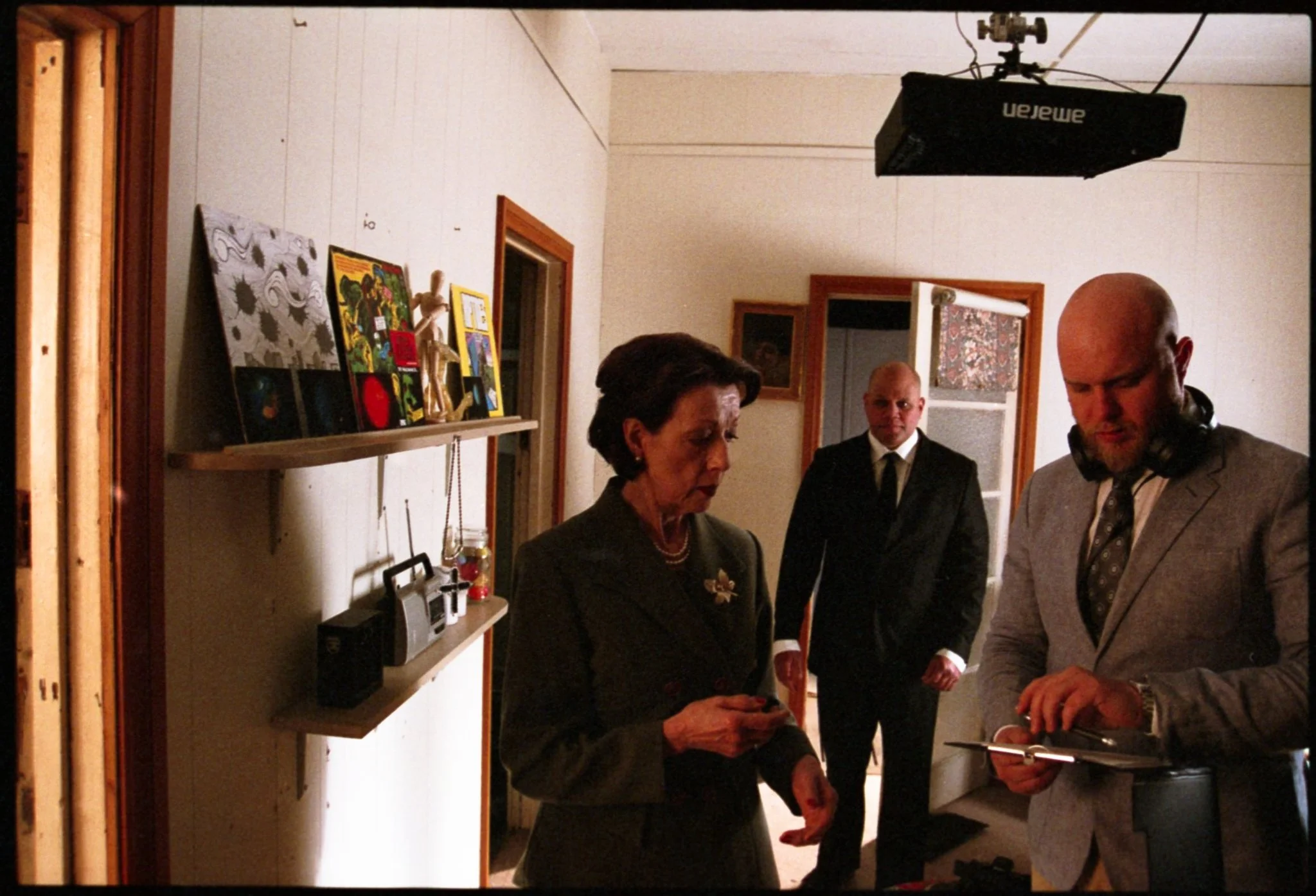
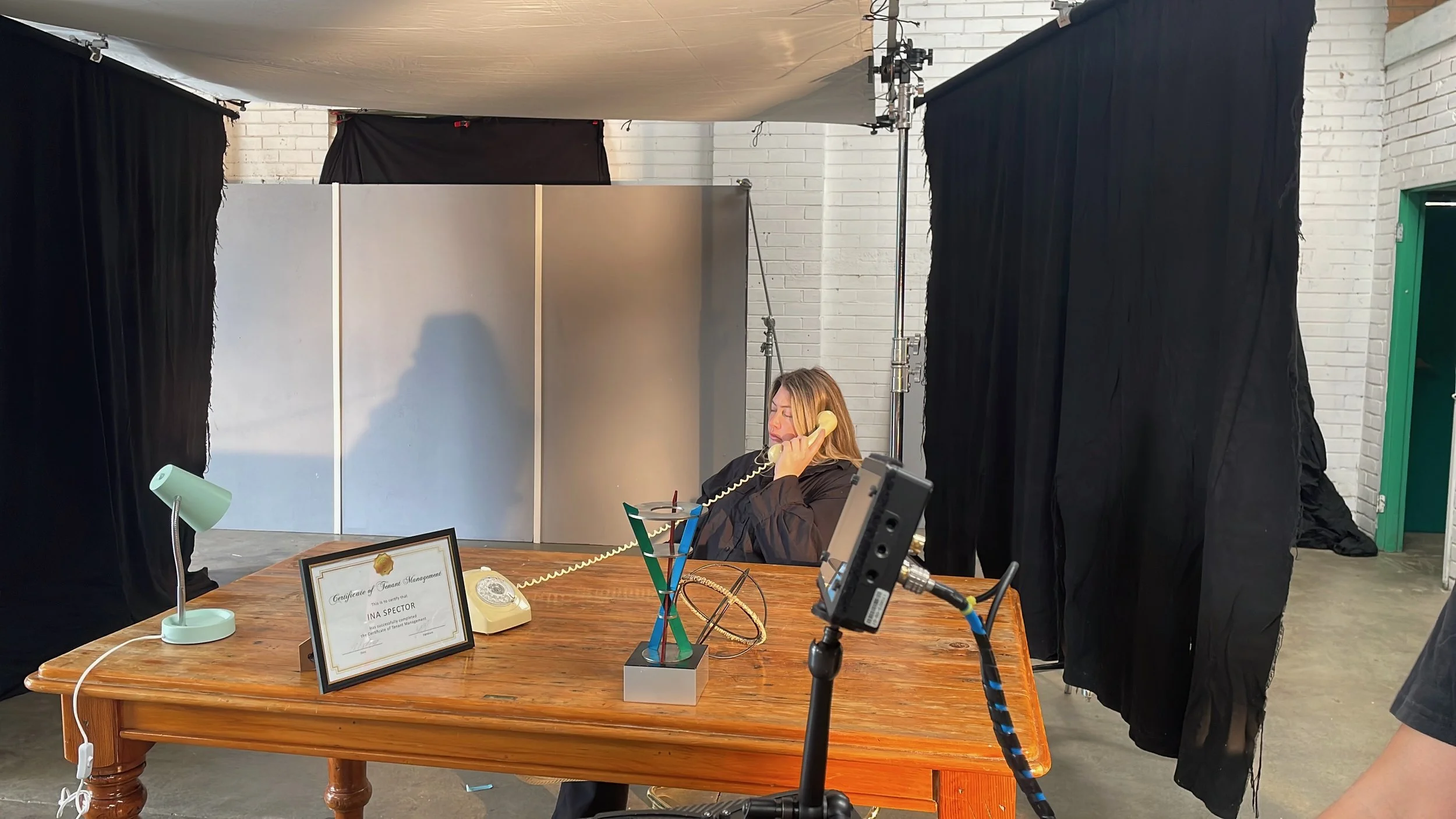
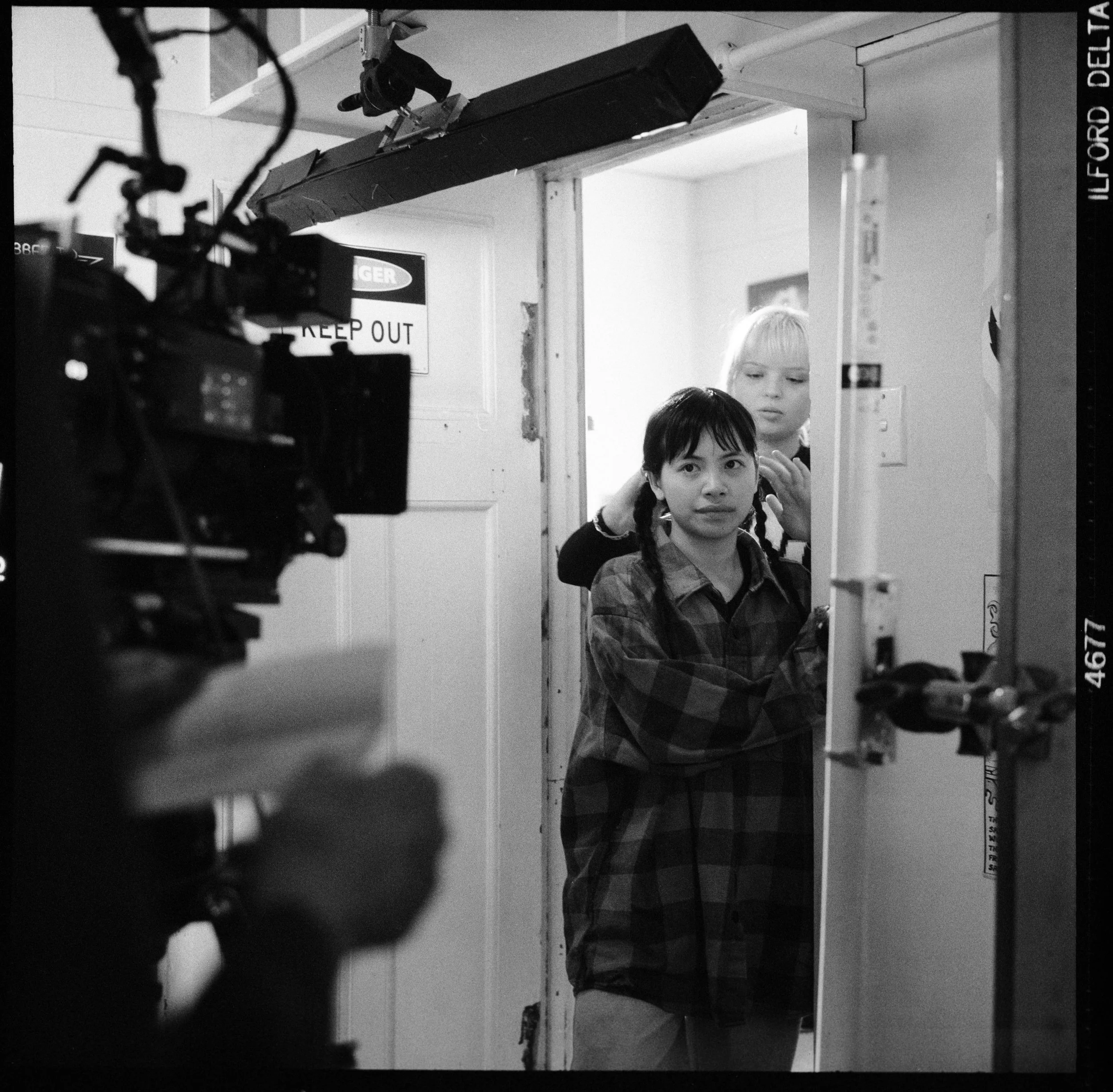
I have to really shout out the whole crew. Simon (J. Walsh) the DP was amazing. I needed to find somebody who'd done a lot with 16mm before [since] I had never shot for any kind of fiction work with it before. Obviously our production designers, and especially Tara Fox who was editor, puppeteer, and animator. She did so many different pieces of it, and there's no way this could have happened without her. There were a lot of conversations between the two of us about how things were going to look. She was a huge component of that. It was a lot of planning.
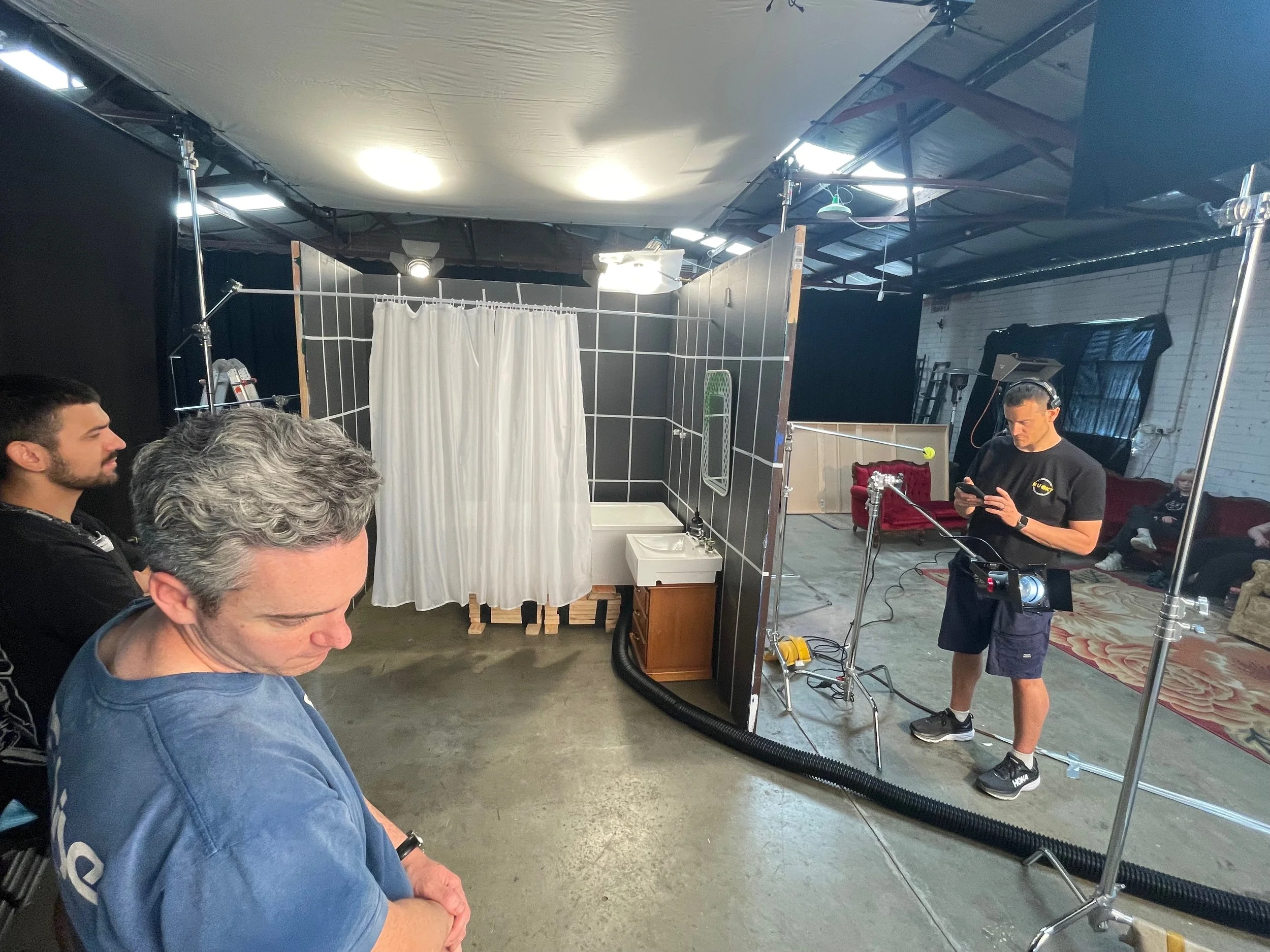
What went into designing the black hole itself?
We knew when the black hole is around objects, it's going to have a gravity well, so we're going to need to have objects that react to that. Most of that was done with strings attached to objects, and we'd have people around the set who would move them. There was a bit of reverse photography; having objects [be] upside down and then flipping [the image]. I'm very proud of that. The table shot of stuff coming off the table is just an upside-down table with a bunch of objects with magnets on the bottom, and we removed the magnets and they fell, and then we flipped it and it looks like they suck up. All the space stuff in the beginning, that's all liquids and paints and dyes. I wanted nothing to feel like it didn't have that kind of tangible presence.
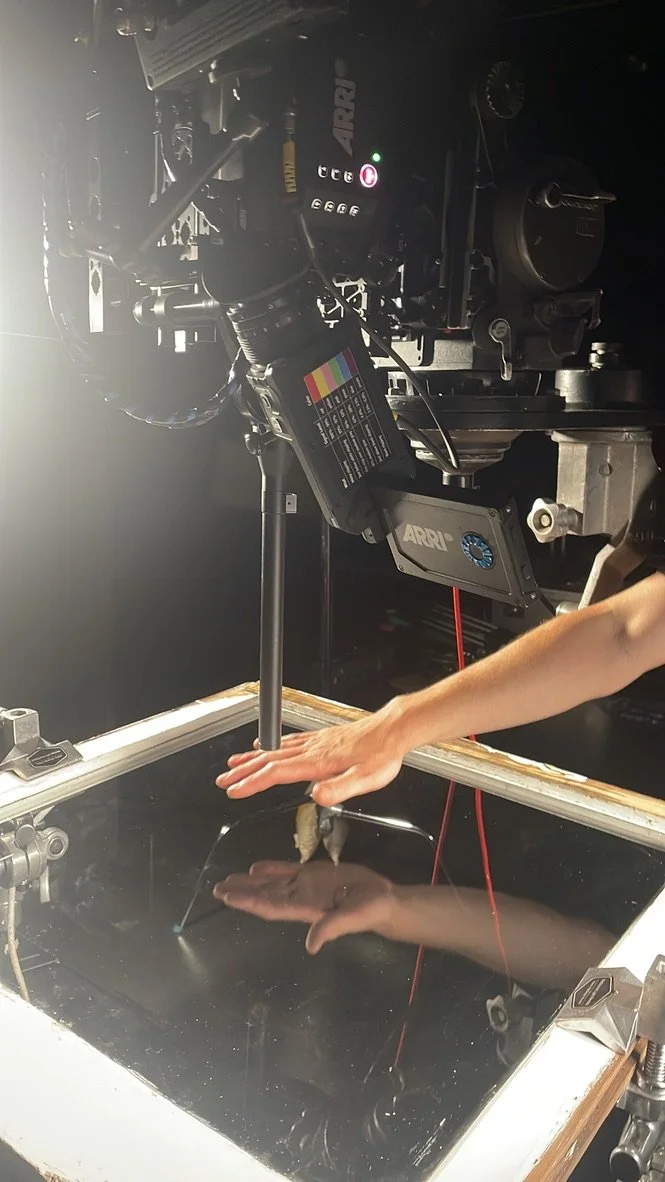
The interesting thing for the black hole is that it actually took a bit for us to figure out what that looked like. There was a lot of back and forth about, “Is this a black hole that has cartoon eyes? What does it look like when it has stuff around it? Are we going full scientifically realistic, with the lensing effect around it?” It wasn’t until we were actually shooting when I started to think more about the rest of the world we've built, how it has this tangibility, and what we know a black hole is abstractly in our own mind. To anybody in the real world, a black hole is a hole in our reality, [but] a black hole in a movie world would be a black hole—a hole in the film itself.
When it comes to the effects, does anything stick out in your mind as being the biggest challenge or headache?
[laughs] What wasn't a giant headache? One of the most stressful ones—and it's such a small shot, which is hilarious—there's a shot of a mound of garbage that's getting sucked up towards the black hole. I think it's literally a second, maybe even less. That was a real headache because it was a whole bunch of strings and wires that had to be attached to different elements. They had to pull in a way that didn't feel like one blob, but different pieces were all moving with their own momentum. It was also the last thing we shot that day. The reset for it, as you might imagine, was incredibly complicated. I had to make a decision about what shot we would do [last]. We had to make an on-the-set decision about, “You can either do this or you can do that, but that's all you get for the amount of time we have left.” I made the commitment to get that stuff on the floor because I said, “No, this really needs to work. We're not getting another opportunity to do something like this.” It took two goes to get it right. My DP Simon was so patient and lovely about it, but by the end, he was holding the camera—we didn't even set it up on a tripod—and saying, "Now just put it on the floor, let's get low, let's just make it happen because this is going to be our last chance to get it.” He did a fantastic job. Tara was the main person who was doing all the wiring for it, and she just busted her guts out making it happen. That's one that really sticks with me because the time was so tense. It's such a small shot in the grand scheme of the movie, but it's one of the pieces that I'm the most proud of.
“There’s a line that can be drawn between a desire for control and an element of fear. I think a lot of my life has been defined by the balance between those two things. I have maybe a stronger-than-usual fear of not knowing things or not knowing how to do something. My solution to that is to put myself in a situation where I’m forced to learn it.”
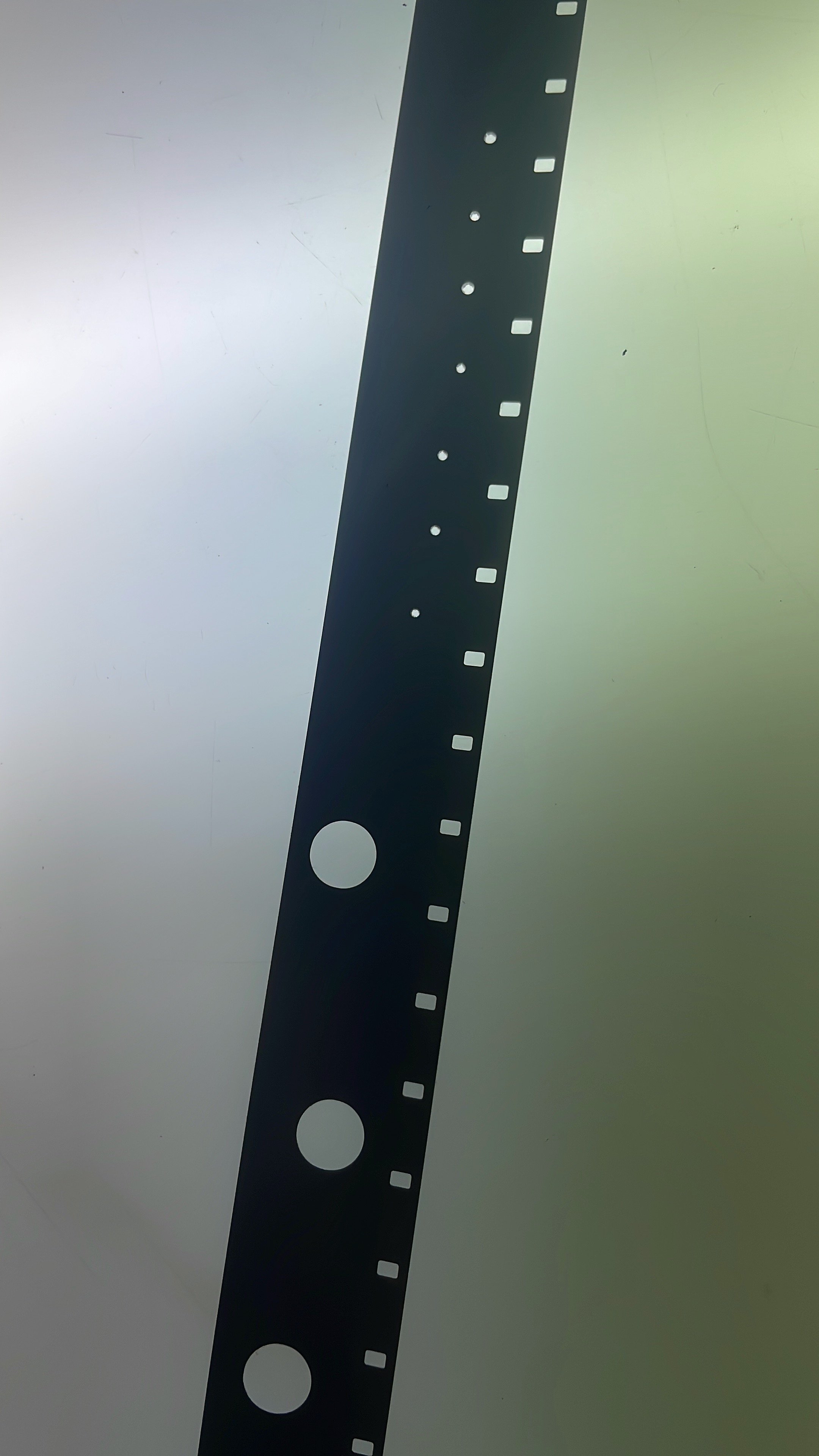
I am somewhat of a control freak over-preparer. I know that's a really rare thing. Most directors aren't like that. I'm being sarcastic. Because I hadn't done a narrative with 16mm before, I took myself on this self-directed crash course by joining this local film collective here in Melbourne. It's an incredible collective called the Artist Film Workshop. I'm still a member of them. I love all the members to bits, they’re fantastic people. It's a great collection of experimental filmmakers and artists, animators… The unifying element is that we have our own little lab that has 16mm cameras, 16mm developers, optical printers, moviolas to hand-edit movies. My approach before I shot anything for this film was to not be intimidated by this format and just get my hands literally dirty. I spent about a year before doing Light Can’t Escape messing around with film, learning how to develop, physically cutting film, taping it together, putting it through, literally feeling it in my hands. That gave me that confidence when we came to the effects, and knowing what it’s going to look like and how it’s going to actually work.
Did you start out as a visual effects artist?
Actually writing is where I came from before anything. When I was a kid, I was doing comic books. I've always been into writing stories. I directed a couple of little things when I was living in Perth. There's a line that can be drawn between a desire for control and an element of fear. I think a lot of my life has been defined by the balance between those two things. I have maybe a stronger-than-usual fear of not knowing things or not knowing how to do something. My solution to that is to put myself in a situation where I'm forced to learn it. I moved to Canada because I couldn’t really make a living in film in Perth, and I started working as a production assistant on TV shows. While I was doing that, I volunteered on every indie shoot I could and accepted whatever role they had. I did everything I had the chance to do. Somebody I worked with ended up switching over to visual effects and asked if I wanted to jump into that. At that point, this was one area of film that to me was like a wizard does it. This was the best way I could learn. After that I ended up doing some indie producing, and then post-COVID I found my way back to directing, but having learned all the things that I'd done in the intervening time.
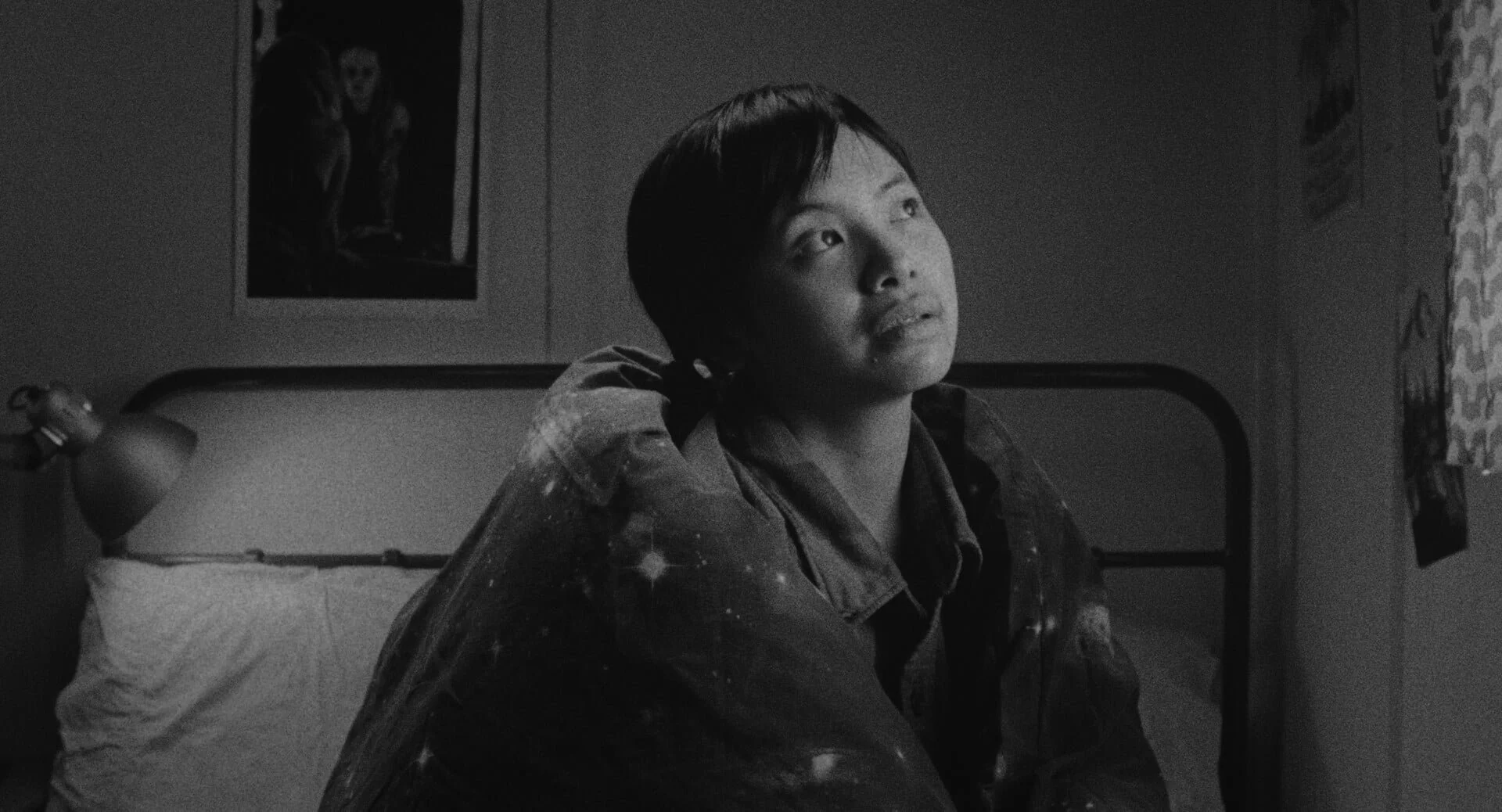
Harriet’s monologue in the middle is so haunting and poignant, and it pays off so incredibly well. What goes into crafting a monologue like this?
Writing a monologue is always very tricky because there's a million ways it can go wrong. It can feel overly constructed. I was very blessed, of course, because Jillian [Nguyen] is such a wonderful actress. She could make a meal of anything. I really wanted to give space and slow things down and let it feel real. I didn't want it to feel like at the beginning she knows that she's going to say something this raw about herself. It’s something that she hasn't really talked about, and in the telling of it she’s almost discovering it again. Like, “I'm just enjoying myself with the black hole on the bed and I'm looking at the moon and it's making me think about it.” For me, that's where—in my life, anyway—real emotional situations come out of. They don’t come out of some big pre-prepared speech. They've almost surprised me a lot of the time. That's how I approached it with Harriet, like it was a discovery.
Leaping back to what we were talking about, I ultimately knew I needed that in there. I needed us to feel that this was a person who also had pain in her life that, as we've talked about before, wasn't a cartoon. She's got her own life, her own wants, her own difficulties, and that's what we all have in our lives. And even in the most insane circumstances, where there's a black hole and an annoying real estate agent is trying to kick you out of your place, you've still got yourself and your problems. I think it's the more honest way to reflect that.
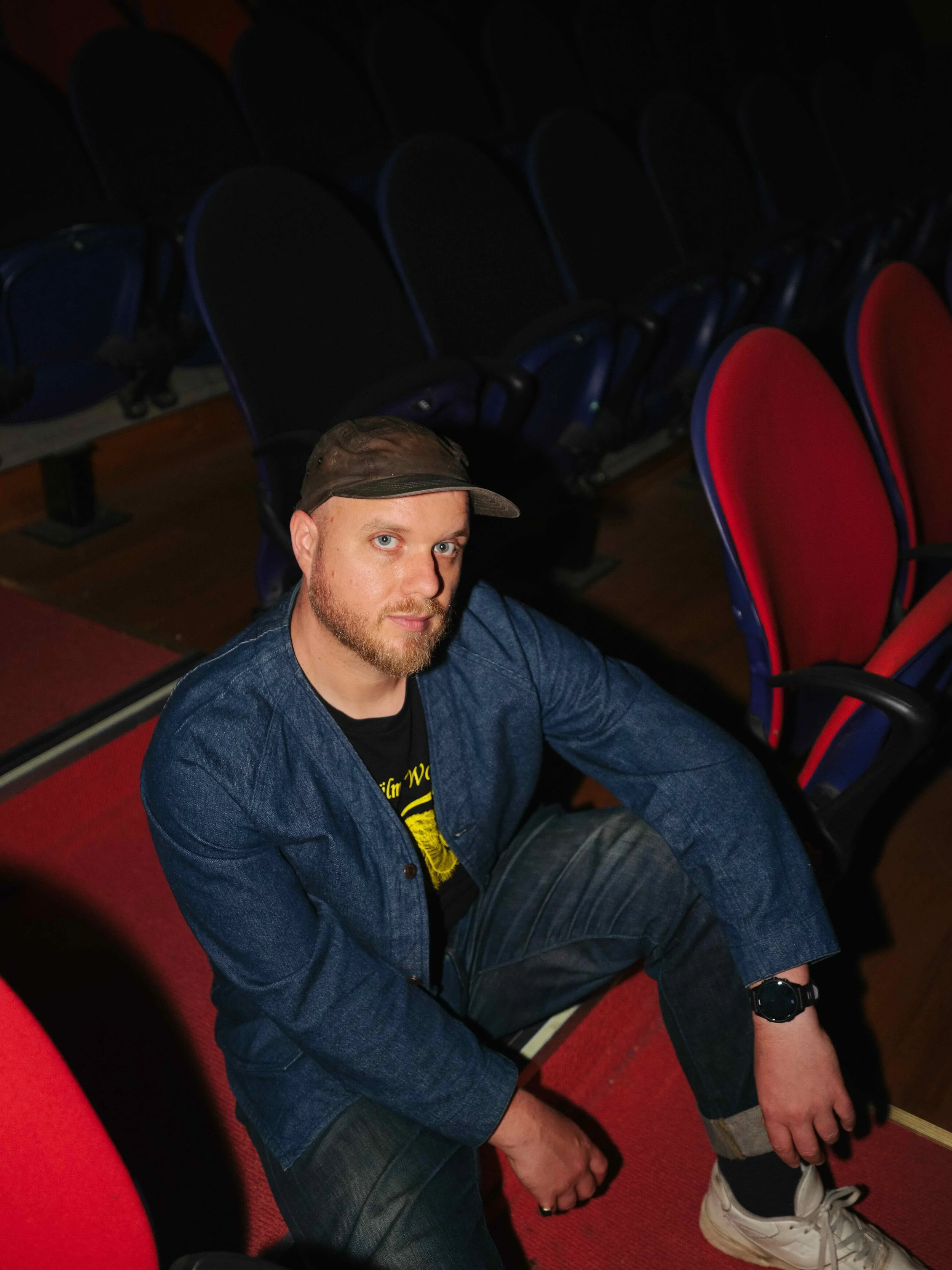
Tim Sharp is a Dutch-Australian filmmaker based in Melbourne, Victoria. He enjoys telling stories about interesting characters encountering the unexpected.