
Lingua Villosa Nigra
directed by Harrison Sloan Gilbertson
USA. 2025. 11 min.
After being diagnosed with a strange condition, The Person (played by nine different actors) spends a day in New York City searching for the cause.
by Jesse Knight
Being alive today is an extreme sport. Finding the motivation to get out of bed in the morning is basically Pilates. Confronting our surroundings—and our surroundings’ surroundings—can be a banana peel slip ‘n slide down a deep, dark well of sludgy despair.
Fortunately, there are filmmakers and artists like Harrison Sloan Gilbertson, an actor from Adelaide, South Australia now residing in New York City, whose directorial debut Lingua Villosa Nigra explores and articulates the profoundly debilitating circumstances facing the globe in a way that reminds us we’re not alone.
By following a protagonist, known as The Person, portrayed by nine different actors, the film exemplifies the world’s inhabitants as a collective body, mind, and—culminating in a sequence of guided meditation in which The Person attempts to purge the weight of the world—consciousness.
In a unique and inventive manner, Gilbertson’s film offers its characters, author, and the audience a means of stark confrontation and momentary release.
I’m always interested when working actors make their directorial debuts—like Paddy Considine’s Tyrannosaur or Tim Roth’s The War Zone, which is almost impossible to watch it’s so bleak and intense—and they make these emotionally, psychologically aggressive, existentially bleak films. I’m curious if you have any insight into why that might be.
Writer/director Harrison Sloan Gilbertson: I think, well, that the life and the career of an actor is existentially bleak most of the time! [laughs] So maybe it's a form of control in trying to release that. Maybe 15 years ago, I was working with an actress and met her boyfriend at the time. He’s this amazing artist named Zach Shields and he does everything. He's a musician, he was an amateur boxer, he's an actor, he's a writer, he's a director. I was 20 at the time and I remember saying, “How do you do so much artistically? I feel like I can only just be an actor.” I'm quite fascinated by spirituality, very agnostically, I'm just curious about it all… And he said, “Do you find learning about all the different spiritualities better support the one theory when it comes to spirituality?” And I said, “Yeah,” and he said, “Well, it's the same with the arts. If you look at writing, even if you never sell a script, you'll understand text better as an actor. If you direct, you'll understand acting better.” I thought that was really cool. But I don't think it was until maybe a year or two ago that that really stuck. And then interestingly enough this morning I saw a video of John Lithgow talking about that, where he's asked of advice for actors and he said, “Whatever you do, the best thing you can do, is have something that's not acting. Because if you can be creating, if you can regard yourself as a creator or an artist rather than a single ideology, then you're never at the whims of that depression or angst of waiting.” That's a roundabout way of answering it. I feel the answer for me is you should just refer to yourself as a creator and then you're creating, be that in front or behind the camera, or on a keyboard, a guitar, or whatever.
What inspired Lingua and why was it important for you to make it for your directorial debut?
I got flown out to LA to do a film that ultimately fell through in the end. I got there and it was like, “They're doing your wardrobe fitting tomorrow.” And then tomorrow turned into the weekend, and then it turned into a week, and I was just stuck in this hotel room. I've directed a couple of music videos for friends, and I was looking for something that was more of a narrative short. I was feeling the panic of waiting in that room, looking at the world around me going, “Man, it's getting darker and I don't really understand what's going on.” Then one day I read an article about this person who was found dead while I was waiting on this job. They were really mentally unwell, and part of their condition was they had linga villosa nigra.
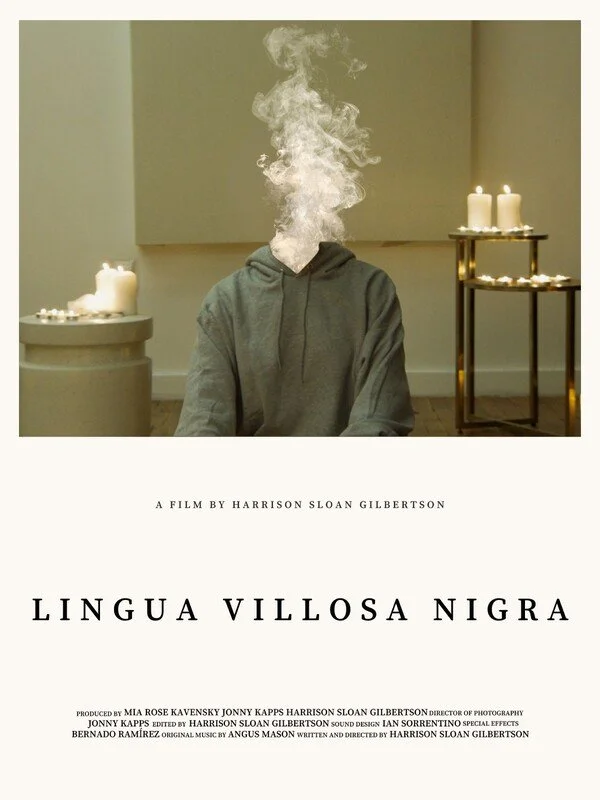
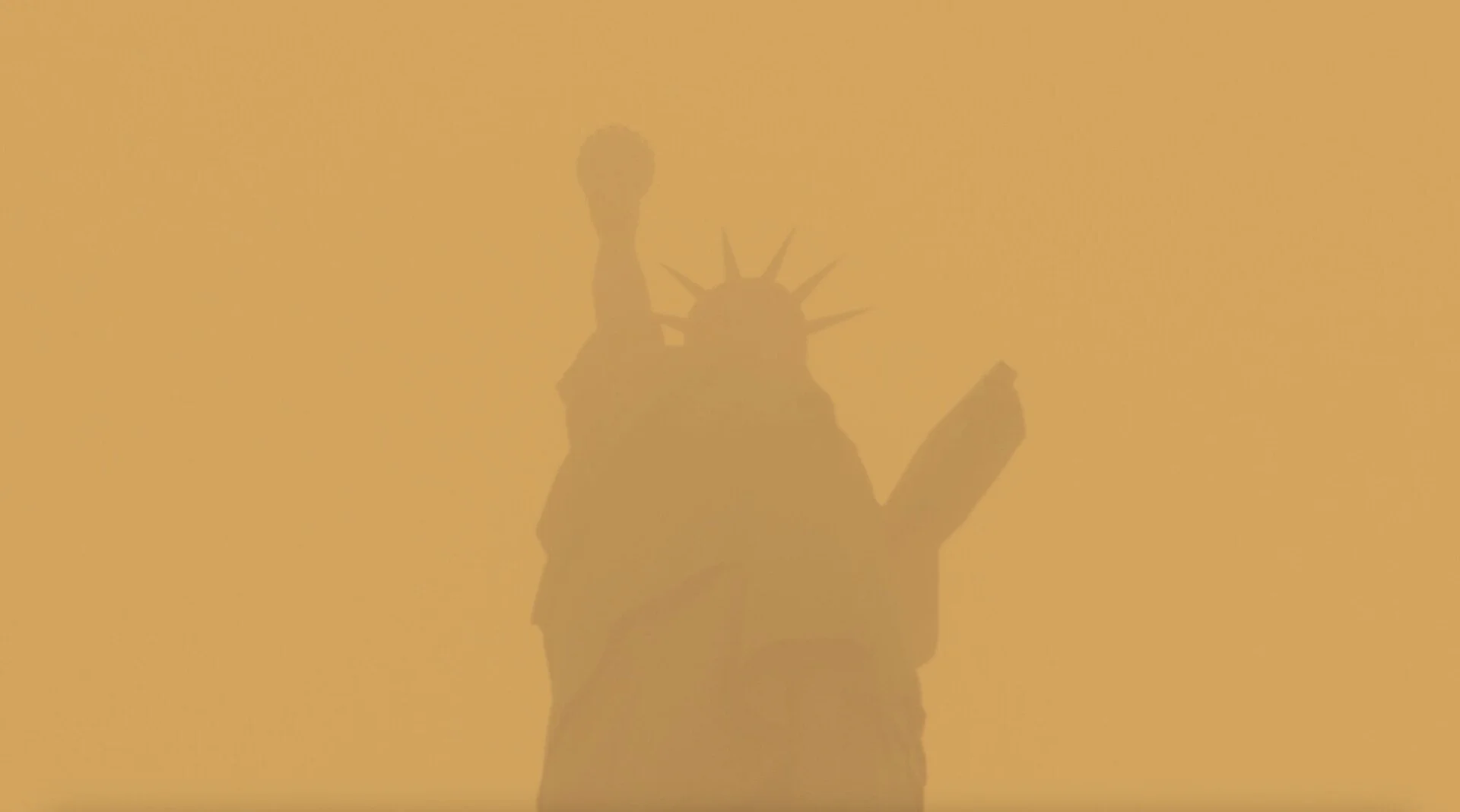
I’d never heard of that. I Googled it and saw the picture of the black, hairy tongue. The film came as a very quick idea. It was a real lightning feeling. I thought, "What if there's this person who's been diagnosed with this? They don't know how they've got it. And they go to this meditation room and we see them exhale this black smoke of all the imagery of the world that we're holding in in these existential times.” It was really quite quick and surprising how fast. I think I wrote it in about 20 minutes. It was probably a year later that I filmed it and the drafts didn't change all that much. I don't say that obnoxiously or anything, I say it with a lot of gratitude. It just felt like all those years of thinking and looking and playing to find an idea… and then one day it's just like, boom, I think I found the story. Then it was finding people to help me make it because when you haven't directed something, obviously you need to get the money and you need to get the right producers to help you pull it off. I had wonderful support from Mia (Rose Kavensky) and Jonny (Kapps) who were my producers on it. And a lot of family, friends, and colleagues I met through acting who helped finance it. I think the biggest struggle was that I kind of wished I wrote, like, two exes meeting up at a bar to talk about who has the dog, because I was kind of giving myself a disservice of trying to pull off something not as straightforward as it could have been for my first short.
How do you know when a film like this is done? Because you could easily keep exploring other characters, other situations, load it up with more examples of existential reckoning.
Man, that’s the hardest thing with this film to this day. I had to put it to bed at some point. The hardest thing was editing with this question, especially the final montage of what this person is taking in that's happening in the world, and the news around them, and as the world just kept getting bleaker I kept thinking, “I got to add that in.” The relevancy of the global trauma we're going through, it feels like every week there's a new extremity. So that was honestly one of the hardest things, knowing when to stop, because I'd think I was done and then something else would happen in the news where I would stop and think, “I should put that in there.” I hope it still has potency two years later because sadly there's a lot more I could add into that montage.
“It’s a complex story, but it’s simple, a simple story, and I should present it simply because I think the impact will come through stronger.”
It does. It still has major impact. Actually watching it now and being able to think about what’s not in the montage and realizing it’s because it hadn’t happened yet just underlines its relevancy in a way.
It's hard, man. And I don't say that lightly. That's obviously a sad thing to say. That was the hardest thing about, per your question, when It was intense, mate. Like I said, I did a couple of music videos where I kind of taught myself how to edit a little, and then the intention was to get an editor, someone with more training, but it was a budgetary issue. So I thought, I reckon I can do this, and set myself that task. But I've got the nine-to-five here and I was auditioning as an actor, too. So for about seven months I didn't sleep a lot. I was staying up trying to find the footage and then cutting it in and changing it. Up until the moment of the meditation, I was trying to capture simplicity and performance. There are actors in it who are trained and professionals, but there are quite a few—actually about four or five of the people are from the studio I work at - that aren’t professionals. I just thought they had really amazing faces. And I think there was a way to get a natural anxiety or fear about being in front of the camera the first time by not hiring only professional actors.
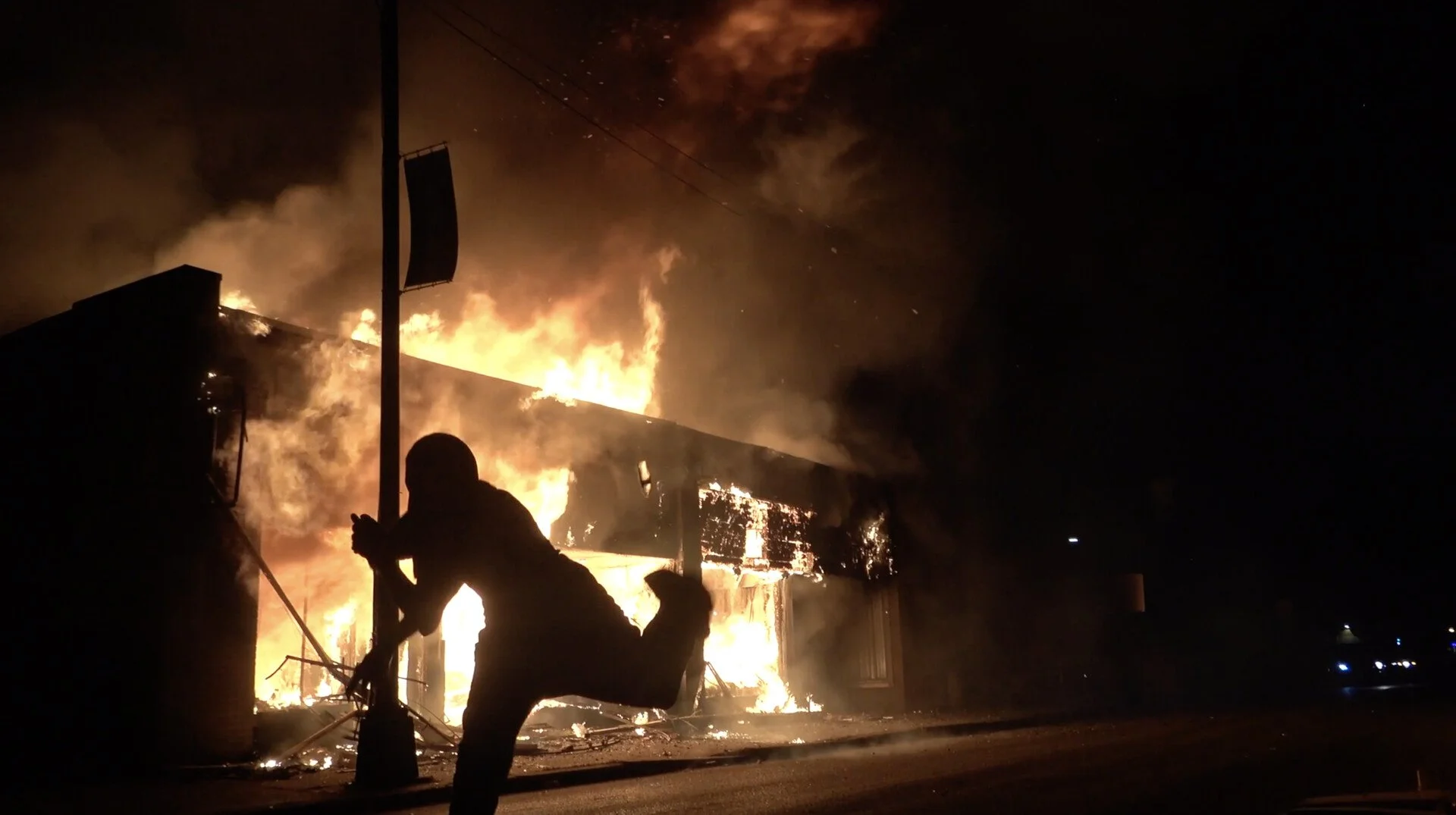
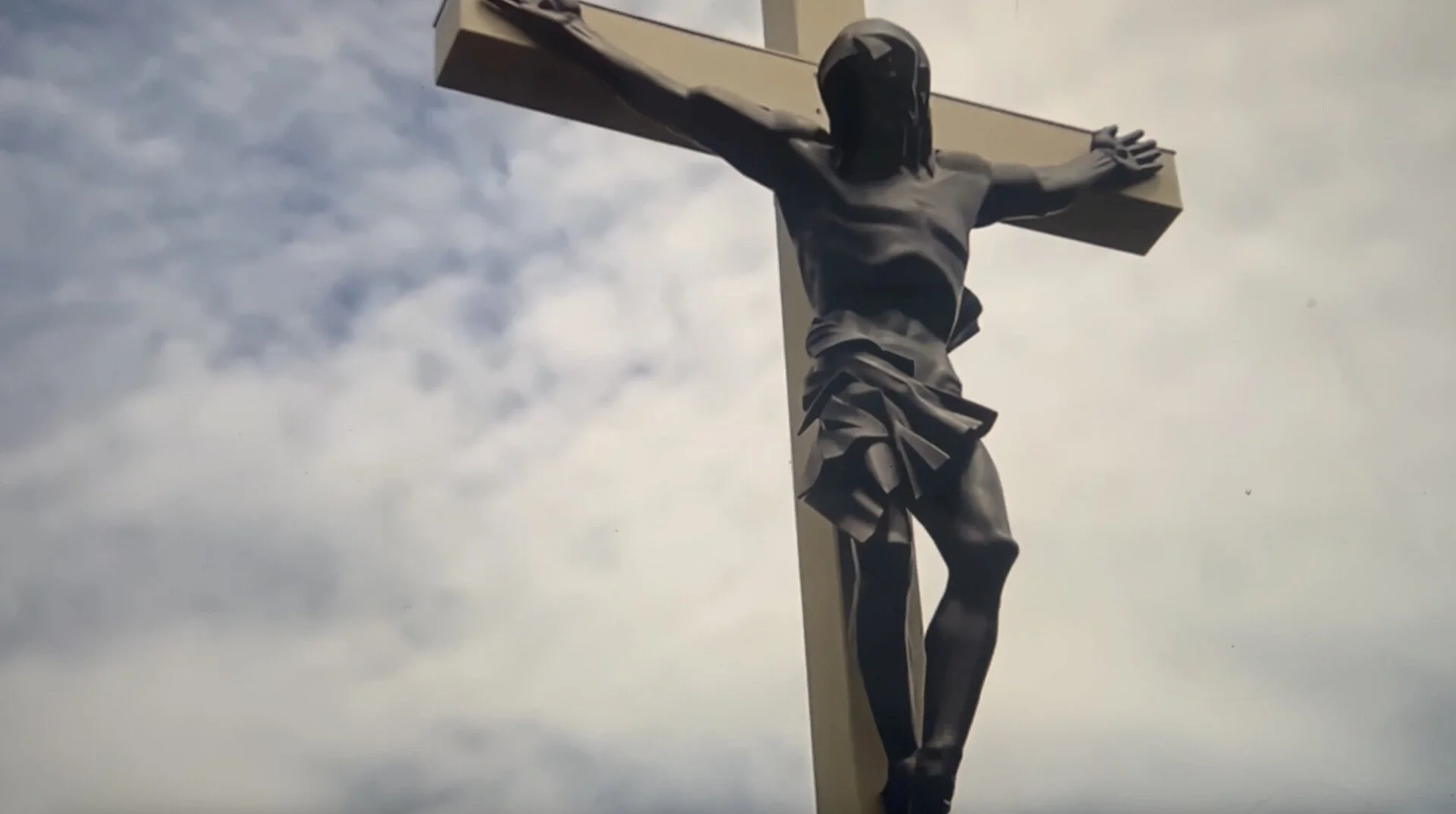
So that first bit was just finding the flow and a pace to it that kept you engaged, but was subtly boiling to a point. Reflecting on the idea of anxiety when you're feeling it is very internal. I didn't want everyone to deliver performances so much as just feel the subtlety, because when we do feel these things we are just sitting on the train looking at our feet going, “Fuck.” So that part was just getting the beats through, and then when the music comes in and we're seeing this footage, I think the hardest thing about doing that was trying not to, as the wisest mentors in filmmaking say, if you're doing something political, you don't want to say, “This is my opinion of what's happening in Gaza,” for example, “this is my opinion of what's happening with religion in America” so much as just showing the things that are happening. And that was more of a tricky thing to figure out than I thought because it's really hard not to lean into what you want to show as a person that affects you or upsets you, or something that you feel is wrong or needs to be changed, but just to have a step back and present it as fact. “This is happening. I'm not saying what I feel about it, but this is happening right now.” And I presume everyone else is aware of it, and whether they're taking private action or whether they're being vocal about it or whether they're turning away from it, it is happening. And that was the trickiest part of editing, finding all that footage, but then trying to… There's a moment in that footage where I've got people dancing in certain countries that I think are probably at the center of the nuclear threat, for example, that we're all feeling. And to not just have a picture of that president or leader, but trying to find footage that would present a sensation. That's why I've got those bits where people are kind of celebrating because I thought it was a nice juxtaposition to what could happen, or hopefully won't happen, with that.
It occurred to me while you were talking that someone could watch this and think that this is how the characters are meditating to relax, thinking of world tragedies.
I practice transcendental meditation, and that is definitely part of why that's in the narrative. So I guess having that footage was more in my experience of meditating, as you're doing that practice to try and let go of those thoughts. You're bringing them up simultaneously because there's a reason you need to meditate, be it your anxiety or overactive mind or whatever. So, per the ending where this release happens, of the smoke, which is the cause of the lingua villosa nigra condition, I thought I had to find a way to show it internally and externally coming out. I played with ideas of how to do that and many of them I just thought wouldn't work or they'd be a little goofy. Ultimately, I decided this is a simple story with complex themes. So when I started editing my thought was, “Just be as simple as you can be with this.”
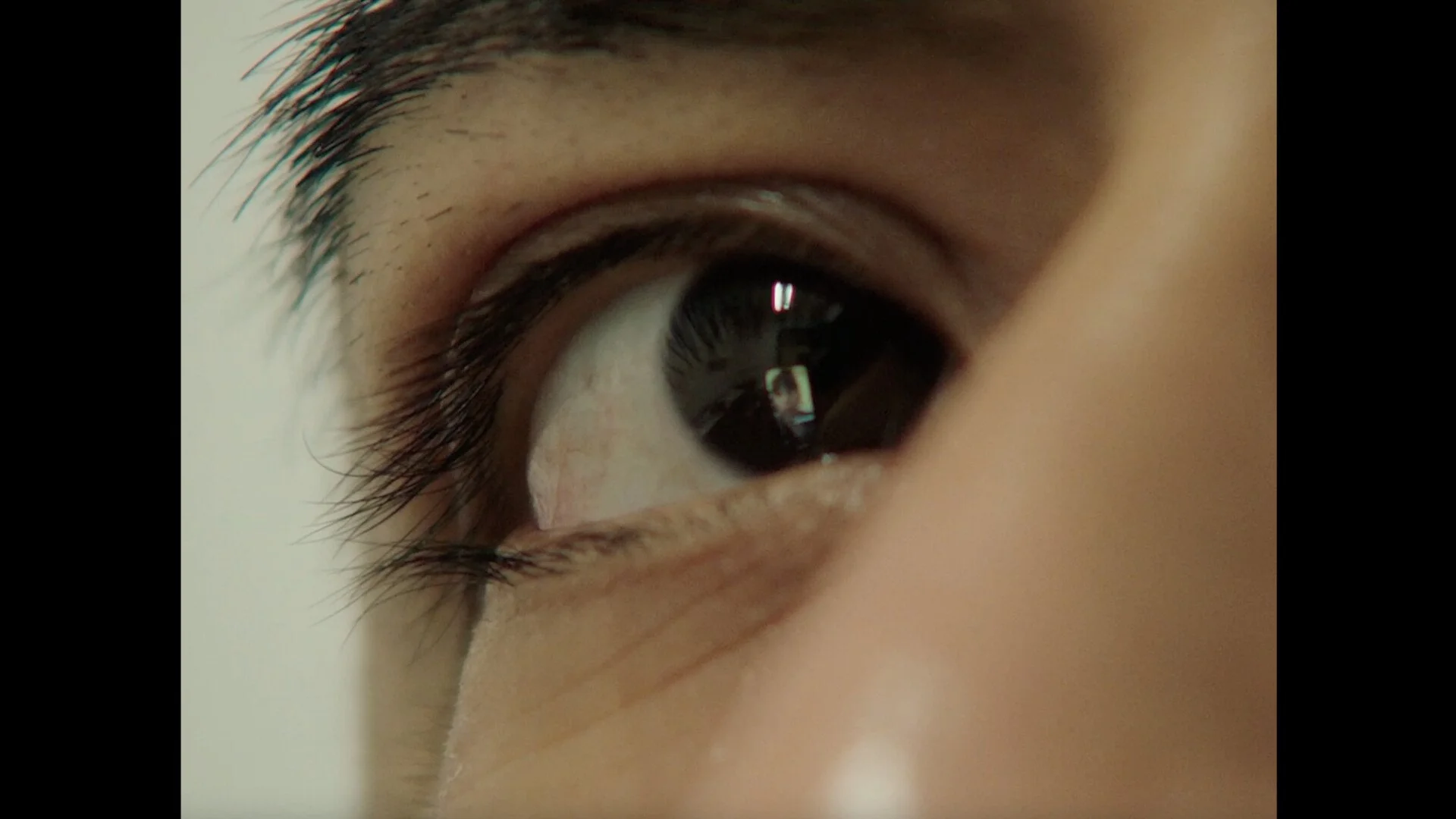
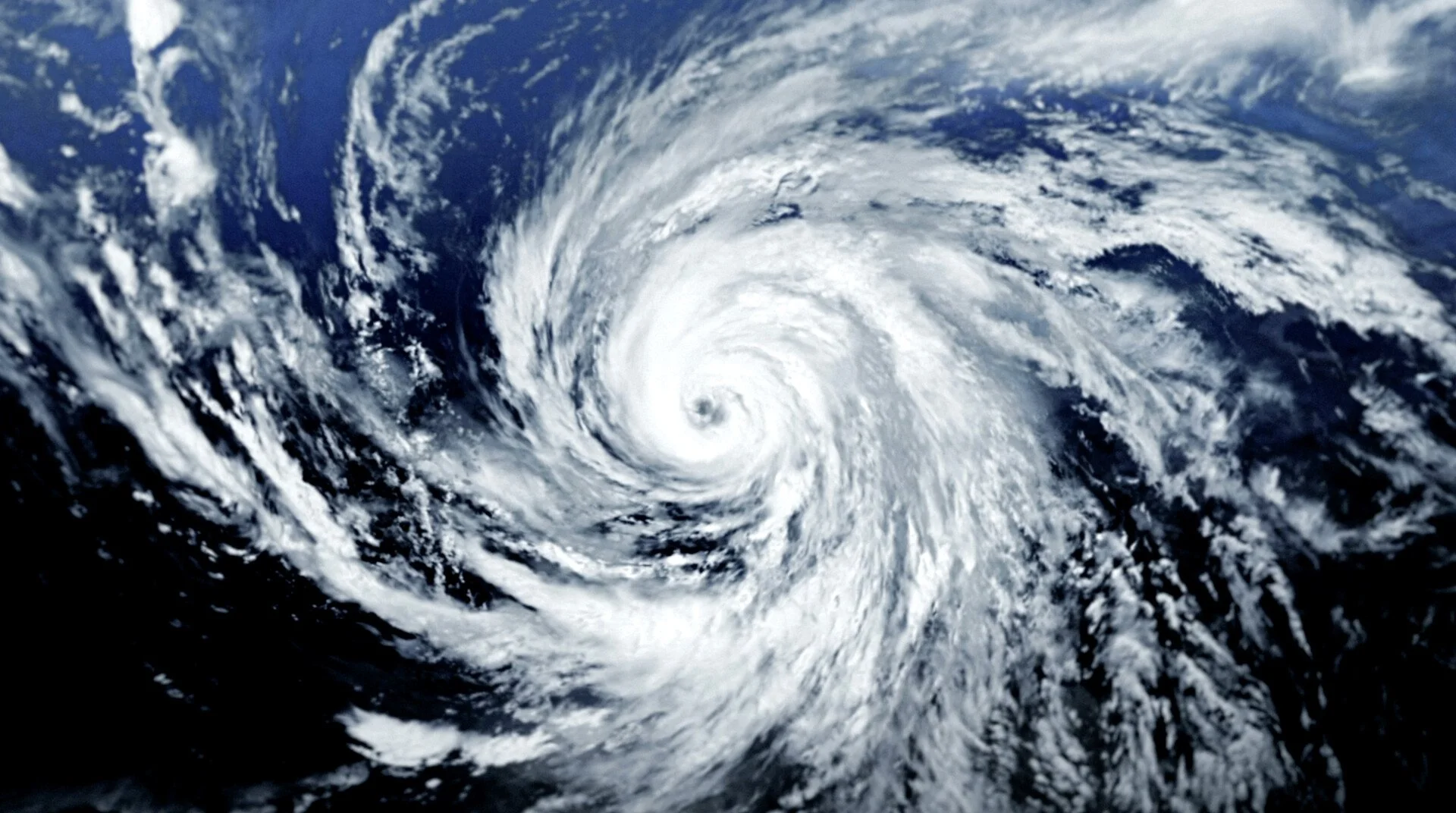
There's a darling I had to kill, where there's a guy walking across the street just before the doctor's office, and I had this great shot that Jonny, our cinematographer, got where he walked past the camera and we pushed into this billow of steam that was coming out from the subway system, and it was obviously a foreshadowing kind of imagery of what was going to come later. I kept it in for ages, and I loved it, but I had to ask myself, “Is this telling your story?” Because it looks great, but I don't think it's keeping with the pace and story that this guy's just trying to get to the doctor's office in this moment. Through all that I realized it's a complex story, but it's simple, a simple story, and I should present it simply because I think the impact will come through stronger.
It shows tremendous restraint to keep something like that out.
That was a two-month period of trying to keep it in, for me. I had a friend send me a beautiful email saying that you've got to be prepared for the birth and death cycle of making a film, which is that the idea will be born and then it will die when you write it. And then it'll be born when you send it off to the first person. It will die when you get your first notes… and this cycle will repeat until you are decidedly finished with it. I kept that in mind the whole way through.
The score is really haunting and evocative. Talk about working with Angus (Manson).
Angus and I met when we were aged nine at school in Adelaide, and he moved to New York too. He’s an incredible jazz drummer and musician in general. He’s an amazing composer, but he hadn't really composed anything as a score before, but I knew he was curious about exploring that field. I sent some music to him as reference and he said, "I'll have something for you by Friday." He sent something through and it was a little darker and didn't feel right. I gave him a loose amount of notes of what I wanted. Two days later, he sent me that piece of music you hear, done. He just got it. It was one of the easiest parts of the whole process and a testament to his talent. I think he captured everything that we had captured visually. I was so impressed by how quickly he understood the task and what he presented. It's wild to experience and share something like this with your friend that you met in the schoolyard when you were nine years old.
Is it one piece of music or is it fragments?
It's one piece. As I said, Angus didn't need to watch it twice to know what to compose. He speaks music like a language, he just gets it so well. I'm very grateful to him for that. I really do think that's one of the strongest parts of the film.
“I had a friend send me a beautiful email saying that you’ve got to be prepared for the birth and death cycle of making a film, which is that the idea will be born and then it will die when you write it. And then it’ll be born when you send it off to the first person. It will die when you get your first notes… and this cycle will repeat until you are decidedly finished with it. I kept that in mind the whole way through.”
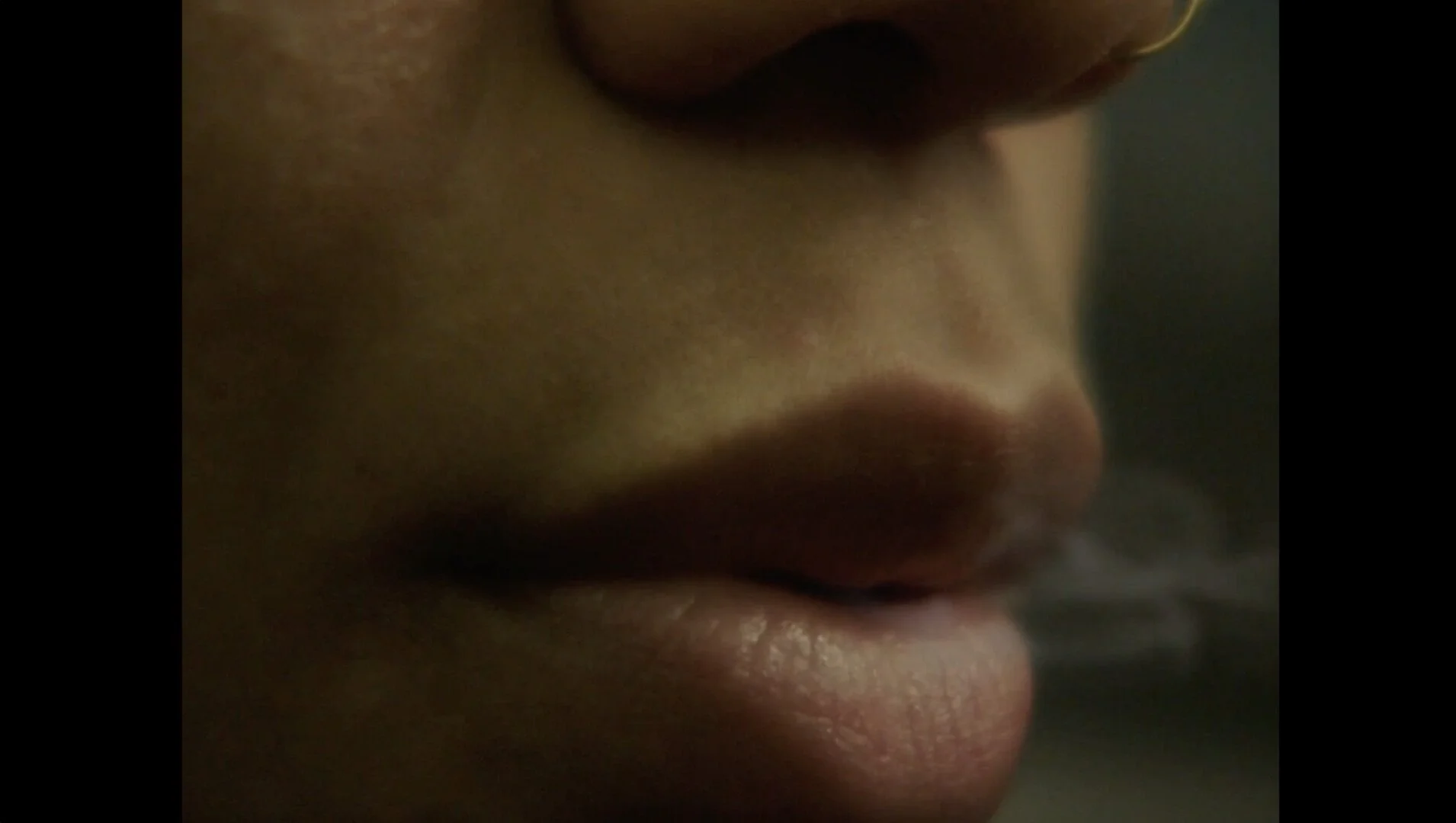
Whose mouth is it in the exhale sequence? How did you achieve that shot?
That happened in two ways. That was the hardest part to get right because I was looking through all of this footage of the world and all these things that are happening, and knew we had to do get this shot right to the best of our ability budget wise. The smoke coming up from the lungs was bought for use off one of those sites where you pay for footage. It's a medical examination. Bernardo (Ramirez), our special effects artist, added the smoke and the black to make the ‘black hairy tongue’. That's how we did that part. And then on the day with Janiva (Taupule), who's sort of the main version of The Person (the film begins with her and ends with her) we just had her hit a vape real quick and blow out the smoke so the two would tie together. But man, I really didn't want to use AI—though that may have been easier and cleaner—just for my personal beliefs, and also given what I was making, it seemed like to use something so existential to so many careers would have been very much against the point. So that was a challenge to find that because you got to get really creative when you've got such financial restraint, and hope you make it look good.
What was the idea behind having multiple actors play one character, or collective body? Why was that important?
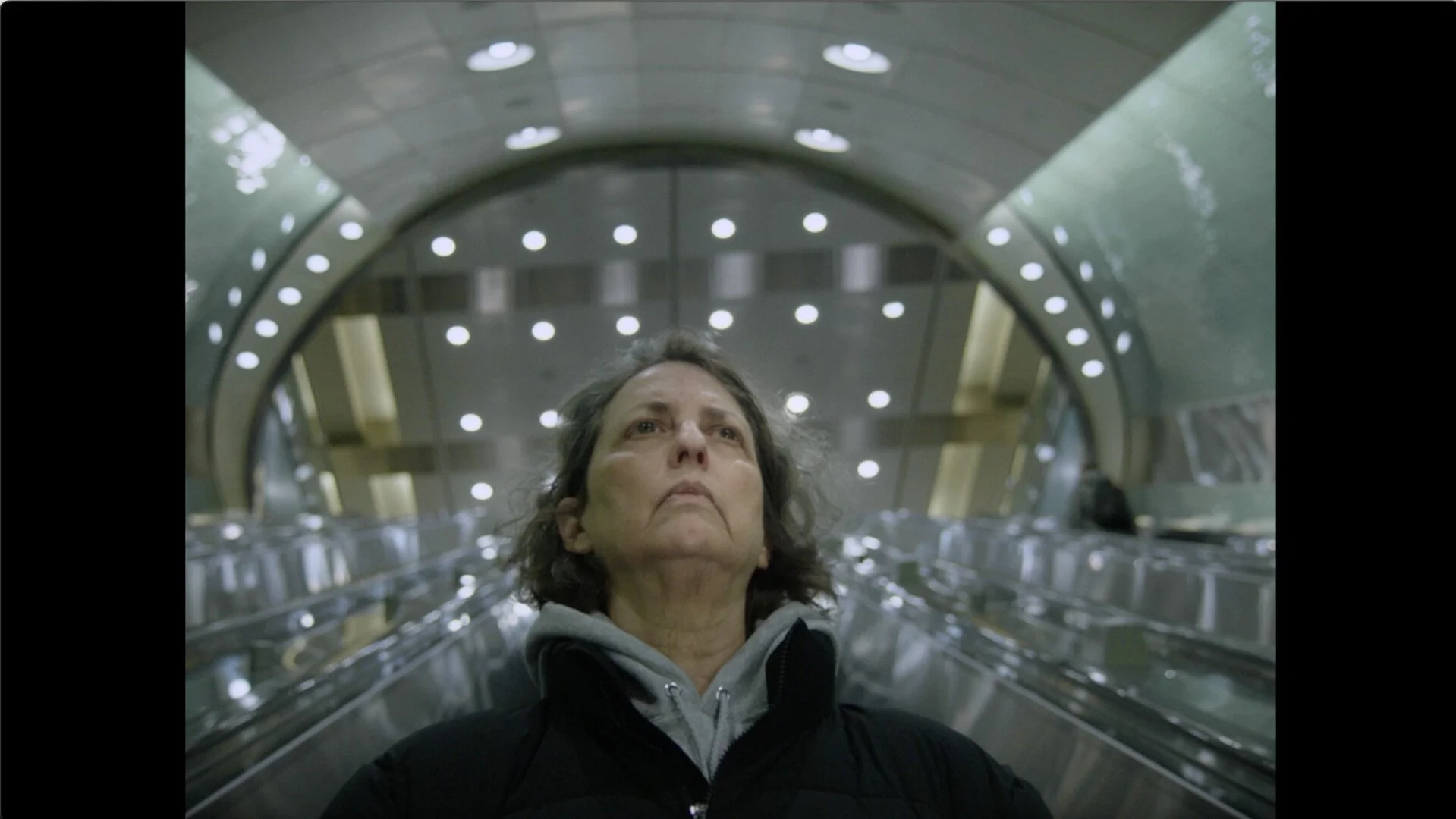
In the first draft it was just one person, and then as I was sitting with the idea more and more—you dance with all these thoughts—I realized everyone's feeling the current state of the world. The reality is that everyone's experiencing this current state of our collective humanity. And there are people that aren't paying it mind. And then there are people who are out there volunteering and marching for a better future. And there are people who are on social media saying, “Donate here,” that maybe are or are not donating the money themselves… Everyone's dealing with it in their own ways. So I realized that it had to be multiple people. And then with that, it obviously had to be not just multiple people, but people from different walks of life. And so we had, for example, the wonderful Sean (McGowan) who's crossing the bridge, who has Down Syndrome, and is a brilliant actor. He works in a theater group here in NYC with adults with disabilities, and I've seen some of his shows subsequently and he and that group are fantastic. My boss, [artist] Sarah Oliphant, is the woman on the escalator who is older in her years and thinking about all the things the film talks about with her life’s wisdom. Then obviously people of different racial backgrounds and ages. Ashley (Alcaron) is a young girl that goes to the studio on the weekends sometimes when her dad's working, and Sarah looks after her, and she was brilliant. I think one of my favorite parts in the film is when [Ashley]’s in the doctor's room. She was so terrified because there was a camera on her. She's a kid, and she really, in that middle part of the film, brings that feeling of anxiety. So that was the idea. This should be everyone. And I had fears of, will people pick that up? With the jacket and the hoodie being the only identifier, that they're all meant to be the same person, would I screw it up if people don't get it? But so far everyone's understood that part, which is good. I just wanted to make sure that it was inclusive and showed that everyone, no matter their background, is aware and contemplative of how bizarre this chapter in human history is. Because I think everyone is.
Because this movie is born out of so much existential anxiety and dread, having made it and gone through the life and death cycle of this movie, how was it cathartic for you?
There's a few aspects to it. So far everyone that's watched it that has let me know their thoughts on it felt like it captured something that they were feeling. So I think as a human being, outside of making this as an art project, to know that people are feeling the same… Sometimes you can feel alone in it, which again I think is reflective of why I had so many people playing one character. The idea of meditation is that it's shared consciousness, and so to feel people respond to it in that way and say, “It's something that I feel, I feel that suffocation when I look at the news and the hopelessness.” I think art is always releasing something. And I do feel the release with this one.
I've got an idea of doing three films based on the ideas of Latin medical terms in the title around the human condition in these times now.
What's the fascination with medical ailments? Is that a surprising development for you or is that something you've always been interested in?
I love his films, but I quite like the creative philosophy of David Lynch and his idea of “catching the big fish” and just letting things go. Like I said, Lingua Villosa Nigra came because I'd never heard of it. I'd read about this individual who passed from it, or it was part of the condition of their passing, and that led to this… I finished it and then, I don't even know where I was, probably the subway, and just thought, “Oh wouldn't that be cool to do two other films [with medical ailments as titles]. I was having a little Google and there's pericarditis, which is an inflammation of the heart lining. I was thinking it would be fun to play with something around there. I got a few ideas I'm dancing with and and just seeing if there is a little trilogy of these films that I could explore because, as you said, this dark time in humanity seems continuous right now.
What you're doing is creating a very difficult way to search for your films, because if you search by title you get hit with all these images of the actual conditions, which are not that pleasant.
No.
It's not what you're expecting, at least.
Well, that was another thing with the film that was a big debate inside myself, was how much do we show of lingua villosa nigra as a condition for context. The Doctor mentions it for context, but how much do we show it? That was a hard thing to decide on. But I thought it was better just to have that little brief moment where the guy's walking and he's got his phone out and the audience just sees it for a moment… I thought, “People can Google it and find out for themselves.”
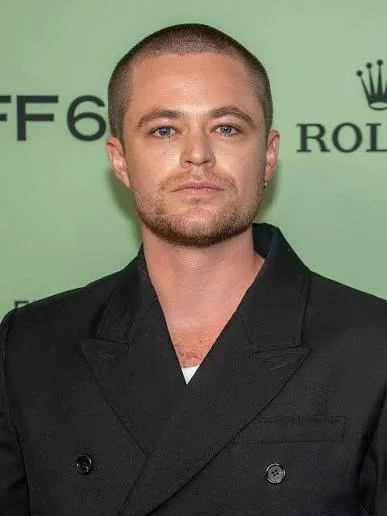
Harrison Sloan Gilbertson is an actor known for his work in Christopher Nolan’s OPPENHEIMER (2023), IN THE TALL GRASS (2019), UPGRADE (2018), and the Bruce Springsteen biopic DELIVER ME FROM NOWHERE (2025) alongside Jeremy Allen White. LINGUA VILLOSA NIGRA is his directorial debut.