
Little One
directed by Lindsay Carpenter
USA. 2024. 9 min.
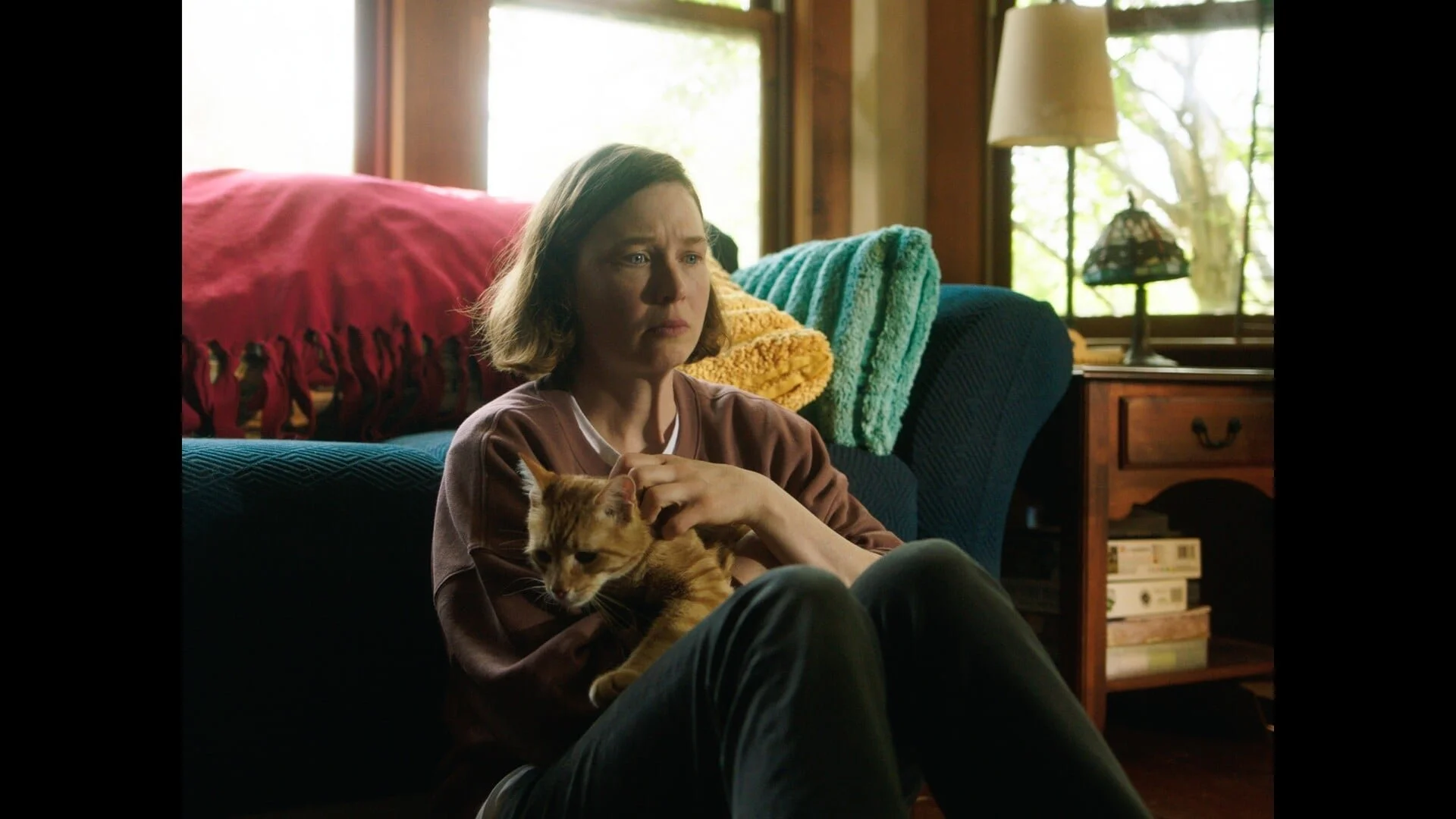
A cat turns into a woman and becomes the object of her owner’s toxic fixation.
by Jesse Knight
It’s strange sharing space, a home, a life with another living creature. Fulfilling demands for attention throughout the day. Sleeping beside them. Accompanying them to doctor visits. Making sure they’re fed. Comfortable. Happy. Alive.
Even stranger that the above can easily apply to human relationships, too. Not just pets.
It’s easy to fantasize what our pets might say if they could speak, if we could truly understand what they were thinking, what they want or need, or—most dangerously—what they really think of us.
With her debut short film, writer/director Lindsay Carpenter makes a case for never knowing. Projecting onto our pets is way healthier than projecting onto our humans. Sometimes, the more we project onto humans, the further we push them away. But with pets it’s the opposite. It may be what keeps us close.
What initially inspired Little One, and why was it important for you to make it for your first film?
Writer/director Lindsay Carpenter: It's funny to phrase it that way because this was not the film I pitched [producers] Erica [Pappas] and Jake [Silbermann] at the start. I got this opportunity over the course of a single week. I hadn't seen Erica in many years. She had been part of this company, The Balcony, which did theatre during COVID. It did workshops online and they ended up workshopping maybe three of my plays. Erica was involved in all of them. Then we reconnected in December 2023. We had coffee and [Pappas] was just about to start a production company, and they wanted to do a short film. At The Balcony, we had workshopped a play that someone else had thought could make a good short, so I said, “Let's do the camping play,” but during that same week I met with a theatre director who wanted to do that play as a play. Suddenly, after years, everyone's interested in doing this one thing. Another friend said, “What about the cat thing?” because I had been working on that for two years. I wrote an entirely rom-com version of Little One in grad school, and then that became a horror feature, and then—because of Erica—the short. I had three or four hundred pages of different drafts that I was starting from. So at the start of the week I pitched Erica one thing, and by the end of the week we’d settled on Little One, with plans to shoot it four months later. The biggest thing for me as I approached the short was: how do you start with a rom-com and turn it into horror? That was much more important to me than the rest of the plot. Because I had written the rom-com feature in its entirety, and people kept saying, “This is so creepy.” I knew when I started to turn it into horror that I had something creepy there.
Did you not realize it was creepy until people said it was?
No, not really. Because my husband and I talk to my cat a lot. We'll both insert her into the conversation. She has a lexicon. Like she uses the word “actually” in a very specific way. And the word “uncouth.” She thinks a lot of things are uncouth, so she started using the word “couth” for things she likes. It's this whole language and tone. When I wrote the rom-com, she just spoke in that way. It was very easy for me to write the way the cat sounded. But then, especially with the short, suddenly the way she spoke changed. I remember getting the note from one of the producers saying that [since] she's so new to being human, she should say less. She became creepier in that draft because she's saying a lot less. But the cat isn't the creepy part, to me, in the short. The interaction between her and the owner is what's creepy. Treating someone like a cat is creepy.
“I like to tell small, intimate stories in big worlds or genres. It’s much easier for me to tell those smaller stories in this other world. When I read stories set in modern day, sometimes it feels too close. So you’re focused on the wrong things. If I’ve created the whole world, I can tell you exactly what to focus on.”
What was the process, then, of switching up genres so dramatically? And when did the relationship allegory become part of it?
I'd written the rom-com in one class. It was my second semester in grad school. The next semester I was taking a low-budget class and you had to come in with an idea and turn it into a low-budget film. I had no plans for that class. I was sitting there the day before the first class thinking this could be such a cheap idea. People kept saying, "It's so creepy." It's funny because I don't actually remember making a decision to make it about an abusive relationship, but that was very much a decision and wasn't at all in the original. That's something I've written about a lot: relationships that seem good and then are actually toxic. Because so often abusive relationships are portrayed as really obvious. That idea of rom-com into horror was where it started to set in: How do we trick the audience into thinking this is something sweet? You could tell a story of abuse in a lot of different ways, but because I've added a cat I think it adds a sense of humor and some distance. What I'm trying to say becomes a lot clearer because there's a cat and an owner, which is funny to me that that makes it easier, by obscuring it in a way.
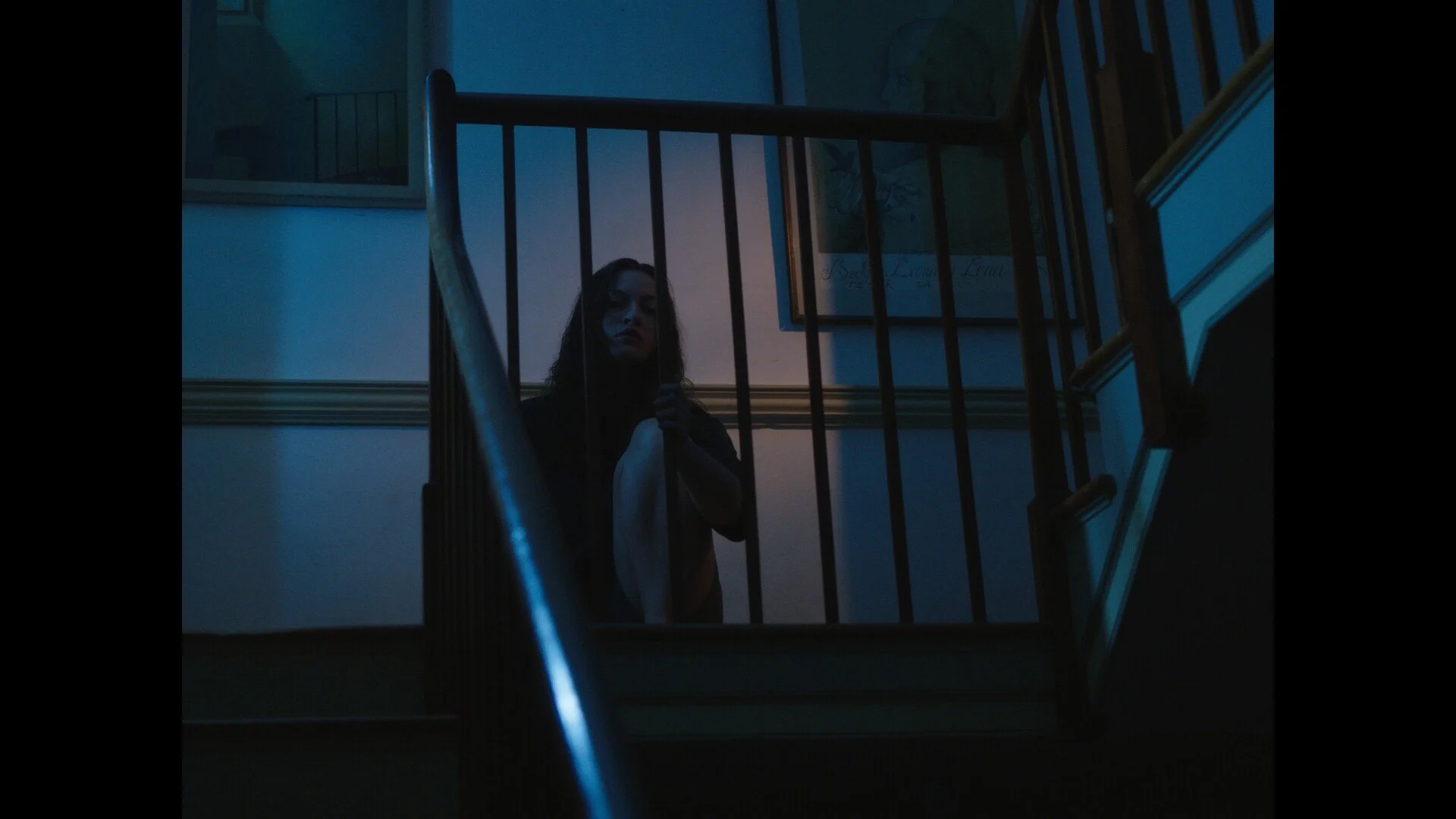
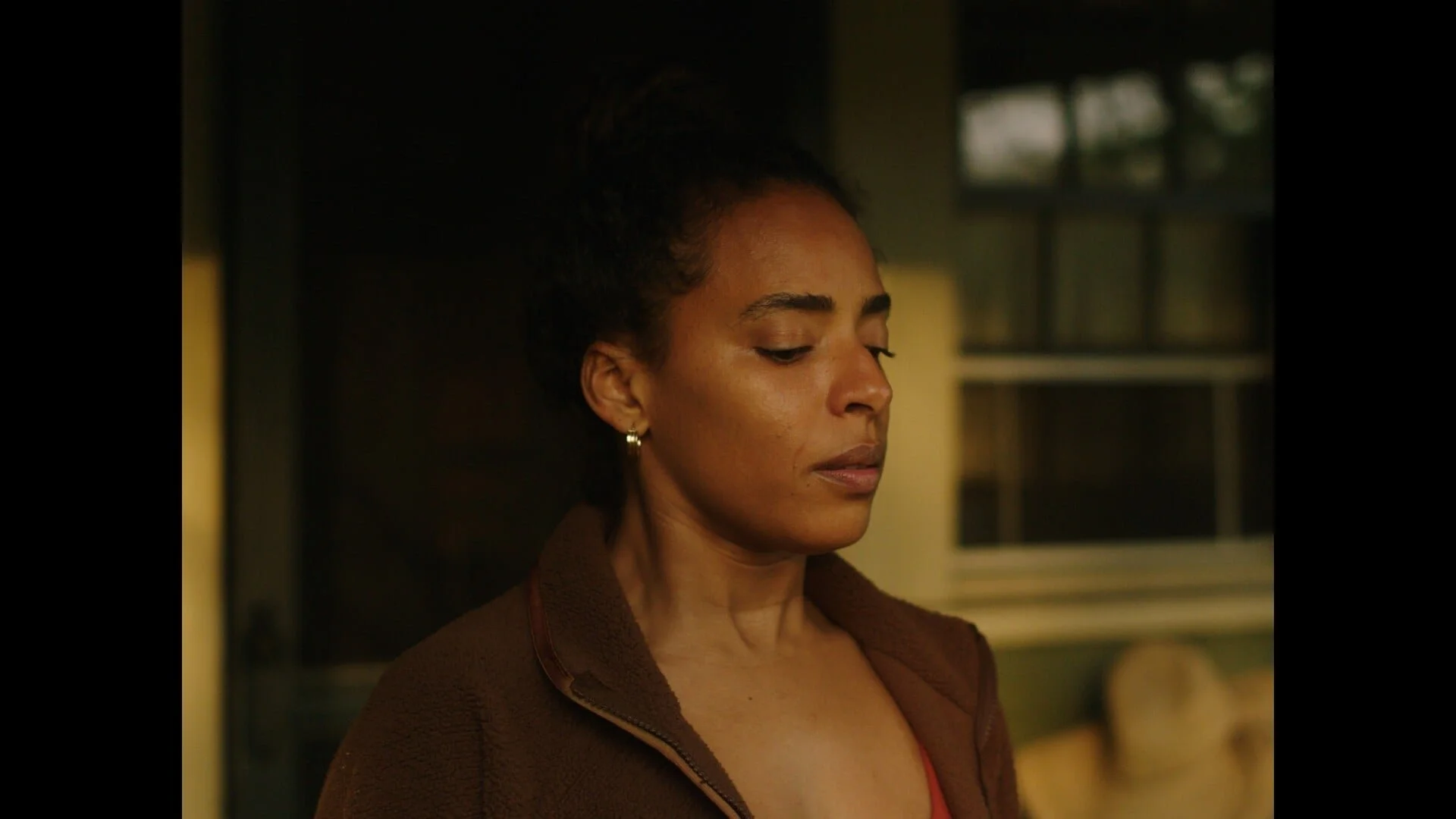
Kate gives one of the all-time great cat performances. What went into casting, and what did Kate specifically bring?
We [saw] maybe 50 videos of actors auditioning to be a cat. We chose a section where they had to hiss—when she gets slapped and responds. When I was choosing the sides, I was focused on the dialogue and forgot that the actors would actually have to hiss. But I'm glad that was part of what they had to do because some of the hissing was so silly. I think [in] my writing, it's often hard to judge the tone. People often start with the wrong take. Like, “Cat turns human, this must be silly.” We ended up with a lot of Halloween cat vibes, like sexy cats. A lot of winged eyeliner in the audition tapes. It was unexpected to me because they all read the script so I assumed they would get it, and that made me realize this isn't necessarily easy to get on the page. And Kate [Kemmet] was just so honest about it. Watching all those auditions made me realize how bad it could have been. [Kate] also studied her cat. She told me she watched her and did her mannerisms. I expected to have to spend a lot of time on set figuring things out and coming up with mannerisms, but I didn't say a thing. Generally I did not contribute to her coming off as a cat. She just walked in and was a cat person, which was awesome. Even the violence, we don't really fault cats for being violent, so at what point is it unacceptable for a former cat to be violent? She comes off as innocent doing all of these things because there's no moral compass.
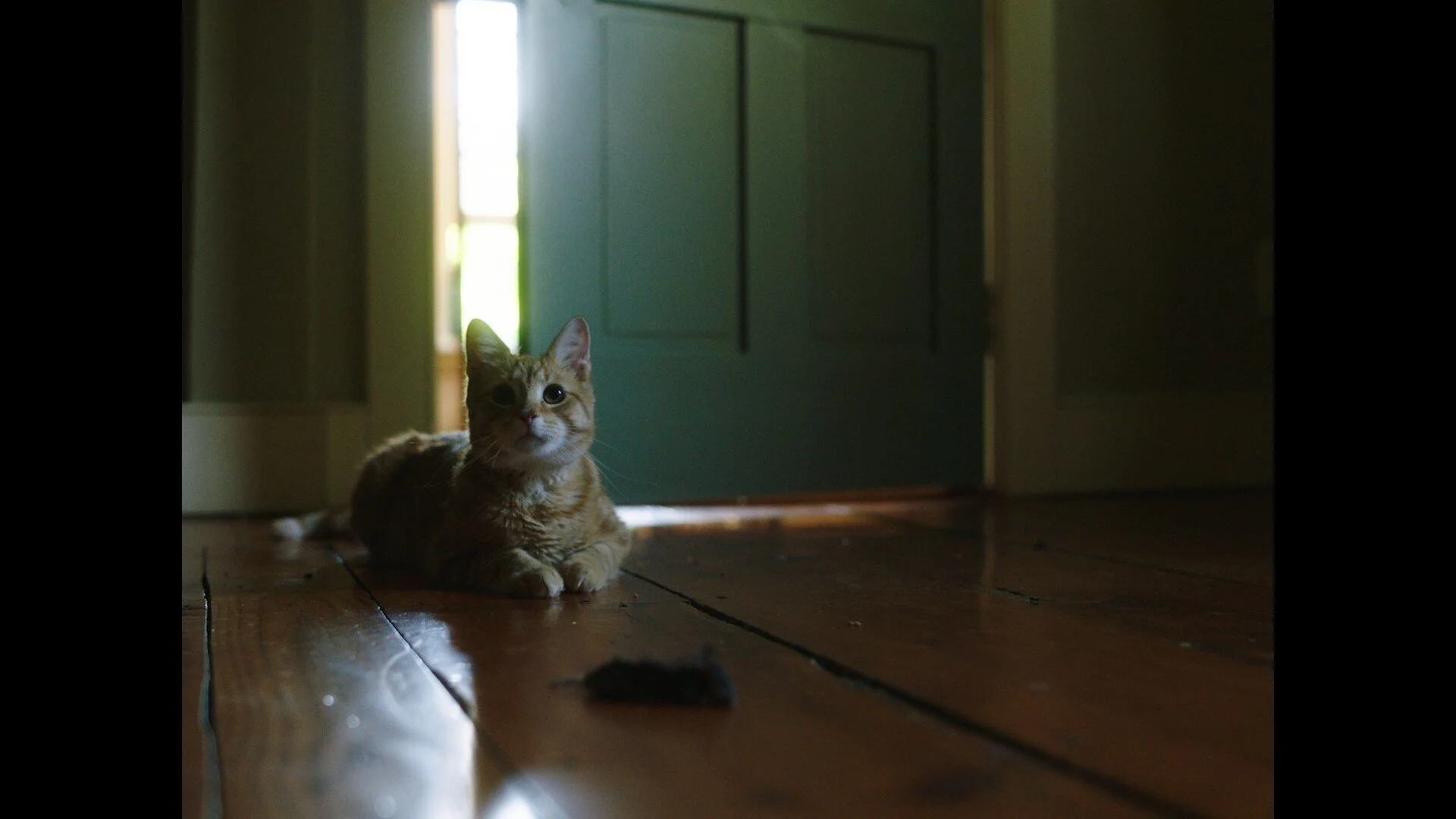
“[In casting] we ended up with a lot of Halloween cat vibes, like sexy cats. A lot of winged eyeliner in the audition tapes. It was unexpected to me because they all read the script so I assumed they would get it, and that made me realize this isn’t necessarily easy to get on the page.”
Why is it important for you to lean on genre and magical realism to tell stories and convey what you’re trying to say?
It's easier, is part of it. There's a shorthand. There's a lot less explaining once you're in a murder mystery about what the rules are, or a western. There's so much that people know at that point because you can work with the tropes and then subvert them. But honestly, it's just fun. [I’ve written] a lot of twisted fairy tales, messing with myths. I like to tell small, intimate stories in big worlds or genres. It's much easier for me to tell those smaller stories in this other world. When I read stories set in modern day, sometimes it feels too close. So you're focused on the wrong things. If I've created the whole world, I can tell you exactly what to focus on. I think of this in terms of cell phones; I don't know that I've written something with a cell phone. Little One could totally have had a cell phone somewhere, or a computer, but I didn't want anything modern-day because I wanted it to feel like a fairy tale. Part of me just finds it ugly to have cell phones, and more immediate not to.
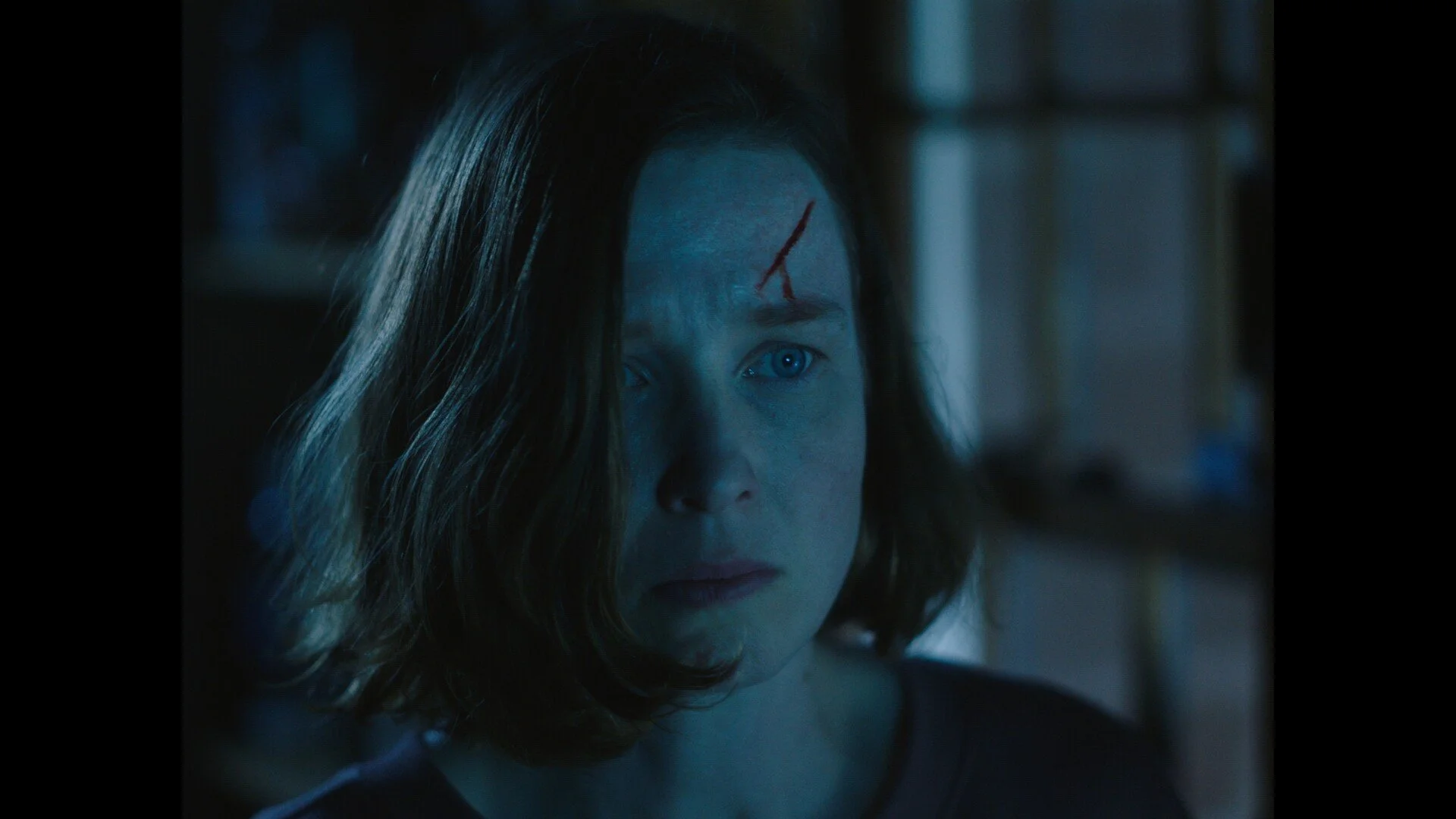
“You could tell a story of abuse in a lot of different ways, but because I’ve added a cat I think it adds a sense of humor and some distance. What I’m trying to say becomes a lot clearer because there’s a cat and an owner, which is funny to me that that makes it easier, by obscuring it in a way.”
You work in so many different forms, I’m curious how you adapt and translate the same story or premise from one to the other.
Mostly I try not to. I write a lot of mediums. I write theater, film. I did a web series with the CBC. I do some immersive theatre. I've been working on my second novel. It's so important to me that they feel different. I think because I've been doing theatre for so long, my theatre benefited more from film than film did from theater, because suddenly I had structure, and my structure was so wild. Because film needed to be action, action, action, it made me think about dialogue as action more [in] my plays. I don't think I'd done that before, but now if [a character is] talking, I'm asking, “Are they bribing them? Are they seducing them?” Because I was coming from this playwriting background, I feel like the obvious thing is to have a really dialogue-heavy play. And Little One, the short, is so quiet. It has very little dialogue. My professor from NYU, Shinho, said something that got in my brain: “The best script, the best film, is going to have the least dialogue. If you can pull off a film with no dialogue, you've [made] the best film.” I don't really think that's right. I think there are a lot of films that have good dialogue. But writing the short, I thought, “How do I do this? How do I make it a film?” The lack of dialogue was a big [way]. That's what's fun about doing different mediums, how different they are. I'm usually working on a few projects at once and I always need some amount of difference between them.
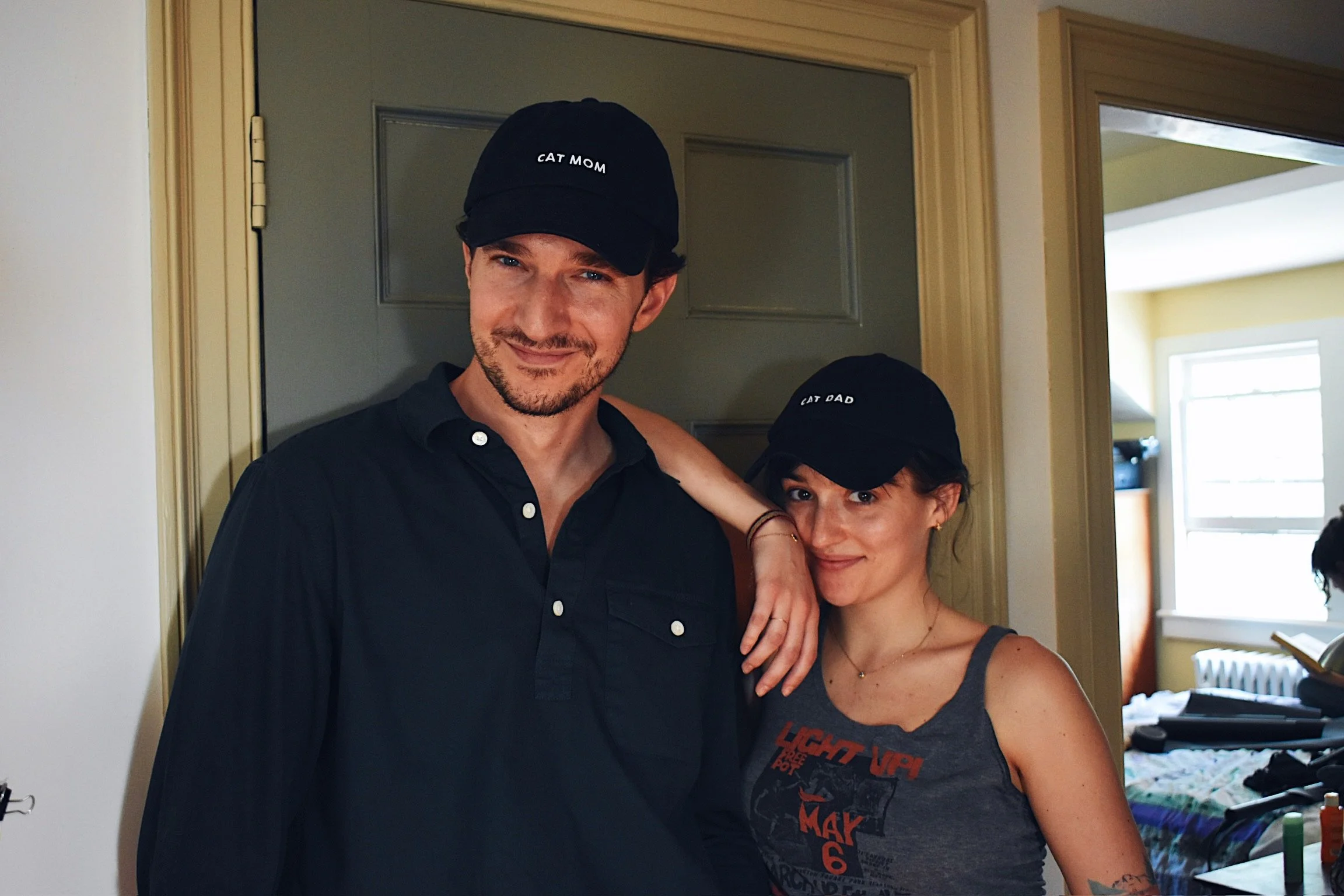
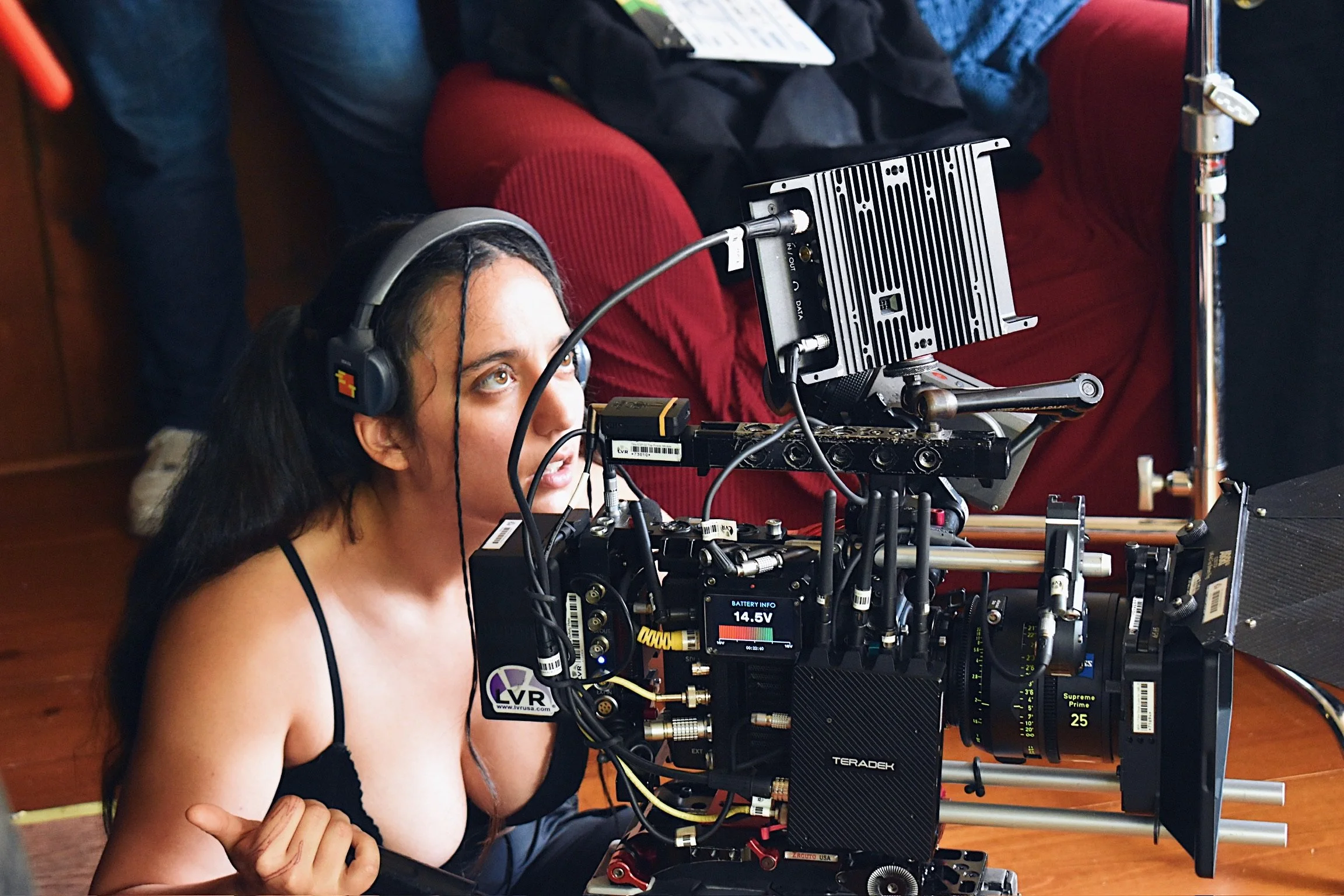
“Every single person [the producers] brought in was incredible, so I felt like [I was] choosing from the best. We also had a high amount of cat lovers in the group, which was really good.”
The atmosphere and color palette add so much. Dreamy, but ominous. Talk about creating the visual style.
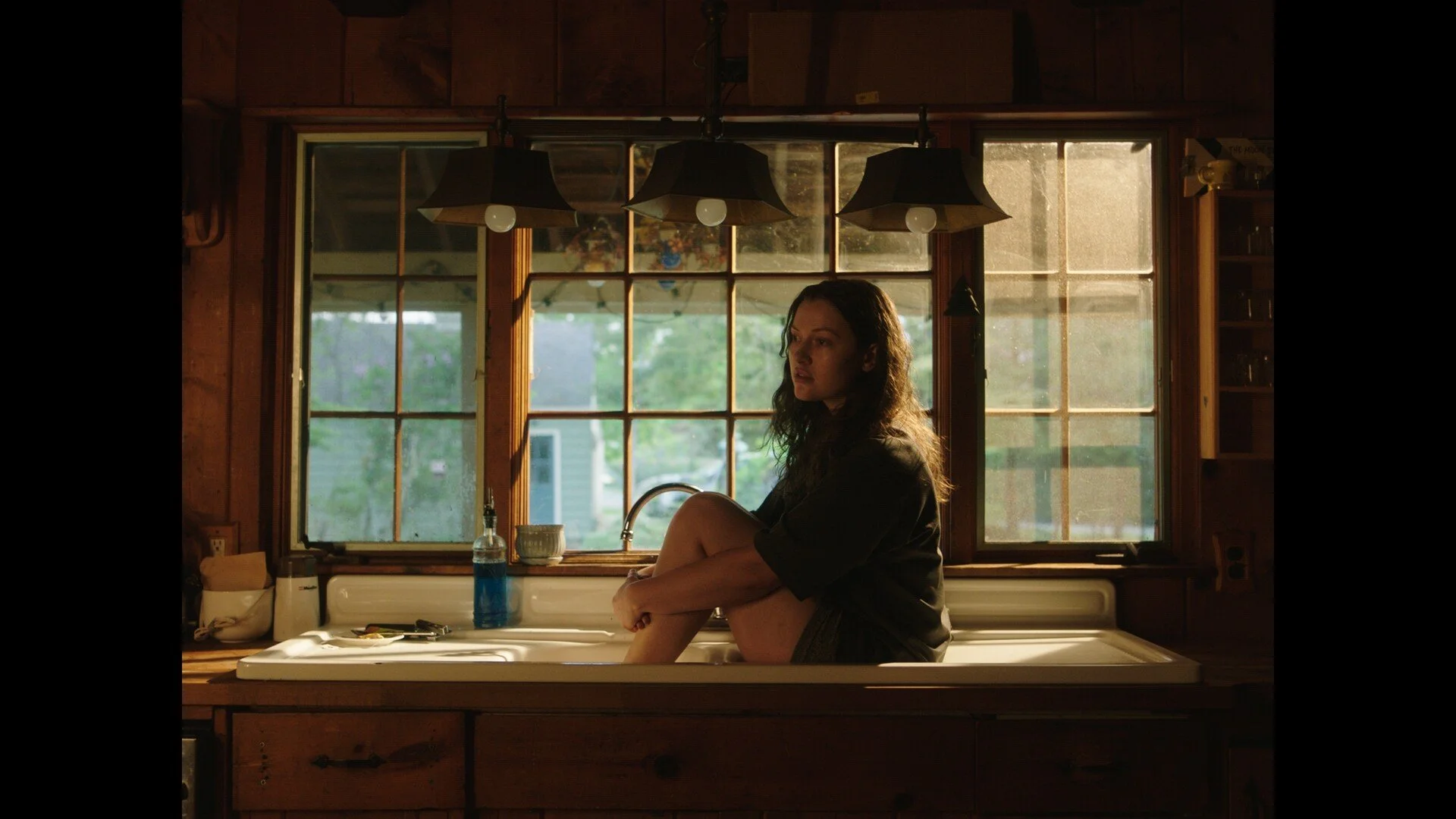
I love that even when it's getting really violent it’s beautiful, and that is 100% [director of photography] Isabel [Padilla]. She worked really closely with Nica [Fazio] the gaffer and their whole team. Isabel just sees things in an incredible and unique way. The charge from Erica and Jake for me as the director was to have a really specific vision, and I think I demanded more from my team than I think necessarily always happens because I didn't know how you were supposed to do this and they really delivered. It's funny that I work in visual fields like film and theatre because I feel like I'm not actually the most visual person. The beauty of the film came from Isabel.
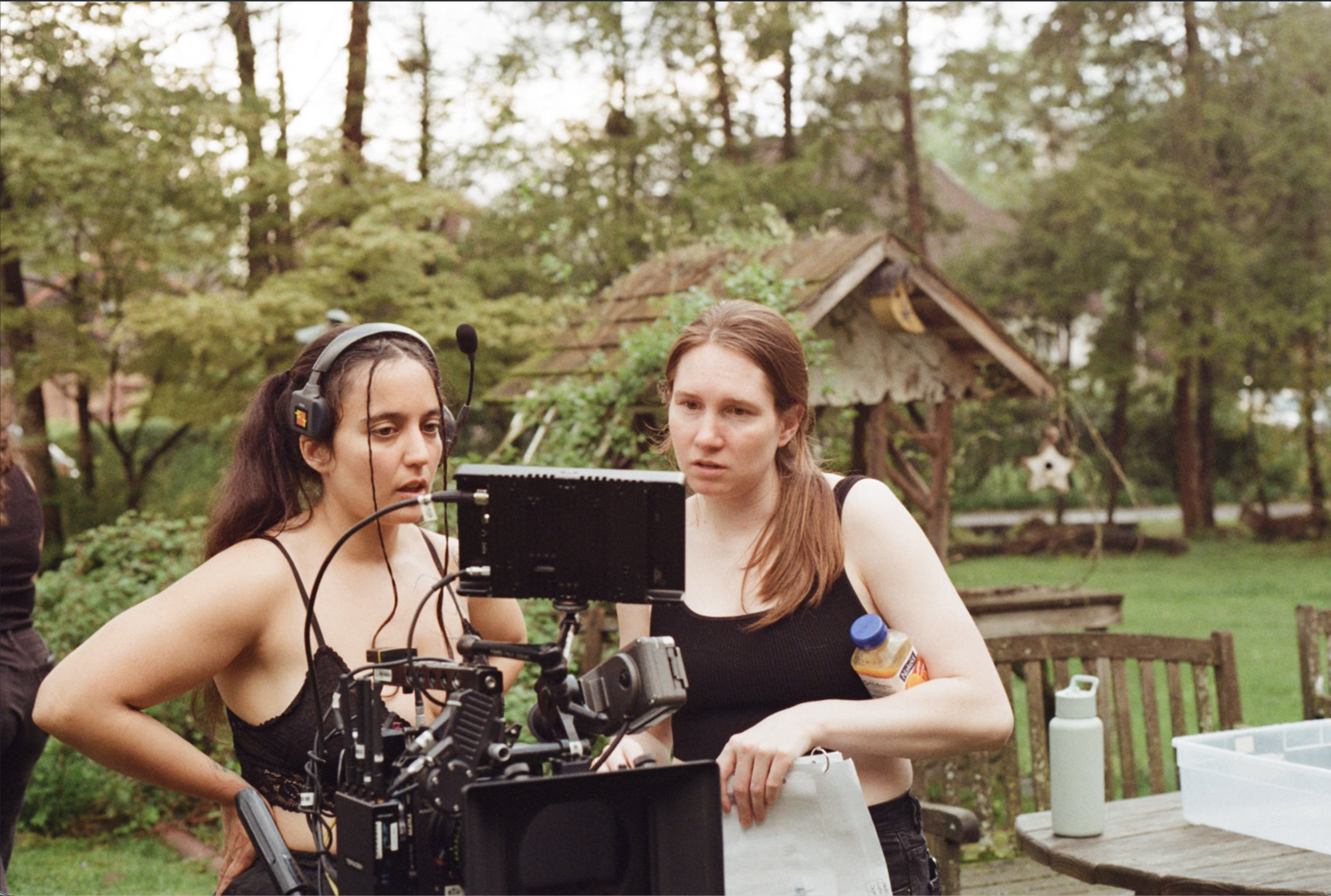
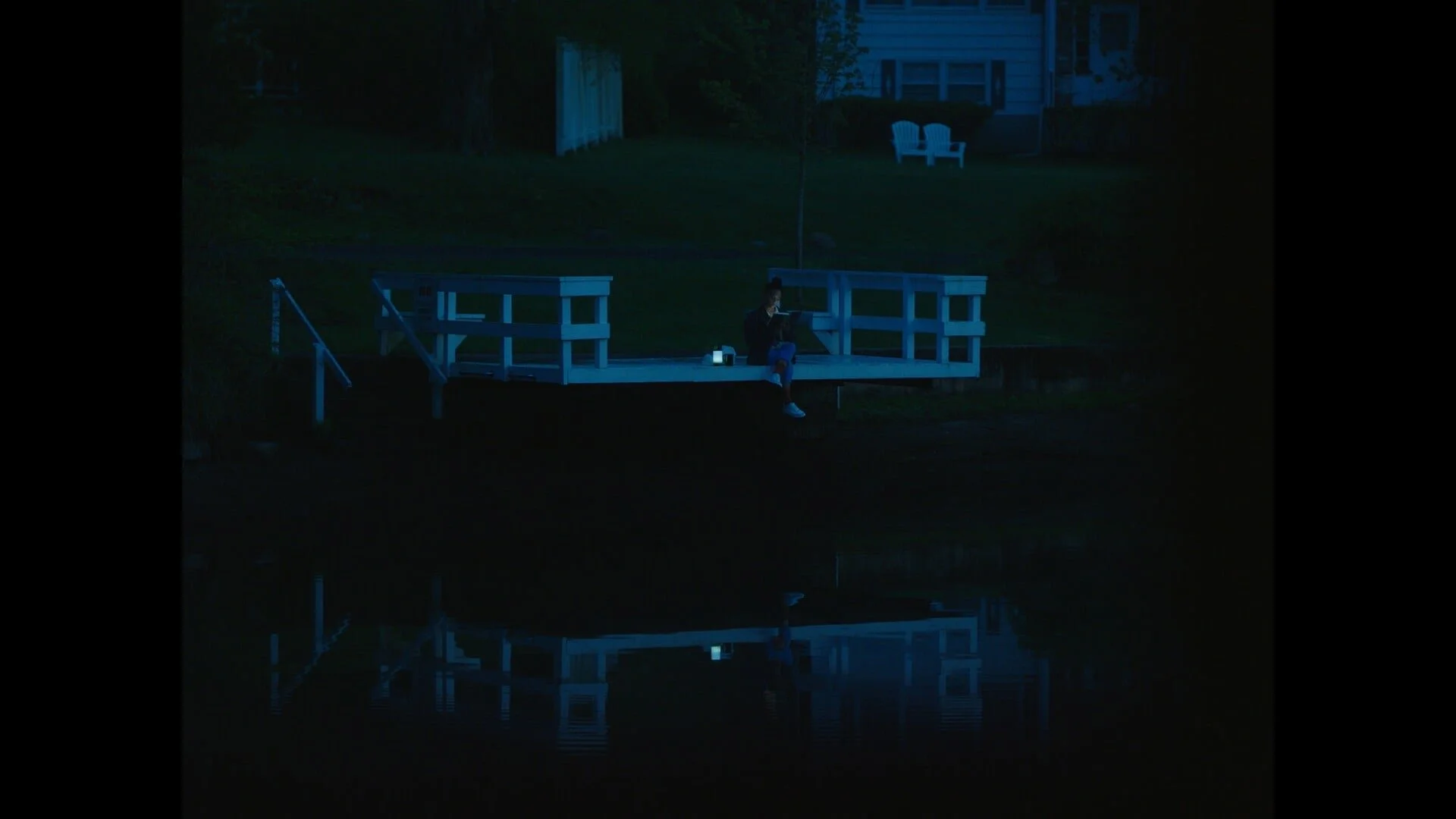
[Editor] Logan [K Triplett] was really great. He was patient and open. We would watch the film. I would spend a week getting feedback from people. He would spend a week thinking about it and then we'd come back and do four-hour stretches on a weekend. I would come in with my list and he would have some things, and then we'd go through and he would have all the solutions for the thing I decided was the new problem. He was especially helpful because I was a new director. He was really good at showing me what was possible. I probably gave him some wild requests. He was very game.
The producers I worked with, Erica and Jake from Secret Beach Productions, were incredible. I had never really worked with producers before. Erica tended to be more focused on the logistics and finding the cast and crew. She made it look easy. Jake led the script development with me, pushing me past where I might have gone to make sure it was clear and as bold as it could be. An earlier draft had the ex-girlfriend and neighbor as two different characters, and the producers encouraged me to combine them. The ending was also one of the last changes. Originally the owner brought back a new cat and called her “little one,” and there was no final moment on the porch. I can’t imagine making this film without Erica and Jake.
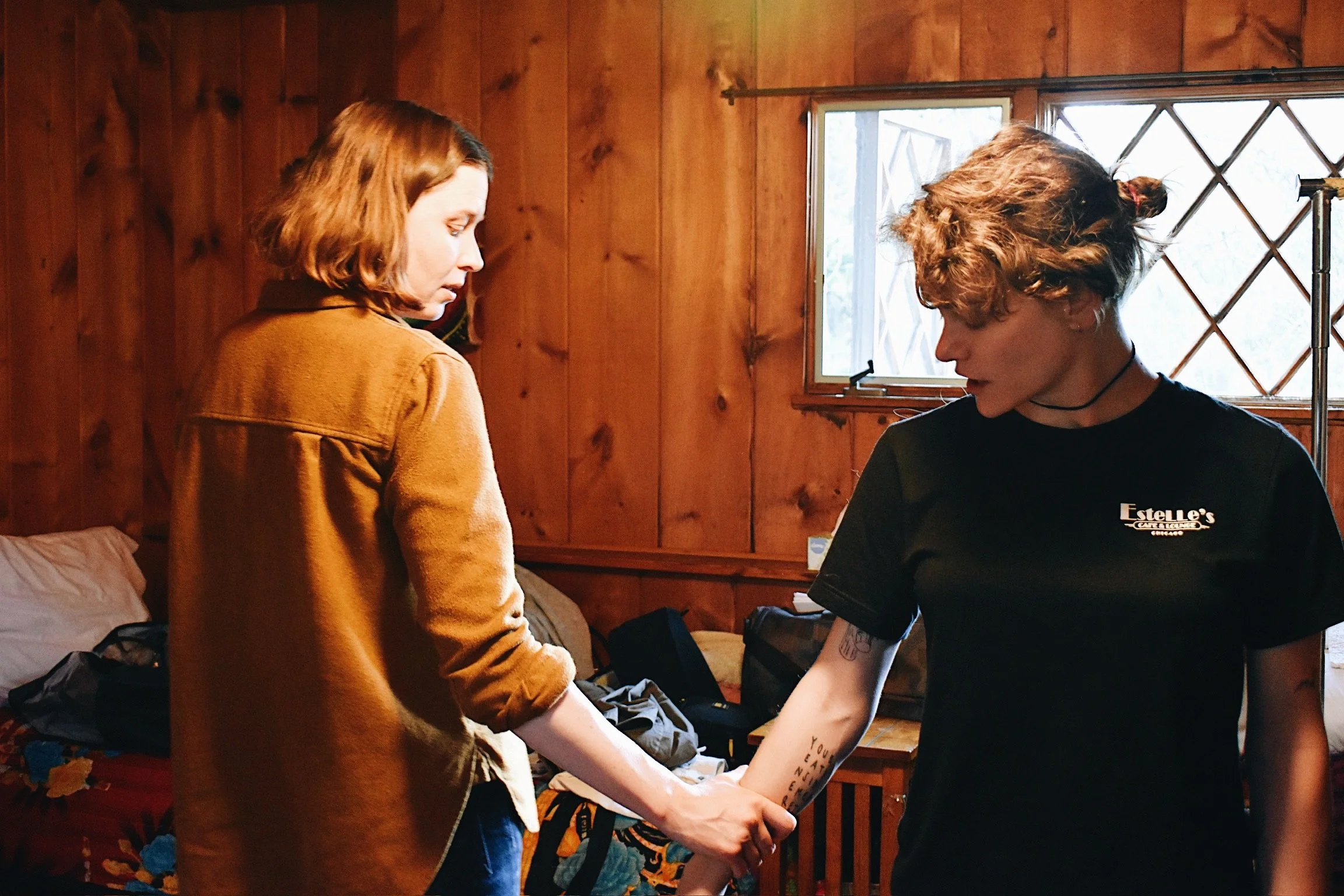
Alex Might was our fight choreographer and intimacy coordinator. She has more of a theatre background, so we really got each other. We had a fight choreography day before we got on set. She was really good because whenever the actors weren't doing anything during the shoot, they’d work on the final fight. I budgeted a long time for that fight because I knew that that needed to work. It was the last thing we had to shoot, so we ended up with only half the time that we had budgeted. It ended up being one of those things where everyone came on in the last hour, and Talia [Light Rake], our AD, was really helpful making sure we weren't missing things and catching little errors. It was very choreographed compared to everything else.
I love that the intimacy coordinator and the fight choreographer were the same person.
It makes sense, though. I like thinking about them in the same way, as storytelling and action and power dynamics. She was so helpful. I'd done some intimacy stuff as a playwright, but I was not directing, so I didn't have to be that involved. Everything's so quick on a film set, and in theatre you can really take your time. It's nice to have someone who could make it feel really straightforward. We did a lot of planning to figure out what was going to be comfortable because I didn't want the nudity to feel like it was objectifying Kate as the cat. I wanted it to feel pretty and to make sense in the story. I am so glad we did it, though, because that first image where she's in the litter box would not have worked without it.
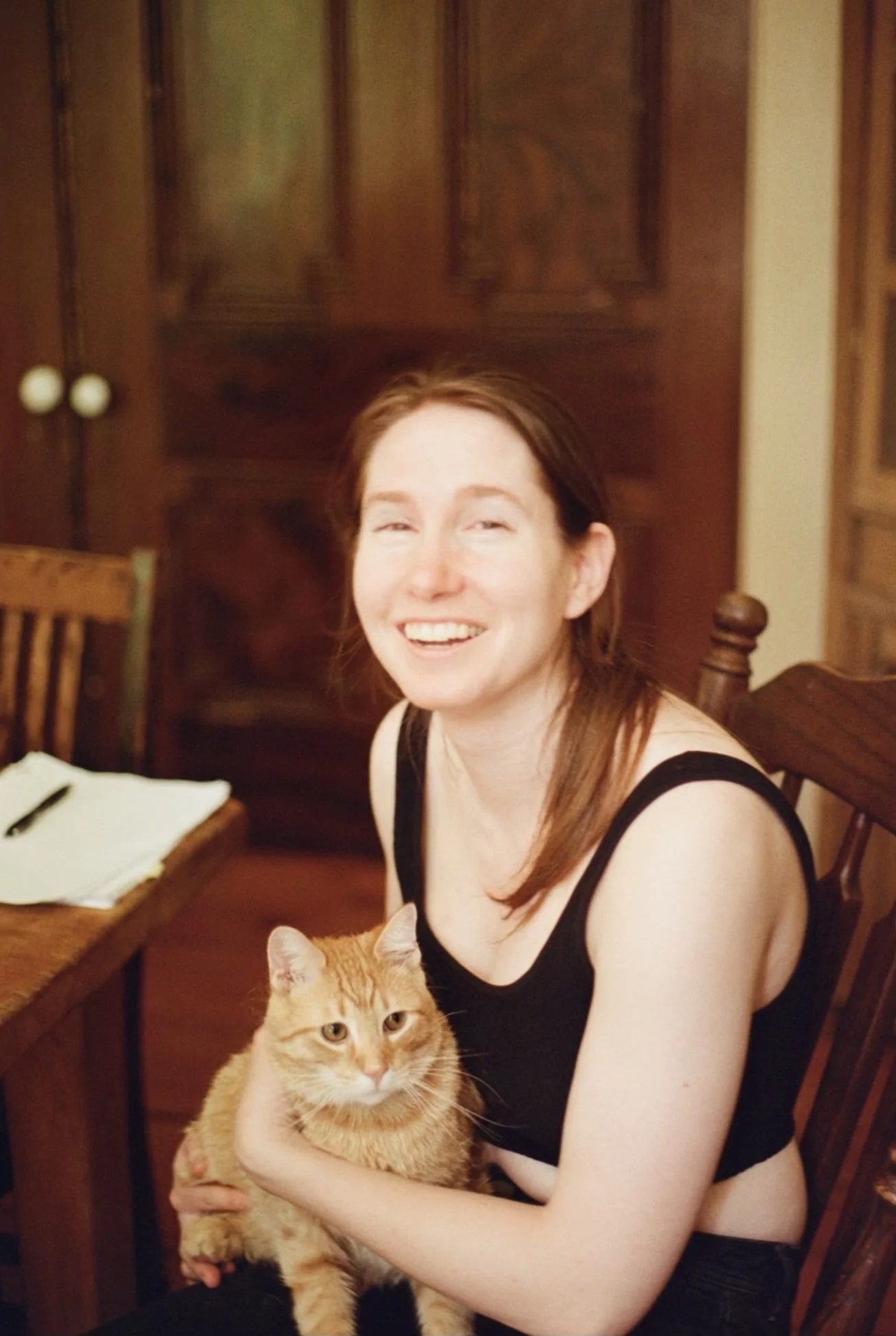
It’s funny to watch this film as someone who has lived with cats because even though cats share certain behaviors, they all still have very distinct personalities. And that does come through with Kate’s performance.
People make fun of me that my cat's name is Nora, and it's Nora in the film. I think people assumed at some point I would have changed that as it got darker and weirder, but I think that's why I can write the cat character. I think if I started thinking of it as an abstract cat, I would fall into the same tropes that a lot of people auditioning were. [But] it isn't my cat Nora anymore, entirely. [My cat Nora’s] goal 100% is and always will be to be included. She just wants to be involved, and that is never the goal of Nora the cat in the film. That would never be something she would deign to do in any of the versions I've written. It's funny that they feel like two different people. I also was not a cat person for a very long time—I was a Nora person. She convinced me.
How has Little One changed your relationship with your cat?
It's creepier sometimes. I was smelling her stomach the other day and it made me think about the film, and then I felt like a creepy person. That's how it's changed my dynamic. I run a murder mystery party company and two years into doing that, people were saying, “Lindsay loves murder mysteries. That's her whole identity.” I never thought of myself that way. I feel like that's happened with this film, where now people think of me as the cat person. Yeah, I really like my cat, but it's funny how big that identity now looms.
What does Nora smell like?
I was thinking about this yesterday, because it rained really hard [and] I was thinking about how good rain smell is. It's kind of earthy. She also smells earthy, like rain. There are so few things you can get that close to, in a way.
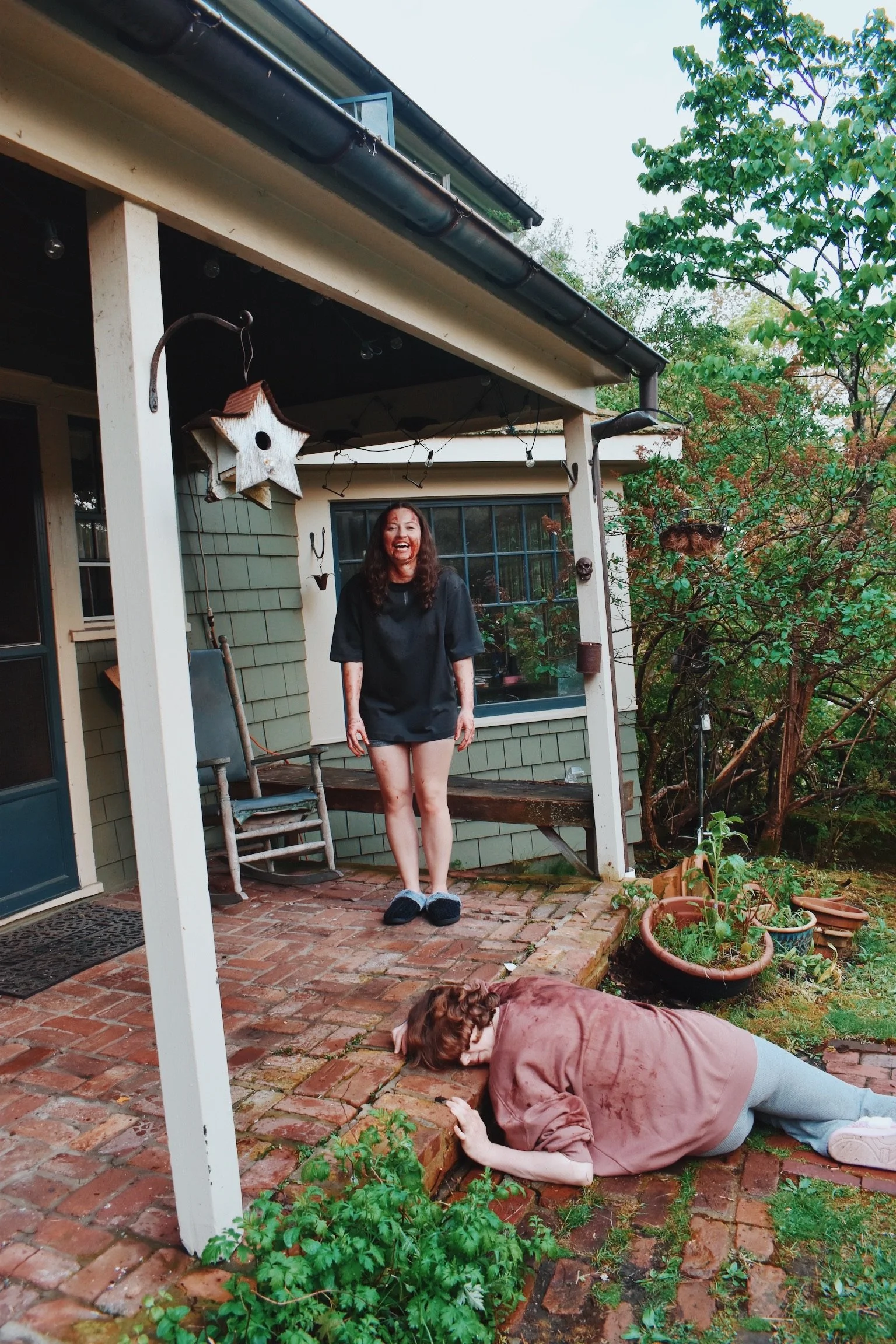
Nora had surgery at one point, or she had an ultrasound. We had to shave her belly, and at that point I would rub her belly and she'd never let me touch her belly before. She doesn't let anyone else touch her belly, but she still lets me. It feels like an inappropriate thing. She starts to turn over bit by bit, her eyes roll back. It's a little much. I can only initiate if she's half asleep. I feel that weird pride we get with our pets of [how] I can get really close to her face and she won't bite me, but she'll bite another person. One of the weirder ones when I first met her [was] I’d try to stick my finger in and out of her mouth while she yawned before she would stop. All of this is really the inception of Little One. Our relationships with our pets are so weird and inappropriate. But also really sweet. Maybe I am a weird cat person at this point.
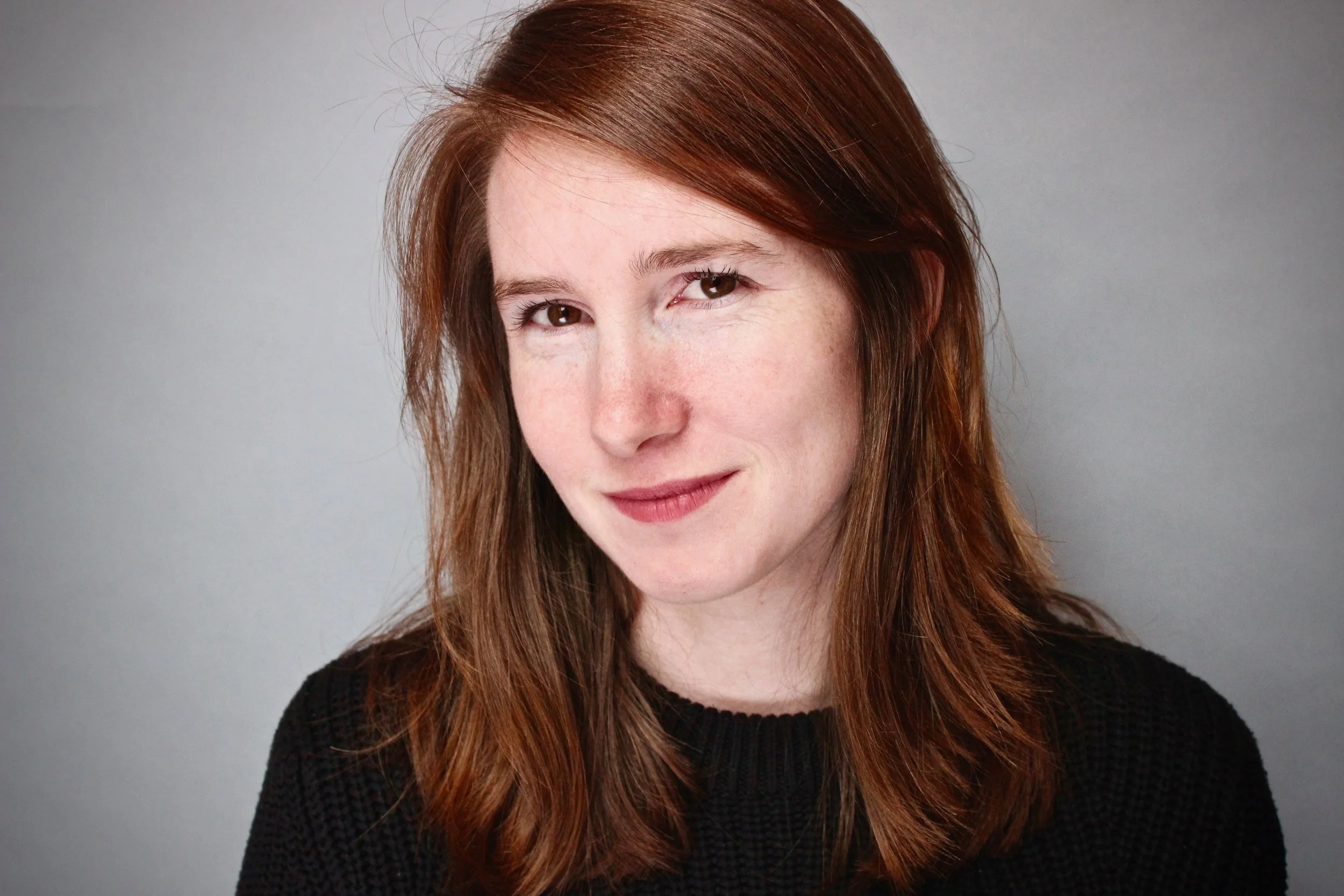
Lindsay Carpenter is a writer and director whose work spans theatre, film, and immersive experiences. Her award-winning short film LITTLE ONE (Secret Beach Productions) screened at festivals worldwide, including Palm Springs ShortFest, RiverRun, and Venezia Shorts. She was a staff writer on CBC’s acclaimed web series AMOURS D’OCCASION and co-founded Ghost Ship Murder Mysteries, which creates elevated, immersive experiences. Her plays have been produced by Unicorn Theatre, Taffety Punk, Tufts University, and the Stella Adler Academy of Acting. She's been a finalist or semi-finalist for the O'Neill, Dramatist Guild Foundation Fellowship, and Princess Grace Award. In 2020, she received her MFA in Dramatic Writing from NYU. Lindsay specializes in intimate, character-driven stories set within heightened genres or worlds.