
Moon & Back
directed by Pony Nicole Herauf
Canada. 2024. 13 min.
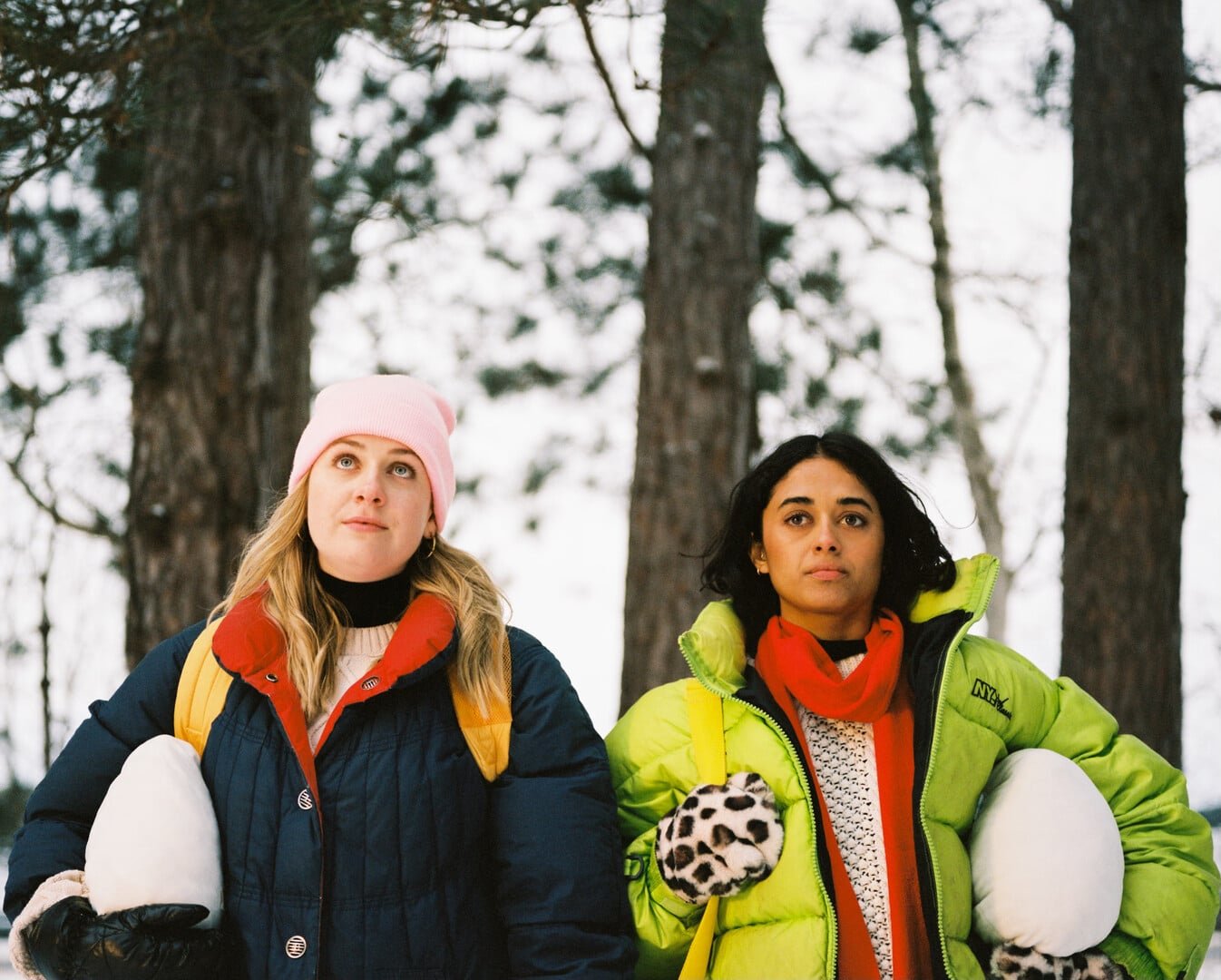
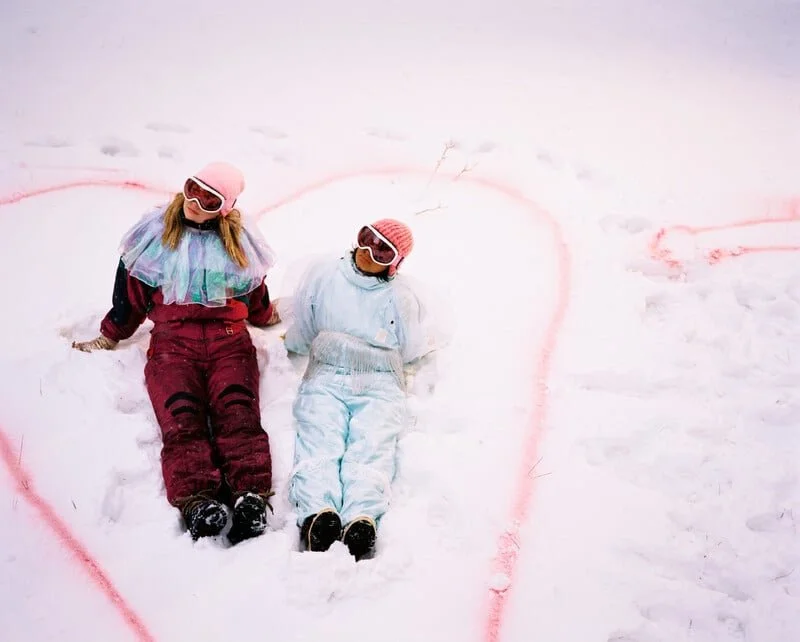
Two young people spend a weekend memorializing their friendship before one of them permanently moves to the moon.
by Jesse Knight
In Toronto-based filmmaker and teacher Pony Nicole Herauf’s funny and knife-twisting sci-fi comedy Moon & Back, inseparable Mattie (Mattie Driscoll) and Branch (Bren Eastcott) retreat to an isolated, snow-nestled cabin to wring out the remaining moments before Branch embarks on a one-way relocation to the moon.
Balancing ribaldry with sincerity—a tightrope walk gleefully and nimbly apparent throughout much of Herauf’s work—Moon & Back is a subversive sermon amplifying the importance of feeling and remembering everything all at once, all the time.
Your previous films reflect more of your self-admitted brashness or crassness, but this one is decidedly more grounded, even though the premise is outlandish. Was that conscious or a natural progression of your work?
Writer/director Pony Nicole Herauf: I guess a bit of both. Originally I had the idea for the movie during the height of COVID when everyone was having these really beautiful long-distance relationships. Right before COVID, Mattie (actor Mattie Driscoll) and I had been in the Netherlands for the cowboy movie (I Wanna Make a Movie, or I Wanna Die Trying) that we made for the 48 Hour Film Project, and then we won for our city. So we got to go compete in the world version in the Netherlands, which was so fun, and we met all these amazing filmmakers from everywhere. I met this group of Australian boys who were so cute and talented, and I thought, “Oh, we’re going to make something together, like we’re going to do this Australian-Canadian co-production,” and then obviously COVID happened and I was thinking, “Okay, Australia is really far, like that’s really far away.” Then, “What’s even farther than Australia?” Like, “Oh, if you had to go to space.” I feel like the sincerity of the film definitely came from those feelings. Everyone was living in such turmoil, like literally will you ever see the people you love again? That definitely influenced some of the sincerity of the script.
There’s so much more crass stuff that we shot that didn’t make it into the movie because I feel like when I’m having fun on set, I’m essentially being a clown as a director. That’s sort of my strategy to keep people motivated and keep morale high. I’m going to make everyone laugh. So I sometimes find when I get to the editing point of a project, I’ll look at what we shot and think, “Oh my god, so much of this is unusable.” Just like bullshit jokes. Even in (my new short) Go Piss, Girl!, which is obviously quite flippant, there was way more stuff that we shot because it was funny in the moment. And when it comes down to the edit, I’m like, “Okay, so that actually has nothing to do with the story or what I’m trying to say here.”
Your commitment to piss is really impressive.
[laughs] I famously wet the bed till I was 16 or 17 years old. To me pee has always been funny because to wake up at age 16 covered in your own pee, and then have to go to high school and like, write a math test, it’s like, if you’re not laughing at pee, it’s deeply traumatizing. It runs deep. It’s a trauma response.
“My hope for this project is to present a new kind of love story, one we meet not at the open, but the close. I want to share the final exchanges between these two people in extraordinary yet identifiable circumstances.”
Did you grow up in Toronto?
I’m from Calgary originally. So, western Canada. Now it obviously has a cool counterculture there. The Calgary Underground Film Festival is so great and there’s so much weird shit coming out of Calgary. I lived there until I was 18 and then I moved to Toronto.
What were some of your first creative obsessions?
When I was a kid, it was more acting. I started acting when I was six or seven, and I did a lot of film and TV body double stuff. They did a remake of Little House on the Prairie and I was playing the back of a girl’s head on that, which was funny. I did a bunch of theatre-y things. I was always saying, “I’m gonna be an actor.” But then I had that natural progression that kids have where I had my family camcorder and I liked being in charge more than I liked being in front of the camera. Maybe halfway through acting school, I was so jealous of all the dudes, particularly, in the filmmaking program, because it was all these boys who had cameras their parents bought them, and I was acting in all of [their movies]. I was like, “Whoa, you guys are so bad at directing. Like, you’re really bad at talking to actors. I don’t understand what you’re making here and this makes no sense.” So I got into the habit of whenever I didn’t know a word someone said on a film set, I would write stuff down. Or if someone was directing me in a way that I thought was bad, I would write down how it made me feel or what I didn’t like about it. And then when I was in my fourth year of university I had written and made a bunch of tiny short films, just funny stuff with my friends, or for school projects where everyone would film it in a day, and I was like, “This is a six-day shoot. We’re taking this really seriously.” I had no idea what I was doing. Obviously I was just playing around. But then I managed to sort of trick the university into giving me a bunch of money after I graduated to make my first short, saying, “Oh, it’s going to be a mentorship program for younger students.” Which it kind of was, but then also kind of a joke because I had not directed anything on a real scale before. I was saying, “I’m going to mentor all of these young boys who are in the film program who are learning how to do this.” And then I just kept going from there.
“To my students or when I’m editing people’s scripts, I’m always giving them advice of: You need to just have characters say what they need to say in as few words as possible. Like, how can you get across the message but really succinctly. Like, cut cut.”
When I was growing up, I always thought about filmmaking as this mystical, amazing thing. And for me, the best part of watching a movie was when we had the DVD of like Freaky Friday or whatever to then get to watch the behind-the-scenes extras. I couldn’t wait for the movie to be finished because I was thinking, “Oh my god, do they have behind-the-scenes extras?” That was my favorite part of watching every movie ever.
Your dialogue is often diamond-cut perfect. Talk about your writing process.
I kind of have a crazy writing process. I usually, for a short, will do it in one sitting. I have the opposite of an attention deficit disorder. I can really sit and be like, “Okay, we’re just going to do this.” But first, when I wrote the movie, I was applying for funding, like for an Ontario Arts Council grant, to be able to make it. And I had done the entire grant, I made a mood board, I had gotten everything together and I hadn’t yet read to the bottom of the grant where it said “Attach the script,” and it was due two days after that, I think. So I just sat down and busted it out. I wrote a first version of it which is honestly not super far from what you see in the final film. It was a little bit longer. Of all the things I like doing, like directing and writing and acting and whatever, I kind of know in my heart that writing is what I’m strongest at. It’s something that comes pretty naturally to me. I feel like dialogue is somewhere where I can hear the beats of it in my head and understand what’s working and what’s not working. But before I wrote the script, the two lines I had in my head—one was from when Branch is leaving that final message, when she says, “Whatever you do, don’t cry.” And then when they’re lying in bed before she goes up into space and she says, “The rest of your life is going to be really good.” And Mattie says, “How do you know?” And she says, “I talked to God. It was awesome.” Those were the two lines where I thought I need to make a movie where those two things are said.
Usually I’m thinking, “You should write something you can make within your means,” so everything’s always in an apartment or on a Toronto street. But I was like, “I’m going to write this movie because we obviously won’t get this grant where she gets sucked off the face of the earth into a spaceship.” And then when we got the money, I thought, “Okay, fuck, now I actually have to figure out how to do that.”
“When you get confirmed in Catholicism, I don’t remember what grade you’re in, like six or something. I remember they had a cool speaker come in and they talked about the idea that your belief in God is like putting chocolate syrup in a glass of milk. Like, you are the milk and God is chocolate syrup. And this guy was like, ‘Whenever you’re feeling lost in this world and your belief is wavering, you can always just think, ‘Please, God, keep me chocolatey.’ And I always think, ‘Okay, how do I stay chocolatey?’”
To my students or when I’m editing people’s scripts, I’m always giving them advice of: You need to just have characters say what they need to say in as few words as possible. Like, how can you get across the message but really succinctly. Like, cut cut. I’m not a precious person when it comes to dialogue. I am so like, “Let’s kill every baby. Let’s throw every baby out the window. I don’t care. Get rid of it.” So, I really pared it down and then I spent maybe a few hours one day with Mattie and Bren having them read through and asking them, “Does any of this stuff feel ridiculous to you when you say it?” Because actors are smart. If an actor says, “I don’t like that,” they’re probably right.
I wanted to ask about the “I talked to God” line. It’s delivered so matter-of-factly that it could be interpreted as totally earnest, even faith-based. Why was that line so important to you?
I have a crazy Catholic history. I went to Catholic church my entire life. It was a rule in my family until I was 18. I had to go to Catholic church every Sunday. I was always sobbing in the car on the way there, on the way home, because I did not want to go to church. I was going to a very progressive feminist all-girls school that was non-denominational, and I was always saying, “The church hates gay people. The church hates women.” It was a huge fight with me and my dad that I have never been religious. But when I started driving when I was 16, I would pray every time I drove my car because I knew I was a bad driver and I didn’t want to crash my car, which started this funny relationship I have to spiritualism. I would not classify myself as a spiritual person, as a religious person, but I find the idea of people praying and talking to God so exceptionally beautiful because I’m like, “Damn, it must feel good to believe in something big, like that must feel really good.” So I do find something really beautiful about the idea of talking to a higher power, and having these big conversations with something you can’t see.
I remember the feeling of being in church when I was eight and being really weirded out that everyone knew what to say at the time. Everyone would stand up at the same time. You’d say, “Peace be with you.” You’d shake hands. People are drinking the wine. All this weird stuff. When you get confirmed in Catholicism, I don’t remember what grade you’re in, like six or something. I remember they had a cool speaker come in and they talked about the idea that your belief in God is like putting chocolate syrup in a glass of milk. Like, you are the milk and God is chocolate syrup. And this guy was like, “Whenever you’re feeling lost in this world and your belief is wavering, you can always just think, ‘Please, God, keep me chocolatey.’” And I always think, “Okay, how do I stay chocolatey?”
Is Mattie in everything you’ve made?
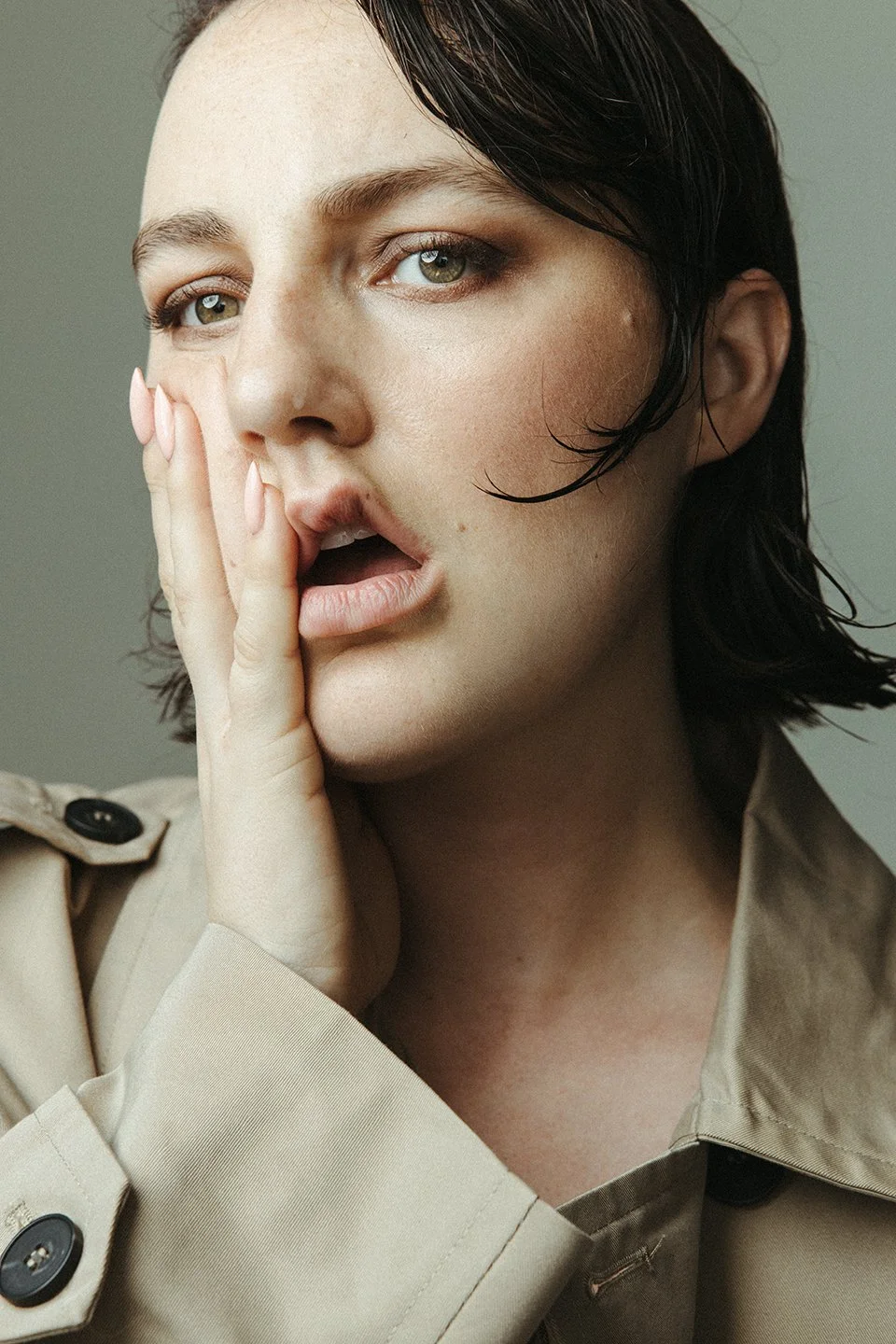
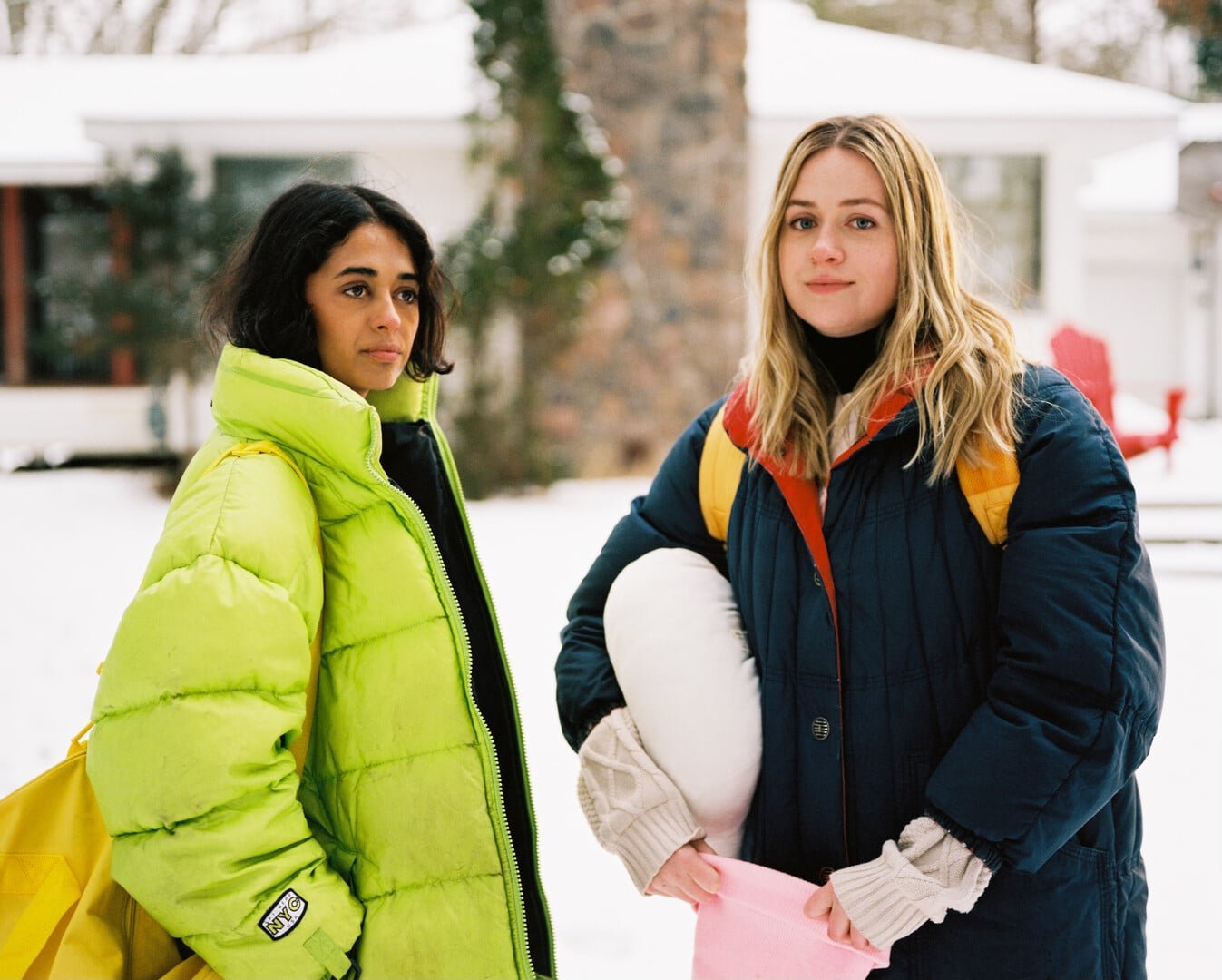
She’s in everything. Mattie is like my soulmate, my best friend. I met her at TMU when we were in acting school. She was the star of my first short, which I made right after we graduated, and she’s been in everything I’ve ever done. She’s such a great actor and she’s so nice. She’s the least annoying person of all time. I cannot be annoyed by her. Everyone loves her. When I wrote Moon & Back, I was writing it about her and for her. She got kind of fed up with me at one point, Mattie, because I was always writing movies for the two of us where her character was the softer, sweeter one, and very much still is in this. The other character, Branch, or Bren, who is actually my fiancé’s sister, so that’s cute too, that is the character who is more like me, more crass and a little more brash or whatnot. But the older I’ve gotten, the more I’ve given up on acting in my own stuff because, especially when you have no money, and on a set like this where we don’t have a huge crew at all, like such a skeleton crew, for me to then be like, “And I’m the actor and the director,” it would be so annoying to everyone. So, when I met Bren, who’s another really good friend of mine and such a brilliant actor, I said, “Okay, you can do this.” And then she and Mattie became really good friends. When we were shooting it, we were all staying up at the cottage where we were shooting, and they were staying in one room and I was in the room next to them, and had to go knock on their door at 4:00 a.m. and say, “You guys need to stop giggling because we have to get up in three hours and start making this movie again.” So they kind of had this beautiful little best-friendship moment when we were making it too, and after, which was so nice.
I feel like there’s a really exciting collective of filmmakers and artists emerging out of Toronto. Who are some of the filmmakers or artists in your circle that you’re excited about?
Toronto is definitely having a moment. I really love the work of Myles. They’re the lead in Go Piss, Girl!. They kind of play themself in that, but they’re doing some really weirdo, fun, freaky stuff. And there’s the Bleeding Edge people who are super cool. Lea Rose Sebastianis made this short, Please Love Me, that’s really exciting. And then obviously someone like Karen Knox. She made a short where she got a nose job in real life and then made a fictionalized movie (The Year of Staring at Noses) about it. Karen is a good friend of mine and she’s very cool and she’s about to have her big commercial break because she’s making that TV show Slow Pitch, which is a lesbian softball comedy. But this short is just one of the coolest things I’ve ever seen. She’s so confident and weird and so hyper-intellectual. Her stuff is really great.
And then obviously you look at people like Chandler Levack and Grace Glowicki and Matt Johnson, and all these people who are having bigger commercial success. Canada’s funny because Canada has such little commercial success that for anyone to make a movie that’s seen beyond Canada is exciting. And it’s also cool because I think people in Canada are aware of how hard it is to make it outside of Canada, so they’re incredibly open about talking to you. Because it’s basically a crapshoot and almost impossible to have a successful film coming out of Canada. So, them saying, “I’m down to sit and help you or at least tell you about my experience,” is really nice, it’s super heartening.
Pony Nicole Herauf is an actor, writer, and director based in Toronto.
Her debut feature film YOUNG FEMALE PLAYWRIGHT, written by Ellie Moon (“…a knotty exploration of womanhood and art making” — Polyester), premiered at the Cinequest Film Festival where she was awarded the New Visions Award, with subsequent screenings at the TIFF Bell Lightbox as part of a TIFF Cinematheque Special Event Presentation, and the Calgary Underground Film Festival.
Pony’s body of short films have screened and been awarded at festivals such as Palm Springs ShortFest, TIFF Next Wave, Fantasia, Whistler, the Vancouver International Film Festival, Inside Out, Dances With Films: New York, Mammoth Lakes, Chattanooga, Forest City, the Chilliwack Independent, and at the Toronto Outdoor Picture Show. Several of her shorts are available to stream on Film Shortage, and CBC Gem.