
Virtual Voice
directed by Suzannah Mirghani
Sudan/Qatar. 2021. 7 min.
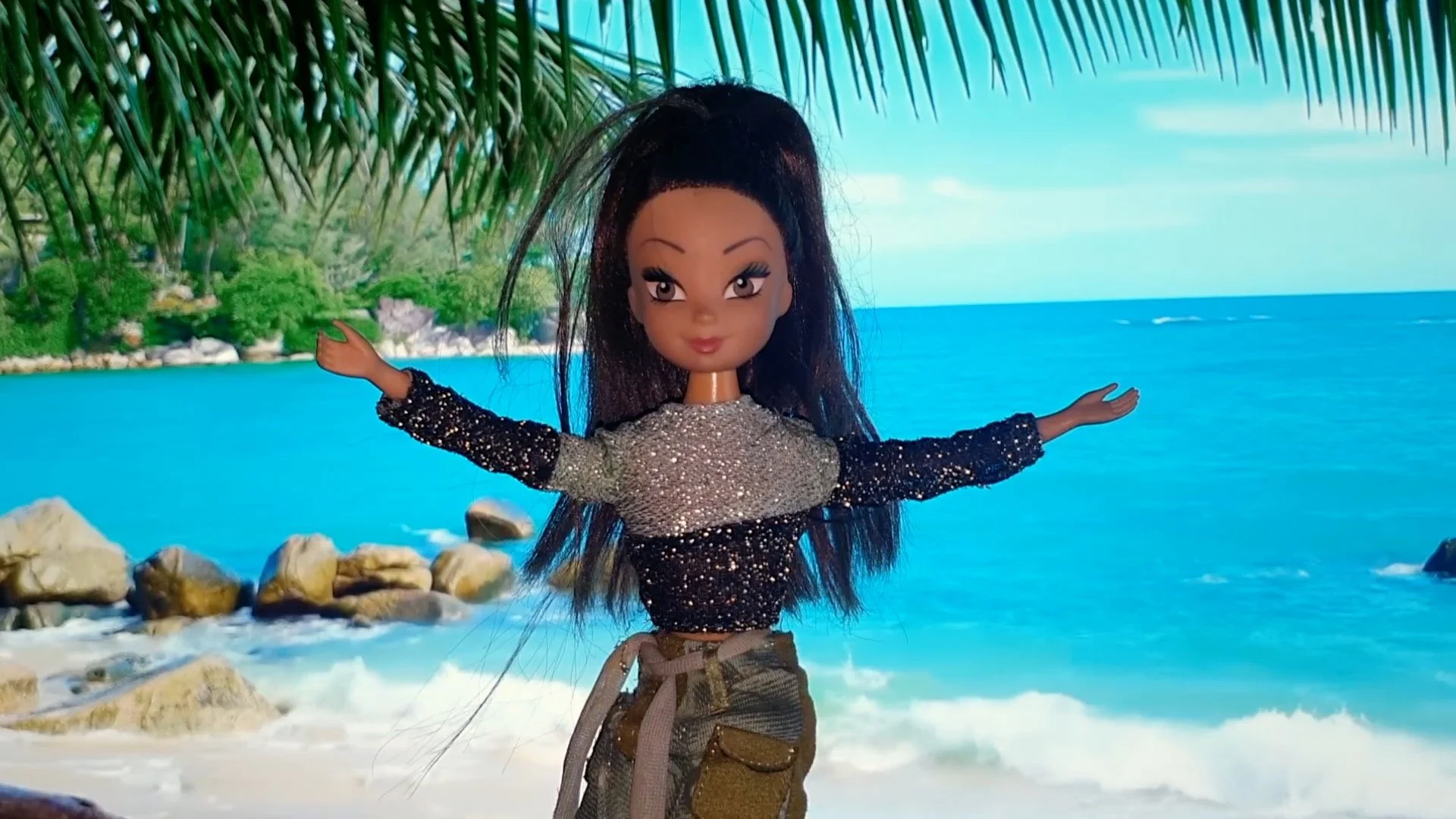
Suzi is the (virtual) voice of her generation.
by Jesse Knight
xxxxxx
Rewatching this film today is a really interesting experience, because even though it’s a COVID movie, it’s still so relevant in that it represents how our consciousness has been sucked into machines. I’m curious what your relationship is to the film now.
Writer/director Suzannah Mirghani: I love it. I actually think that it's my favorite film [I've made] because it gives me a lot of joy and it saved me. This film saved me from COVID. It kept me busy, it kept me positive, it kept me creative. It was all the things that I needed at that time. I actually haven't seen it in a while, but for me it comes with a really positive aura. At the time I was editing Al-Sit, another short film that I’d made, which is in a much more straightforward, dialogue-driven, traditional format. I was struggling a little bit with the edit. And [with] this I could do what I wanted. It gave me such freedom. It was such a creative process. There were no rules, there was no crew, there was no cast. It was the opposite of everything that I was doing. It really just… It saved me.
“I had the luxury of working with the best actor in the world, which is a doll that never lets you down in terms of her non-expression.”
It’s such a striking departure from Al-Sit, which I also loved, but it was exciting to see another side of you as a filmmaker. There are so many lines and details in this that are on people’s minds but so few can articulate as succinctly. Each line is like a little stab. What was the process of crafting the script?
I made this film during an online filmmaking workshop with the Doha Film Institute, and the mentor is Rithy Panh, who makes very poignant, dark documentaries related to the genocide in Cambodia. But he also has this openly spirited way of letting everyone do what they want. During the COVID period, we were all online and he said, “Just go for it.”
The script actually started as a poem. If you take every line and write them down, you'll see the rhythm in it. Then I attached visuals to the poetry, but sometimes I did it the other way around. It became a fluid process.
I like that idea of every line being a stab because that’s exactly how it felt to me as well, poking fun at everyone and everything, and myself and influences and everything that we were facing on a daily basis, especially during the COVID period.
“This process really made me fall in love with filmmaking again because it takes you back to the basics of your own abilities and your own imagination and what you can do with very little.”
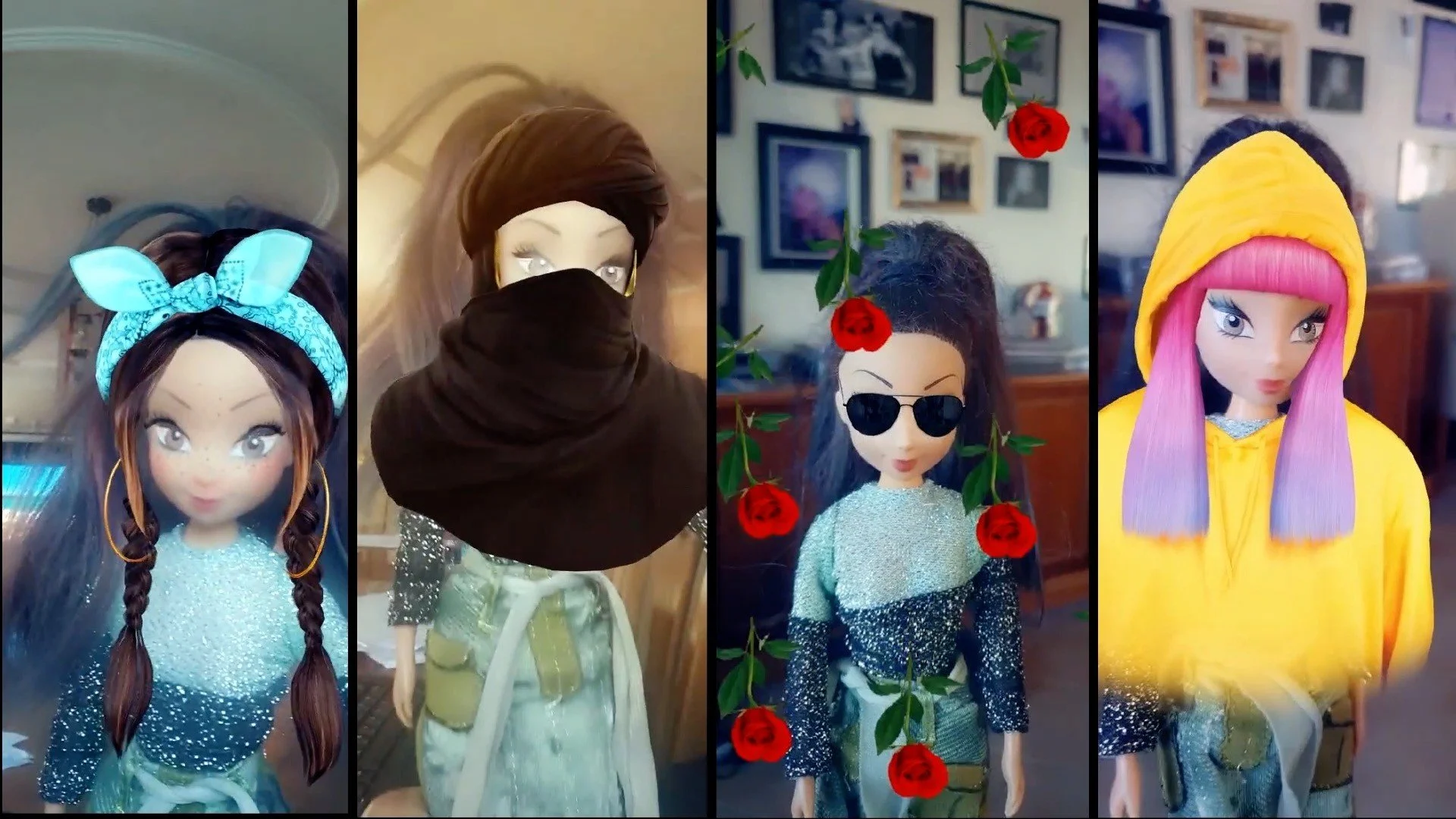
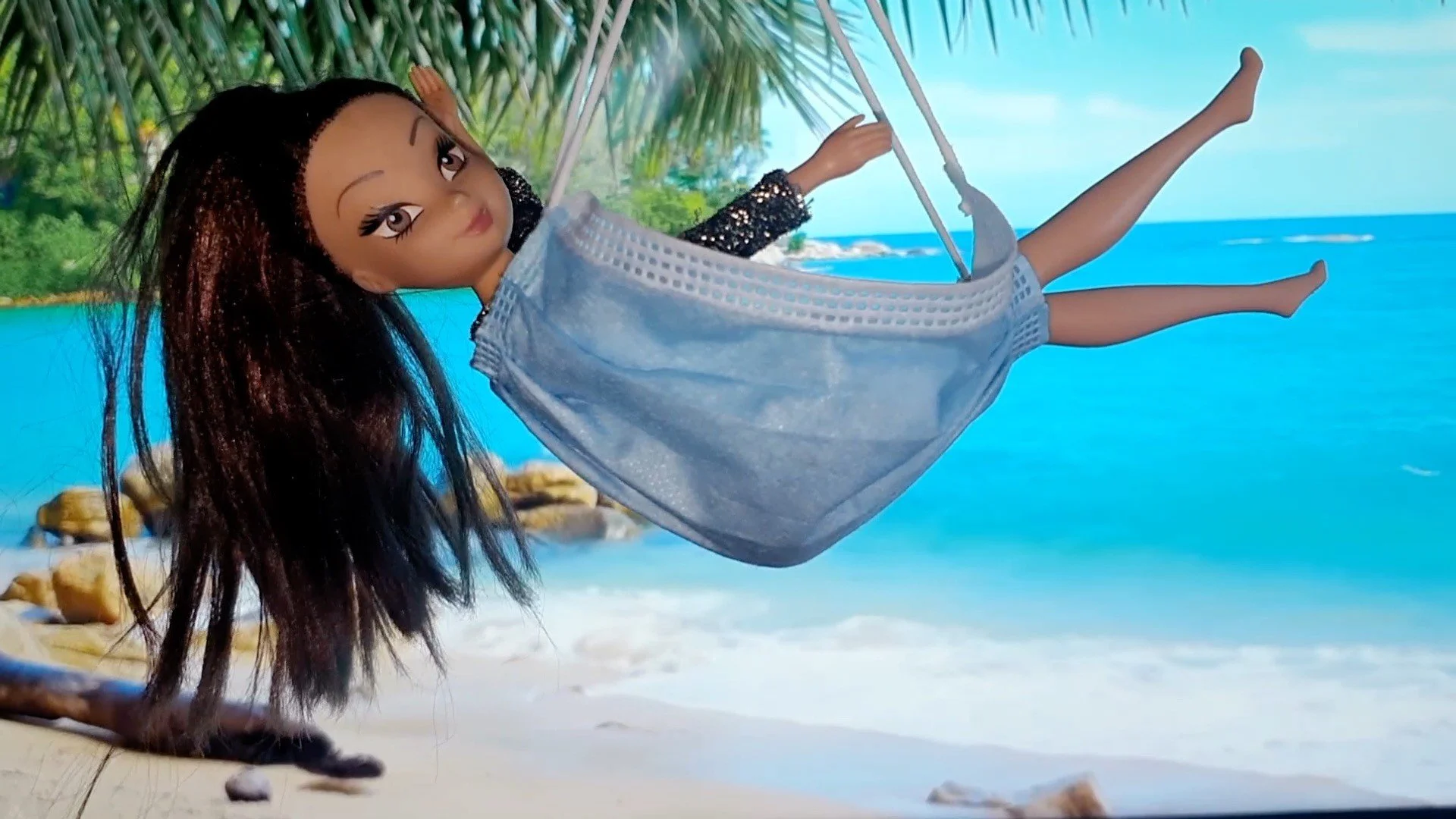
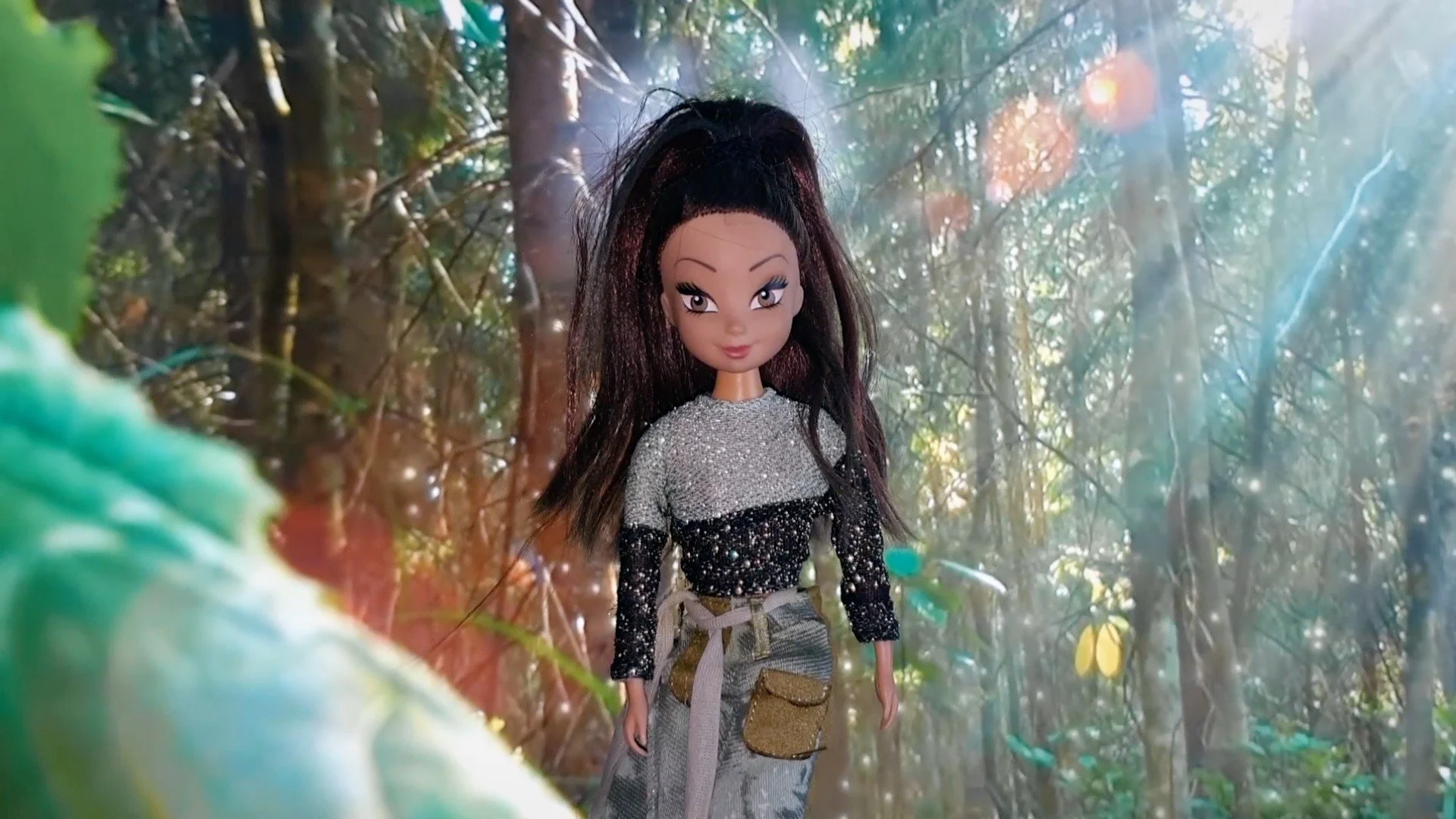
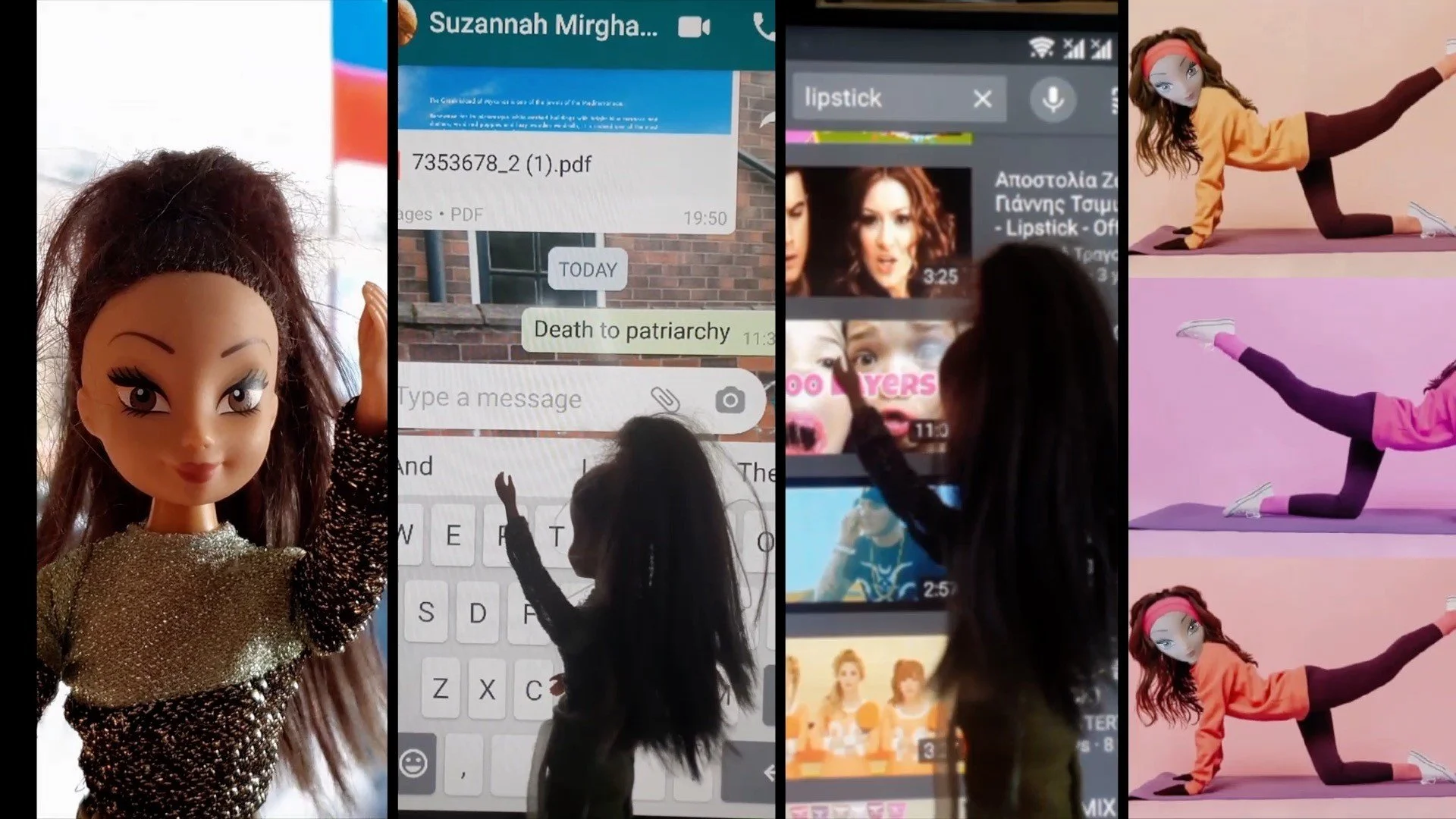
I had the luxury of working with the best actor in the world, which is a doll that never lets you down in terms of her non-expression. She has this blank face all the time, yet imbued with all of the thoughts that you give her. It was a lot of fun. It was a crazy process. It cost very, very little. It was experimentation from the beginning. It was all about experimenting. And of course using the tools that I had, which was my phone. The whole film is shot on a phone or on Zoom. This process really made me fall in love with filmmaking again because it takes you back to the basics of your own abilities and your own imagination and what you can do with very little.
How many dolls did you audition, I guess you could say, for Suzi? Was this always the one?
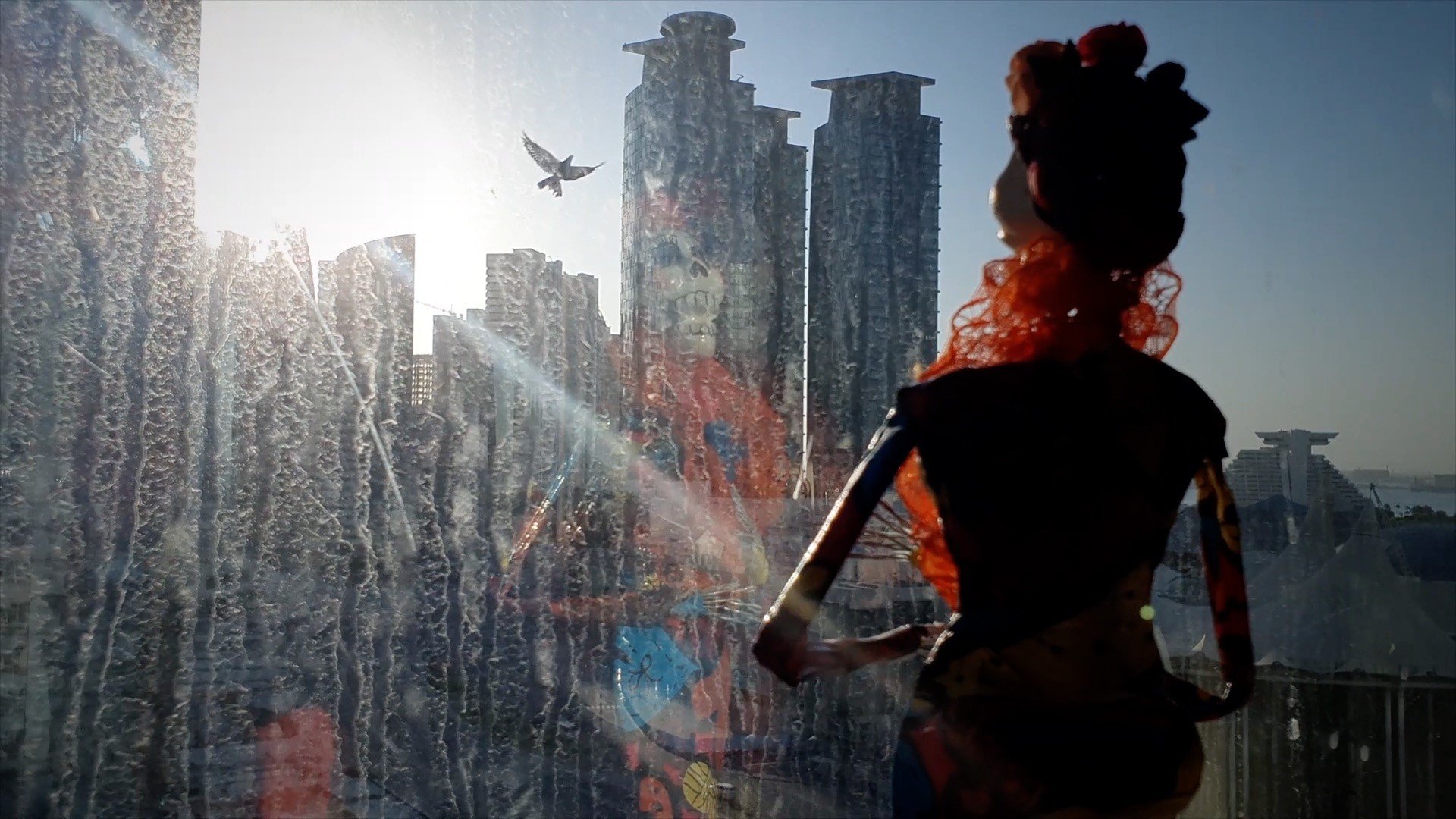
There is another doll in there, when she talks about not putting her makeup on. There’s a reflection in the window of a Día de Los Muertos doll. That was the only other stand-in for her. And then there is a Zoom meeting with various other dolls. That was my actual meeting with the online workshop group. Those were the other participants in the workshop with Rithy. You can even see his little doll, which is the one that he made for his film, The Missing Picture. He makes all his own figurines.
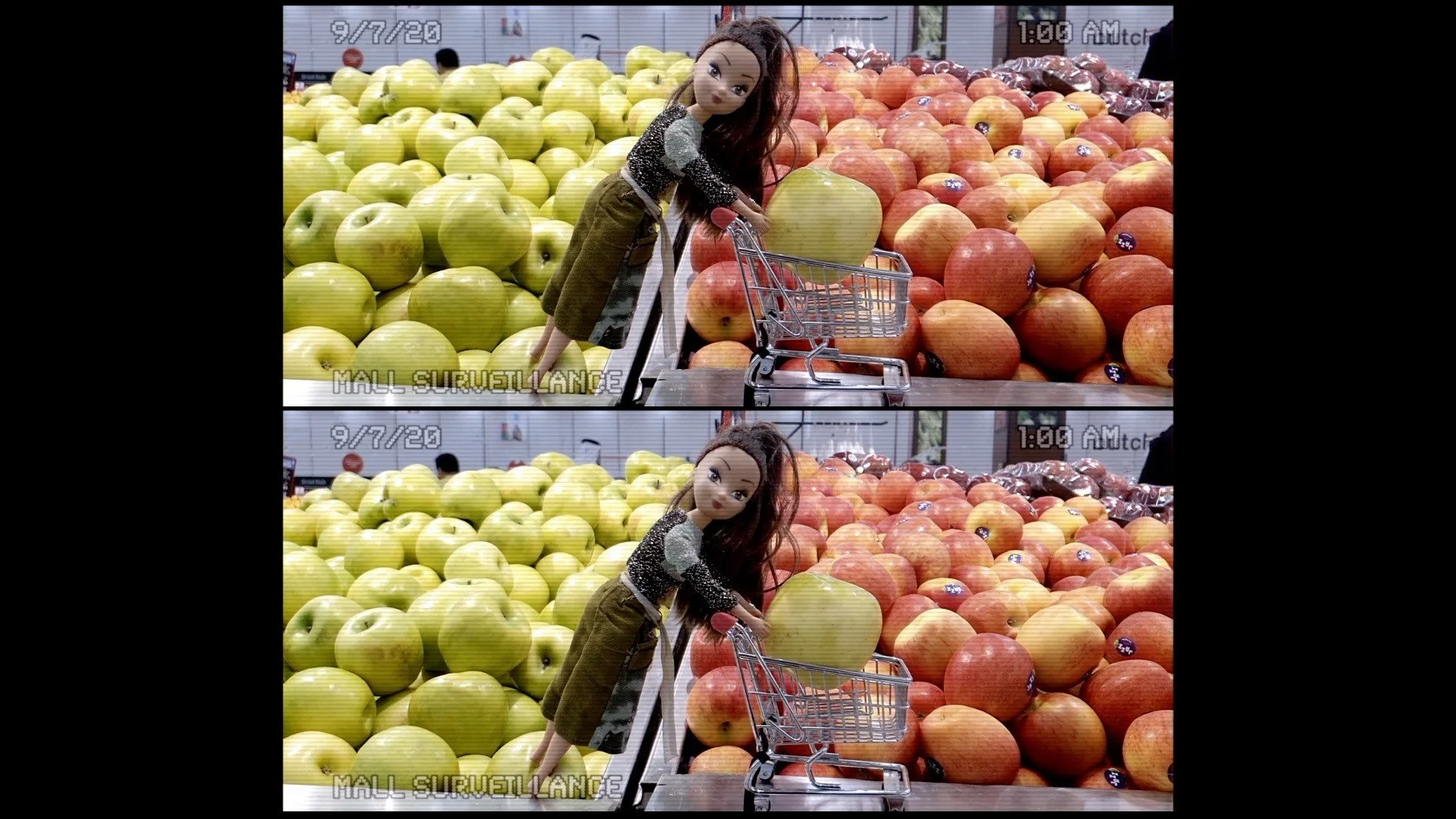
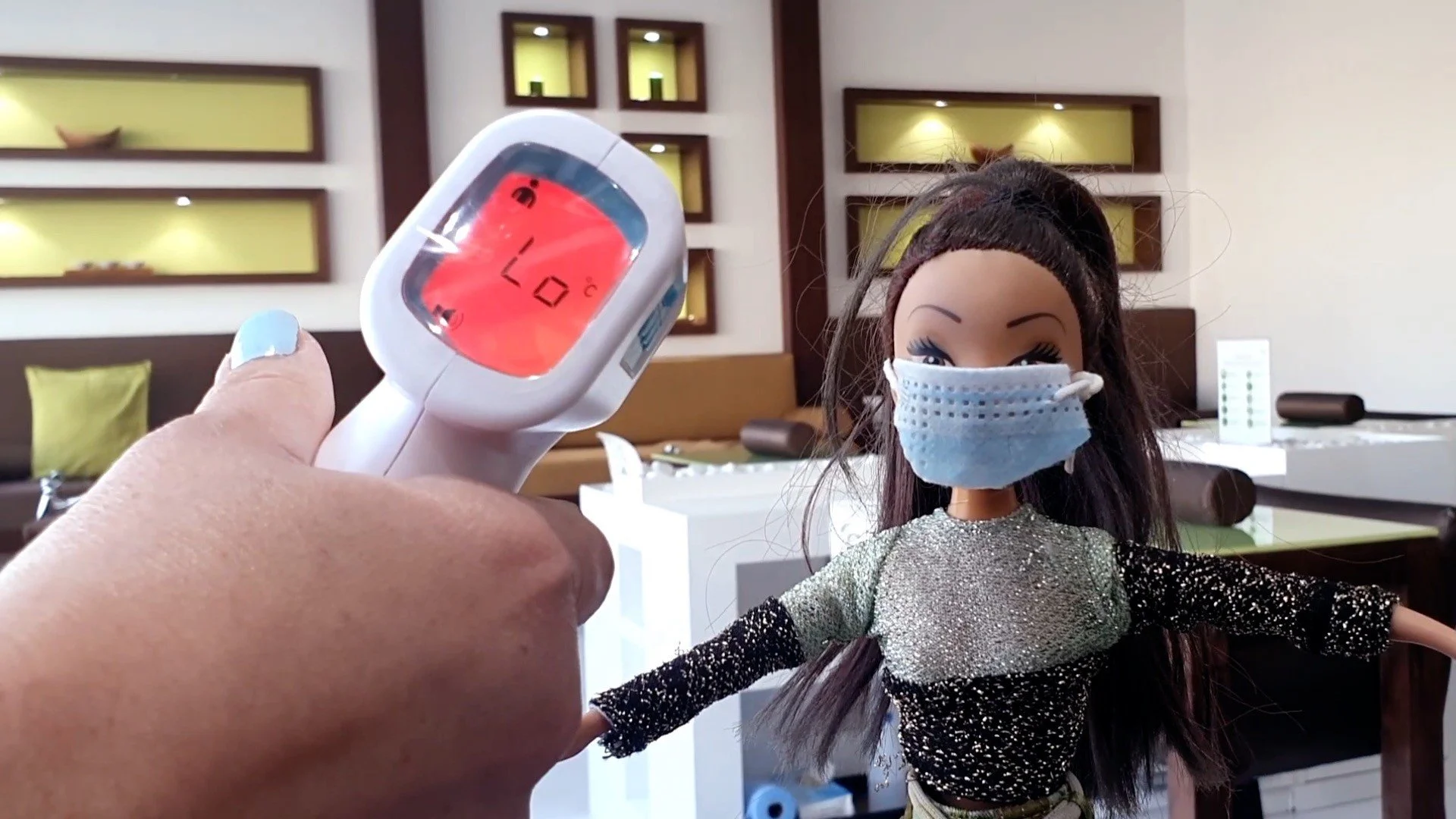
Suzi doll is an abaya-covered doll that I bought here in Doha. A very conservative Muslim doll. She comes with a long coat and the hijab. I like to bring in a bit of the local flavor, even though you don’t necessarily see that so much. The masks had done a lot of wonders for leveling society here, even though you didn’t see much of it. There's one shot—it's the only shot that's outdoors, if I remember correctly—where she goes to the supermarket. This was her only interaction with other people. Because everyone’s wearing masks, everyone in a strange way is assimilated by not standing out too much.
When you were shooting that, did you feel like an influencer making content?
I felt like everyone was looking at me like I was a crazy person because I actually took the doll and the little supermarket trolley to the supermarket and we were having a lot of fun. I think people were very disturbed at that time by anything odd occurring, but also enjoying a little bit of the difference. Of course I'm out there with my phone and no crew or cast or lighting. Everyone thought I was a bit strange, but I think everyone lost their minds a little bit during COVID, so people didn’t take it too seriously.
question
I did keep going and it was about 15 minutes long. But then it becomes the same thing over and over again. You can only have so many witty statements or stabs, as you say, before you get bored. Once I started getting bored, after a while it was like, “Okay no, keep it short and sweet.” It’s like a flash in the pan. See it, love it, leave it, laugh at it, and that’s it. I had about 15 minutes and even I was getting bored editing it.
“If filmmaking means that you have to follow a certain groove and this idea of the voice, I get it. I get that you have to practice, and practice makes perfect and so on, but I also think that you need to breathe. For me, breathing means doing something outside of that groove, outside of that norm. I discovered that you can be multiple people at the same time. And you shouldn’t necessarily develop one voice.”
question
I was kind of the class clown. We would edit an extra 20 or 30 seconds and meet weekly and show it and have a good laugh. I would always be kept to the end so we could end on a high note.
Because we were all so isolated, was making people laugh part of maybe making yourself feel more connected to people?
Definitely. The laughs are always intentional, but the laughs are through gritted teeth sometimes. They’re difficult laughs. We're laughing at it, as well. We know that we’re making fun of someone and we know that this is a very difficult time. I think it brought people together insofar as we wanted to see the good in humanity and we were laughing at [what] was bringing us all down. Especially with what was going on in the world at the time. That was the height of the Black Lives Matter movement. A lot was going on in Sudan at the time. There was a lot to unpack. I think this is just the way that I dealt with it, but [it] resonated as well, and resonated with people outside of my culture, outside of my community, in this shared online space.
question
He is the harshest critic. He will never, ever say that something is good. But the moment that he shrugged his shoulders and said, “Eh, not bad,” I was like, “Yes.” “Not bad” for me is the highest accolade that you can get from Rithy.
question
As I said, I think it’s the thing that made me fall back in love with the process. We’re so concerned about an industry and formalizing. I come from Sudan, so we don’t have [an industry]. We want to build one modeled on other industries, with rules and regulations. This gave me the space to play and to think of creativity in another way, but also to explore different sides of my own filmmaking, where people don't necessarily tell you what’s right or wrong. You follow an instinct, you follow a laugh, you follow an audience reaction.
I remember screening one of the first cuts of this to other mentors outside of the workshop and there was some shock horror. People said, “Suzi, you have built a track record for yourself. I think you are losing your voice.” I was shocked by this. I said, “But I’m experimenting. I’m trying to do other things.” They said, “No, you have to develop the voice that you have in Al-Sit.” Al-Sit was for Sudan. It was building something for people to connect with the culture. That’s when I realized that if filmmaking means that you have to follow a certain groove and this idea of the voice, I get it. I get that you have to practice, and practice makes perfect and so on, but I also think that you need to breathe. For me, breathing means doing something outside of that groove, outside of that norm. I discovered that you can be multiple people at the same time. And you shouldn't necessarily develop one voice.
question
That moment is a real transition between the horror and then moving on so easily and so quickly and needing that entertainment, that buzz again. It goes from dark to light. This is a nod to the Black Lives Matter movement. This is a nod to people that were being killed in the street. Riots, Sudan, Darfur, it/s all mixed up in there together. Yemen, child soldiers. It’s too much. She’s overwhelmed, and then, “Next, please. Next reel, please.”
How do you cuz I mean that it just seems to be happening more and more every day. It's just such a it's just it's so uh in the foreground that experience. Do you I mean how do you deal with it just personally?
I have to say I’m not a huge social media user. I have an Instagram account that I check occasionally. I don’t normally post personal things. It’s always in relation to my films. I try not to get sucked in. My husband doesn’t use social media at all. I think we’re on the cusp of a generation [in which] it’s not our entire world. That’s why I'm really interested to look at my nephews and nieces who are divided 50/50 with those who have and those who haven’t. That’s a really interesting portrait of a generation where some have rejected it entirely. They’re into sports, they get up in the morning and go play football and basketball, they’re always doing outdoor things. And then others are glued constantly. Any time people say it’s the way of the future, it is, but it also isn’t. I have my nephews and nieces, who are in their teens, as proof.
Suzannah Mirghani is a Sudanese-Russian writer, researcher, and graduate in media studies/museum studies. Her film AL-SIT (2020) won 48 awards; VIRTUAL VOICE (2021) premiered at Tribeca; and KAMALA IBRAHIM ISHAG: STATES OF ONENESS (2022) was commissioned by Serpentine Galleries. Suzannah’s poem Some Behavioral Characteristics of the Sudanese Honey Bee was published in Mizna (2023). Her feature film, COTTON QUEEN, won the 2022 ArteKino Award at L’Atelier de la Cinéfondation, Cannes Film Festival. It premiered at Venice Film Festival, won Best International Film at Thessaloniki Film Festival, the Audience Award at Doha Film Festival, and Best First Film at Carthage Film Festival.