Naiku
directed by Pijus Maciulskis
Lithuania. 2023. 20 min.
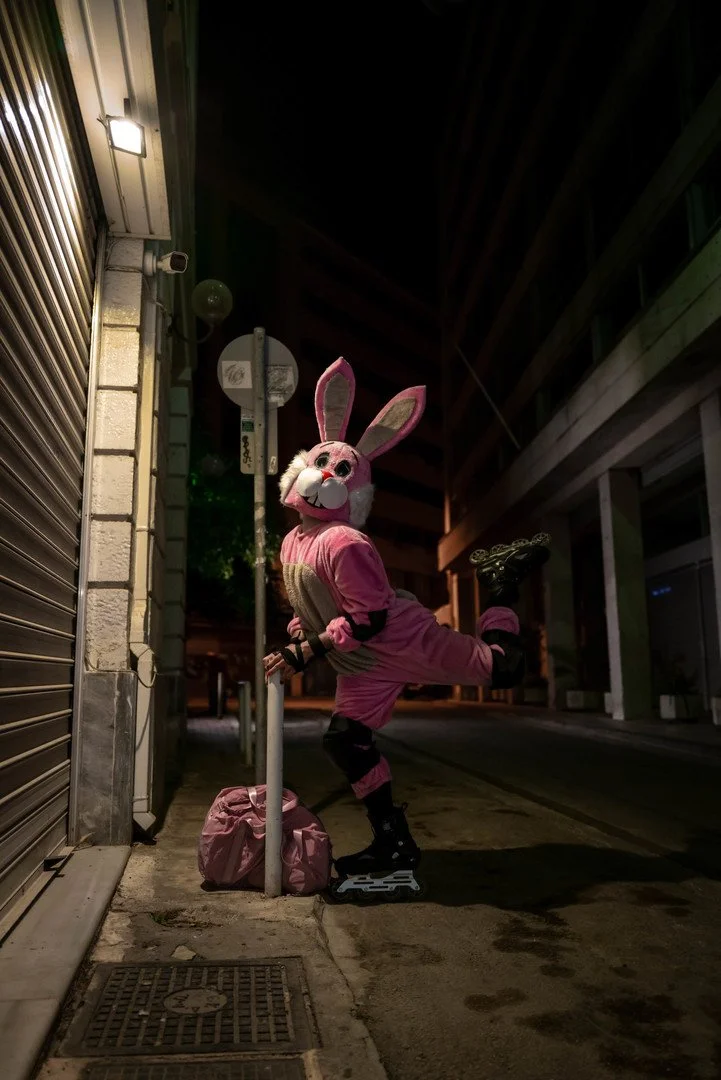
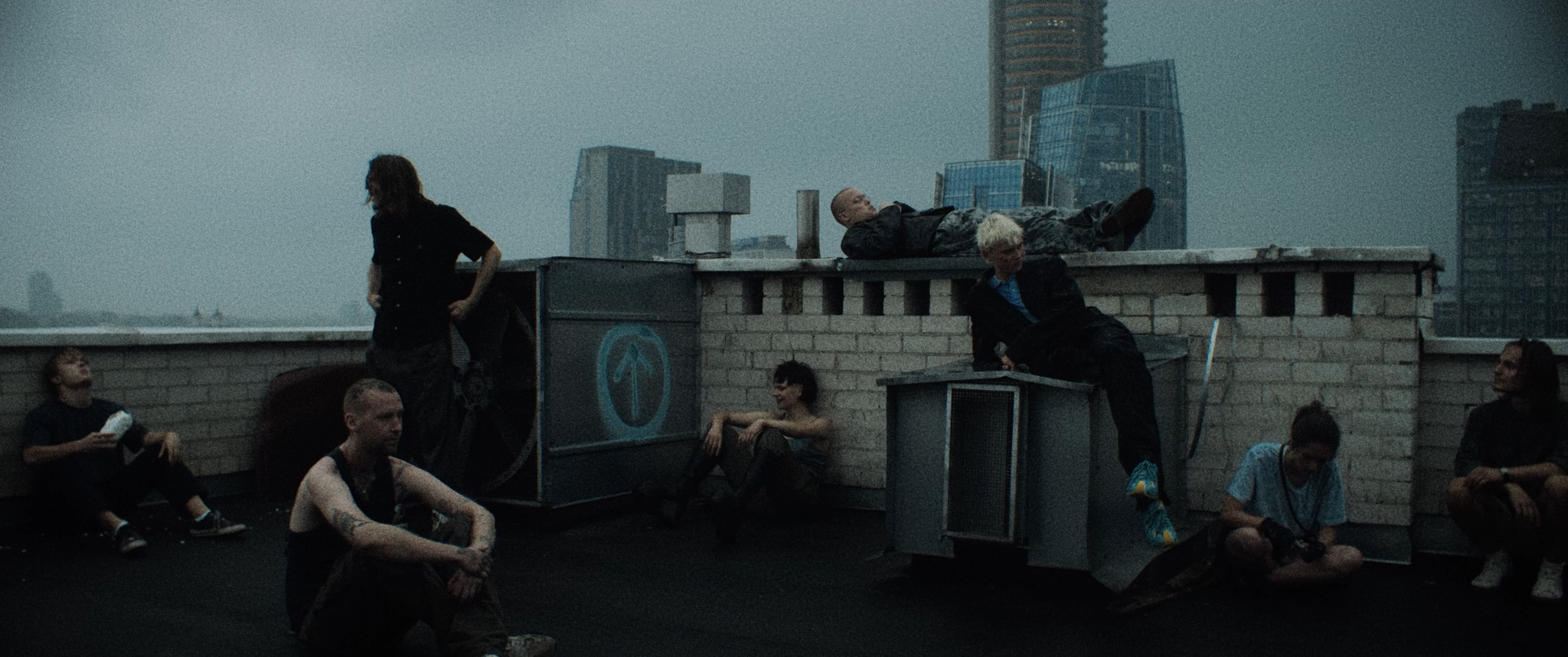
Ten hooligans recklessly drive a jeep through abandoned neighborhoods and lure a passerby, Adomas, to join them in a violent tournament.
by Jesse Knight
Mere seconds into Naiku, it’s clear we’re in the hands of an artist hellbent on torpedoing expectations. Maximalist in scope and ambition, anarchic filmmaker Pijus Maciulskis builds worlds that feel both space-age and primitive. Stark yet sweeping. Color explodes from derelict, gunmetal environments. Fifty shades of ashen.
A world inhabited by armorless knights, musketless soldiers, and punks who’ve conformed so uniformly they operate as one body. Their weapon of choice is savage competition, their ammo the taste of freedom. Victory is an illusion. Better to just keep playing.
It’s hooliganistic filmmaking at its most riveting, subverting genres before laying them to waste. Maciulskis wields restless artistic invention with walloping impact, and gifts us this blunt reminder: If you see a rule, break it. That’s what they’re for.
You seem to approach filmmaking from such unique angles. What drives the way you approach each project?
Writer/director Pijus Maciulskis: I guess at the moment, which is still changing quite rapidly, I feel like my main driver is something I’ve never seen, and originality in general, trying to push for new sensations or new feelings. At the same time, I understand the older generation of filmmakers that I’ve met who are upset about the current state of art. Some of them are unhappy that everyone is chasing originality—not only in film, but in general. They say the everlasting themes and the feeling of harmonious life should be maintained so as to stay in touch with the eternal beauty and guide people towards it. And I understand that chasing originality damages this sort of a goal because we try to constantly reinvent everything and push for new sensations. If I come up with an idea and it’s something that I’ve seen or felt or imagined, I instinctively throw it away or try to change it so that it’s exciting to see anew. Sometimes I have problems with that because then it becomes too vague, so I have to choose where to push back. Anyway, I’m conflicted about this…
Was there a specific point when you realized you wanted to push things in these different directions?
Not really. Looking back, when I started shooting with friends in the backyard, we were maybe 10. I had a Nokia X2 at the time. The 5-megapixel was the first camera I had, and we did shoot very unoriginal things for that time. Crime, guns, money, and films like that. But as I developed in general as a person, I wanted to understand what I was attracted to, and I guess that’s how I grew into the idea of individuality. That you have to pursue something, pursue yourself in a way, your original being. I’m not sure why that is the case, and I'm not even convinced that it’s something worthwhile in the end. I hope it is. It’s satisfying, but at the same time it’s a very relentless, sort of never fulfilling sensation, too.
“I see style and world building as essential to have an effect on the viewer. If I see reality without a mask in a film, it feels either not truthful to the real world or a bad imitation. It almost never feels right to me if it’s trying to be reality as it is.”
It’s funny that Naiku and your next short Lark Ravenhair explore these crime elements. It must be satisfying to make the films you were making as a kid in your backyard but on a grander scale. What attracts you to that—I don’t want to say “genre” because that limits it, but what attracts you to this environment and these characters and this propulsive intensity?
I grew up in a neighborhood where I was allowed to free roam with my friends. We did have some pretty sketchy areas in Vilnius. Some young guys from there would come to our neighborhood and we had frictions. Some kids started smoking quite early, selling or giving [to] others, first Romantics too. And there were some territorial clashes. Imagine stuff like this, but with 10 to 12 year-olds. It’s strange. I would imagine this happening later, but we did it earlier. At the time, I saw a lot of violence. We had a burglary at our house when I was maybe 10 and I saw a man fighting with my father. There was a knife and a lot of blood. I saw a lot of this stuff pretty early on, at around the same time I got my first camera, so it kind of synced. We did have a lot of bullying in the neighborhood, and sometimes we filmed it. We were oblivious and intrigued. No guns or many life-threatening situations, just, once in a while, some sinister events.
At the same time, those were the best years I’ve had in terms of adventures, friends and intrigues around the neighborhood, because we were basically allowed to explore freely and test everything with our own hands. I’m really thankful that my parents allowed it to happen because the climate is changing in general and everyone’s more cautious now. I feel like I got the last bit of the cake for that.
“When you see something, immediately your brain categorizes it into all the shelves that you know already. My main goal a lot of the time was to immediately get all of that out so that it’s reset.”
What inspired Naiku?
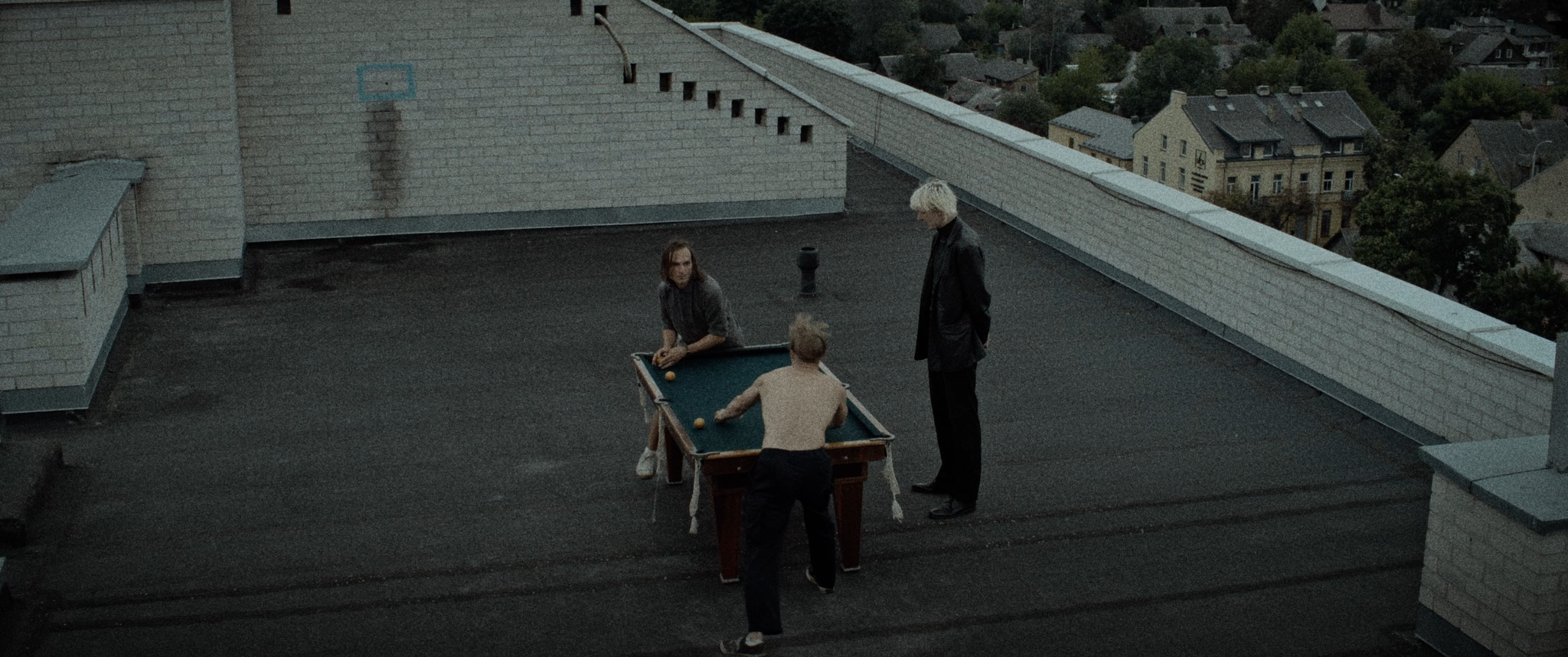
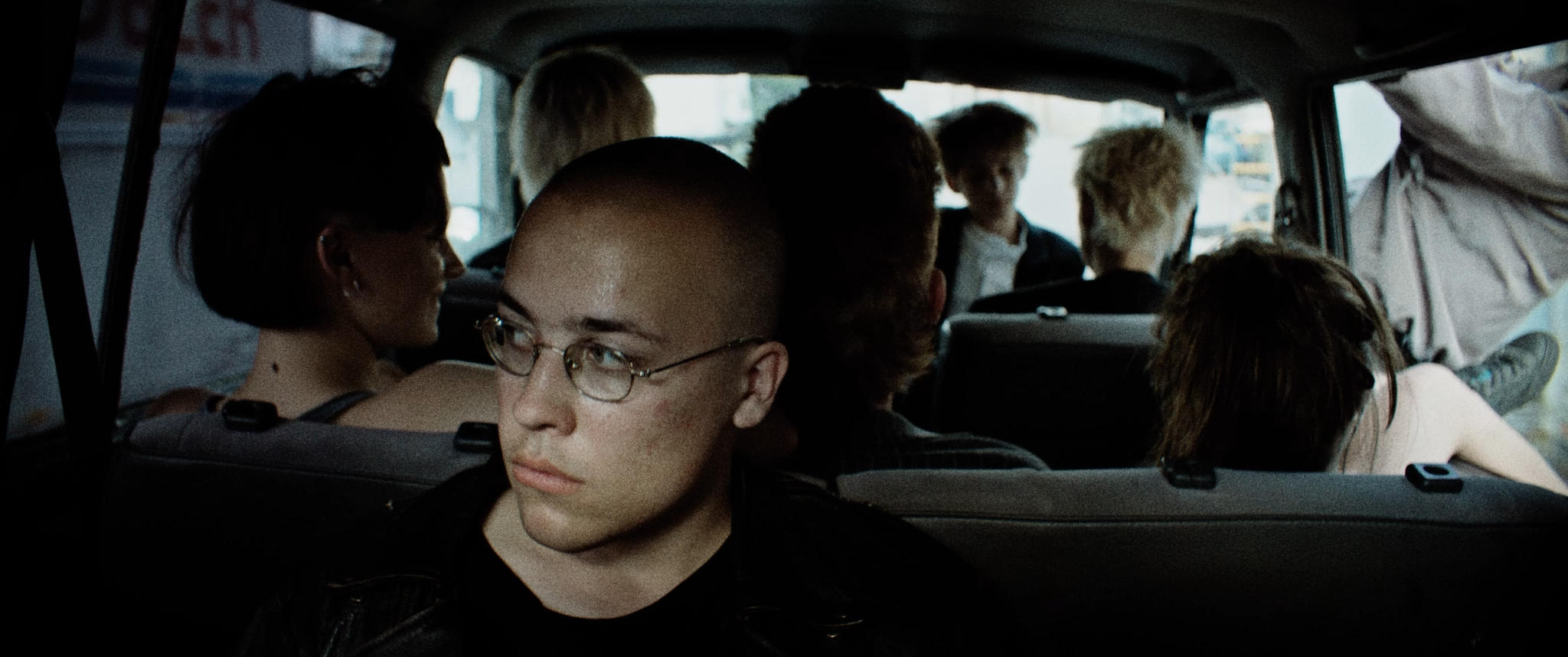
I was playing basketball for six years in middle school quite seriously. We were driving in and out the country and would stay at these trashy places. This particular one was a half-star hotel or hostel and it had a billiard table, but there were no cues, only balls. We immediately figured out a game to play. It was similar to the film, but everyone was covering a single hole with their hands and trying to throw the ball in. And of course it escalated. It was a very natural development. ‘Basketball bros’ were quite fast to invent a hurting competition, and we had fun with it. So the game in the film was directly inspired from this.
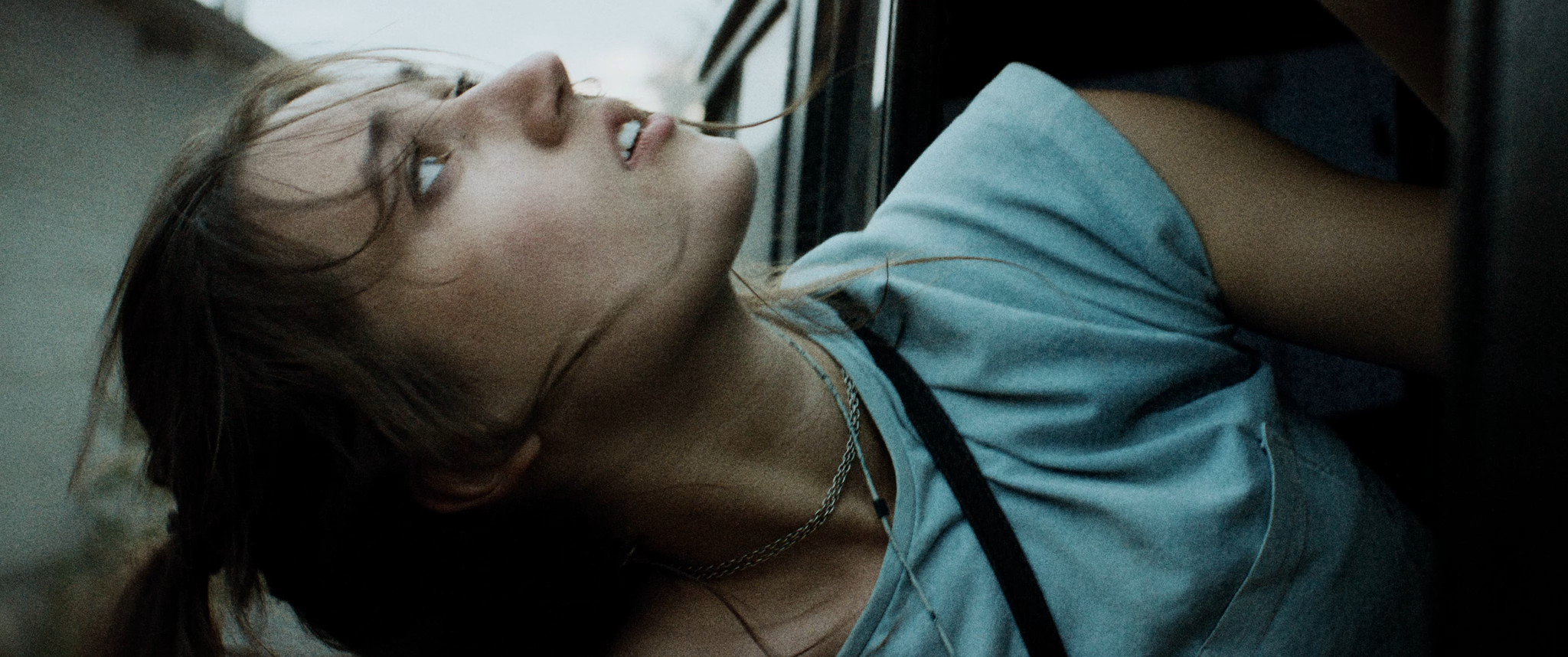
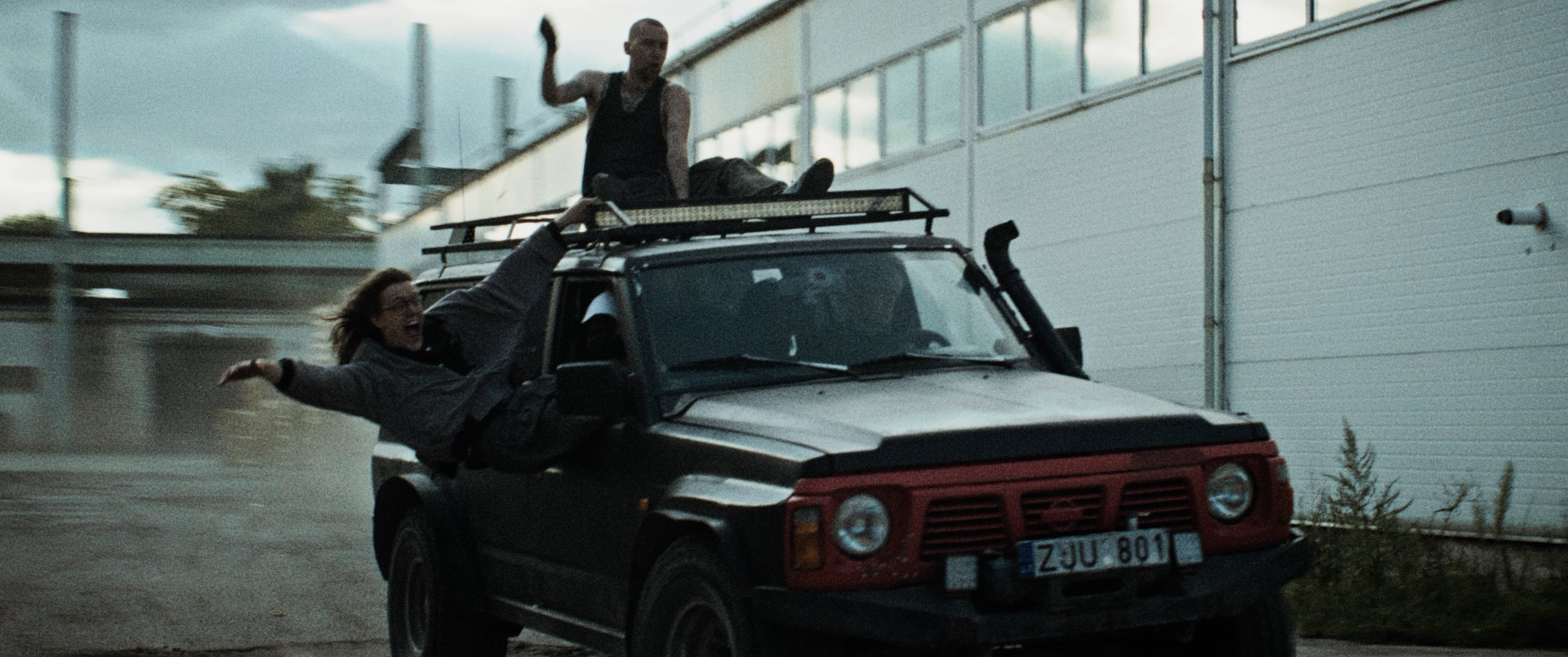
What were the logistics of shooting so many bodies crammed into a moving jeep?
In the beginning when we decided that it’s going to be 12 people in the jeep, a lot of people said it was impossible practically. But when we fit everyone in, it wasn’t so stuffed. I feel like we should have maybe added four more people in the back. It would have been what I initially wanted.
I was—and still am—a very naive person. In the film, the world is like the jeep, and there are different castes or different social statuses and I was trying to put that in the jeep itself, the hierarchy. Originally, I wanted to fill the jeep completely. There’s this Michelangelo Antonioni film, Blow-Up, and there is this short mysterious sequence of a jeep full of young mimes driving around. I had this whole idea about making, not a spin-off, but some sort of a story with them. I wanted to know more about them and it was never shown.
The clutch part actually also comes from real life. Fresh out of high school when they had their licenses, my friends would do collective driving. One would do the gears and pedals, another would drive, and the last one would help the driver smoke. So, a real-life situation, but I just pushed it a bit.
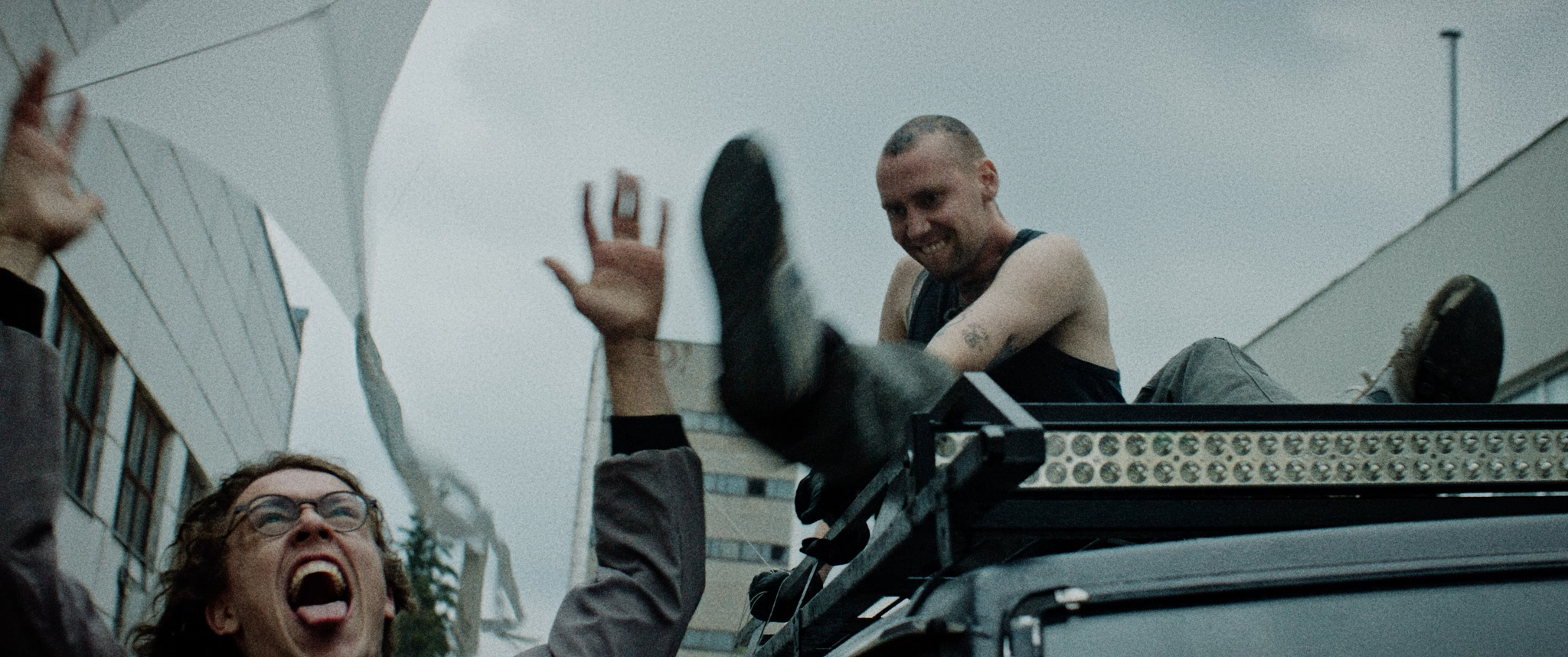
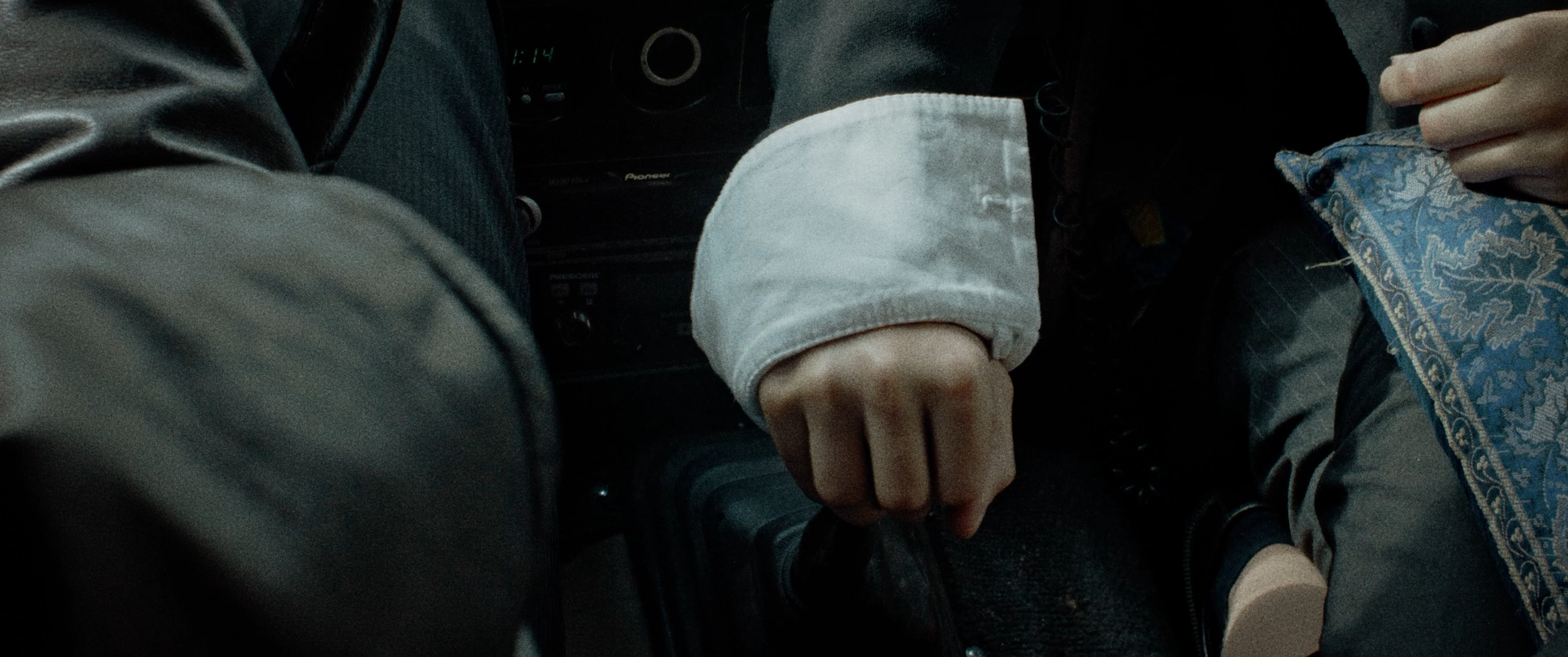
What went into styling the characters? There’s this almost futuristic element to the way they dress. They’re so cool and distinct.
Most of the actors are not actors. Only one, the driver of the jeep, is a professional actor. The rest were mostly first-time actors. Some of them were models. Some of them local rappers, photographers, singers, local friends, or inspiring people that I found photogenically attractive. The hairstyles were actually theirs. We didn’t change anything physically, really. So that’s a compliment for them. The costumes we did create according to the palette and how they were as people.
We did a lot of improvisation in general, so a lot of things came about naturally. At some point we put the camera down for an hour, for the wide shot of them all together, and the strong guy without the shirt, Juozapas, he fell asleep for real during shooting and didn’t know we even started. Then he woke up and we allowed them to roam around the shot, and he didn’t realize others were acting. I thought it was completely obvious, but some magic happened. They started acting up on him and he thought it was for real, and it worked. So a lot of elements we just allowed to happen.
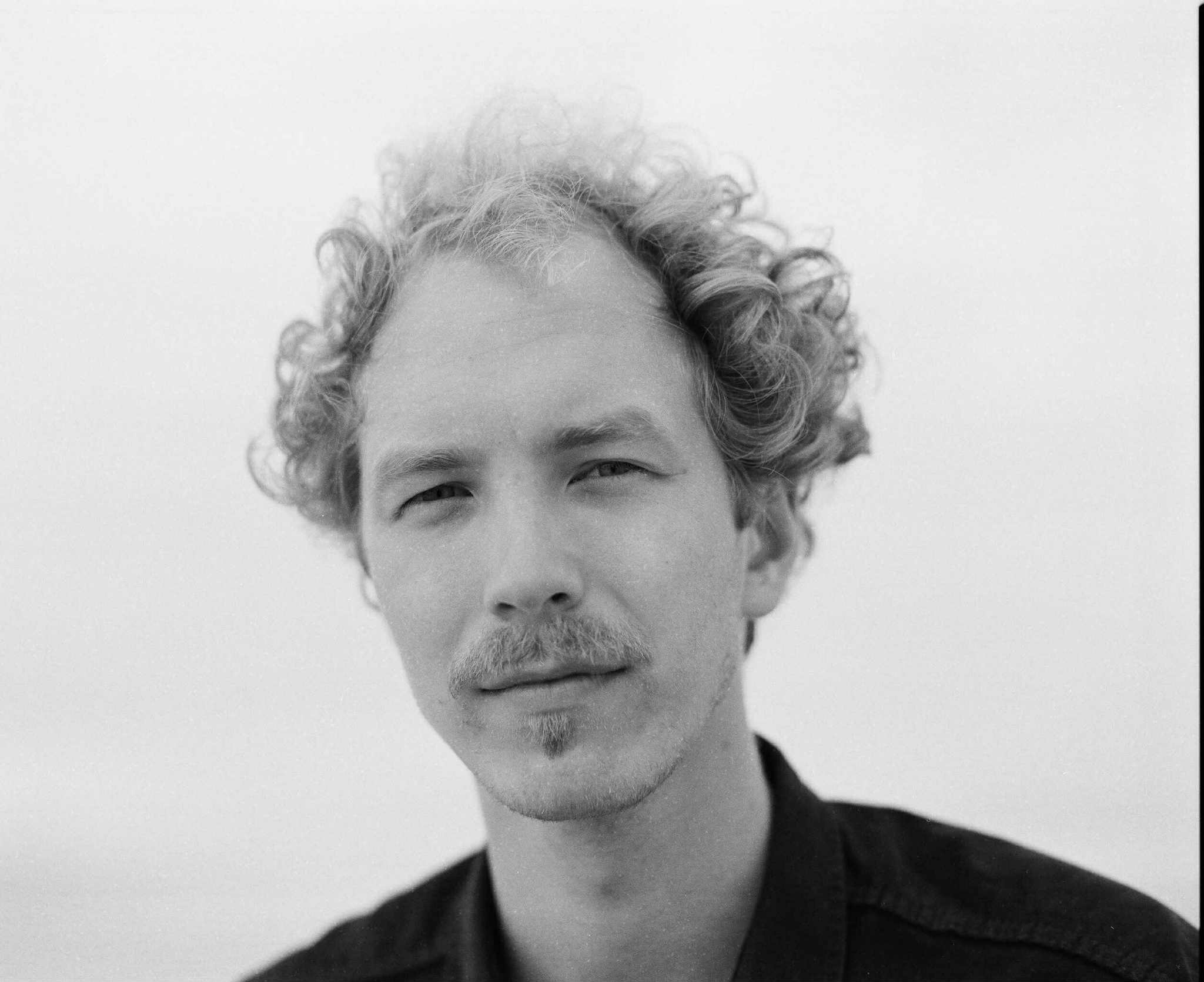
“My main driver is something I’ve never seen, and originality in general, trying to push for new sensations or new feelings.”
It’s rare to see the kind of maximalist scope and world building of your films in general, but especially in the short form.
I see style and world building as essential to have an effect on the viewer. If I see reality without a mask in a film, it feels either not truthful to the real world or a bad imitation. It almost never feels right to me if it’s trying to be reality as it is.
I also don’t find it attractive and interesting, really, at all. It goes back to the same sort of originality thrust that I was speaking about. When you see something, immediately your brain categorizes it into all the shelves that you know already. My main goal a lot of the time was to immediately get all of that out so that it’s reset. To me, the driving force of the narrative partially should just be the mystery of trying to understand how it all fits together, and what the maximalist feeling or larger imagined world is. I don’t really want it to feel like a direct world, but also I don’t want to go too much into genre or abstraction. It’s difficult to maintain that balance.
It also goes back to how I grew up. I grew up with a lot of video games and genre films. Even in our teen years, we would gather with friends and try to watch films that would blow our minds or be something that we couldn’t understand, and it would have a very strong emotional effect. To this day I don't really know why. Most of the time it wouldn’t feel good afterwards, but it would feel impactful.
What were some of the movies that you watched to blow your minds? Which ones were successful?
Michael Haneke and Lars von Trier would always deliver insanely well on something that you haven’t seen and were, I don't want to say damaging, but close to that. We would somehow enjoy it. Some of these films I would not watch again because now I’ve come into more understanding of what they are about, and got more personal experience that may resonate even more. I feel like we did understand what they were about, but now, with time, it becomes sharper and bites more. So maybe I wouldn't watch them again. Some of them.
Were there any surprising reactions you’ve had to Naiku?
We got accepted in Japan, and we went there a few times to show it in different selections. They responded very strongly to the kite and the metaphor. We found some similarities in mythologies. I wouldn’t be able to say how relevant it is in Japan exactly, but they felt the metaphor emotionally, and I wouldn’t have dared to expect that.
The word “Naiku” itself is a gibberish word I came up with and it felt right. There’s no meaning. And in Japan, “Naiku” means a particular “Inner Shrine,” which was incredible. When we were there for the first time, my friend went to the Shinto shrine where “Naiku” was written on a road sign in Latin symbols, he met the priests, told them the story and they wrote a blessing down. It was this strange, mysterious experience, and it expanded as we were there with various pagan and northern countries’ connections.
When they gave us the prize, the jury reflected on how they felt the resonance with the Lithuanian kite symbol, which is one of the central folk figures. I would have never expected it to have that alignment, because it’s so far away. I was really amazed.
What were your intentions with the kite? Also those final shots. What do they mean to you?
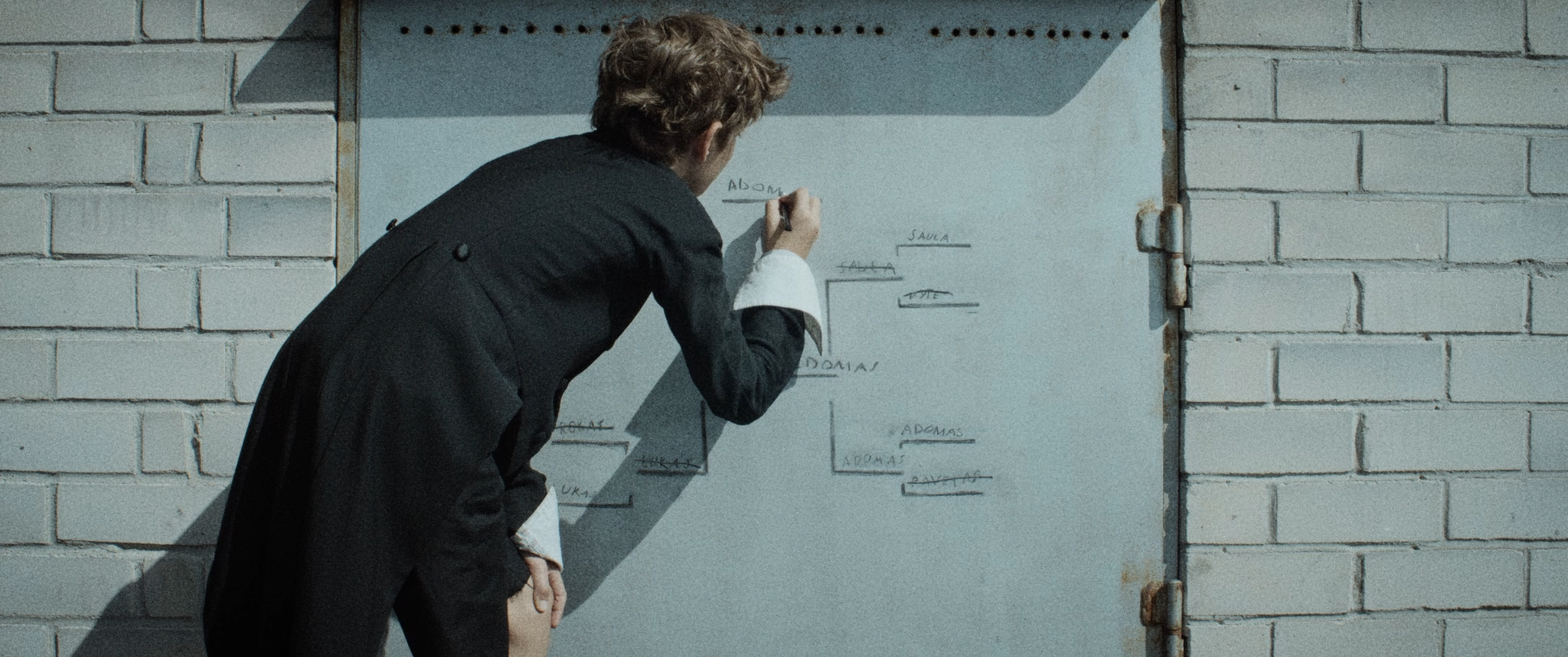
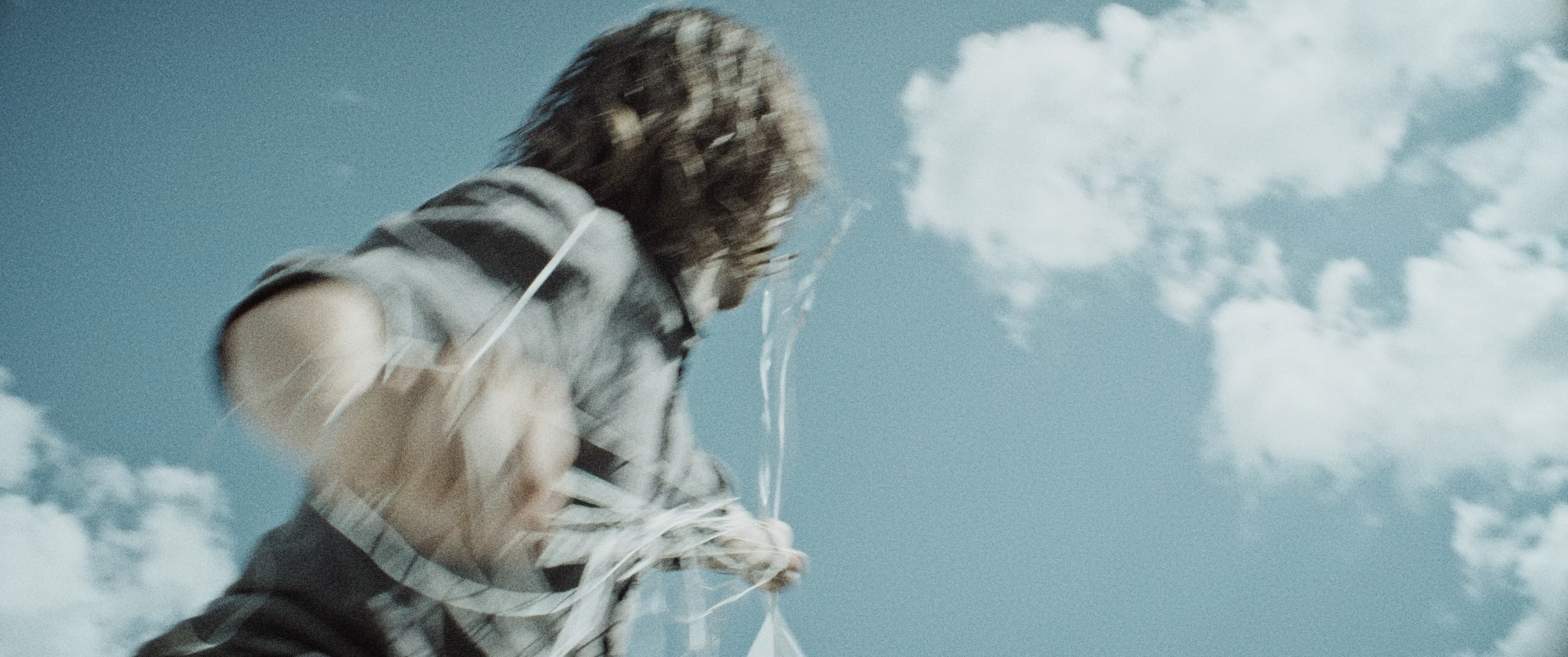
The kite was sort of a trophy. The whole hierarchical metaphor was for the competition in life in general, and that you’re thrown into the game without ever choosing, but you're attracted from the very beginning to this abstract prize that allures your attention and desire and effort, and can make you a really bad person and distract you, maybe even from personal relations or intimacy. I never felt that it’s money in particular, which would be very concrete. I felt like there’s some strange underlying allure, and with the kite I wanted to keep it abstract because it’s the wind, really, not the object itself. It shows the movement of the wind. We were trying to link it a bit with folklore in Lithuania so that it has a feeling of an entity, but never characterized. I didn’t want to simplify something that I don’t really understand, but I wanted to keep that feeling. When he wins, I wanted it to feel like the win was unsatisfactory.
When he takes down the kite, the kite itself, we wanted it to feel less godly or ethereal, just a material stupid object with many ropes tangled up. It’s not there anymore, it doesn’t exist, or it exists somewhere else. I wanted it to feel empty and that he won but now he’s alone, walking in his kingdom of emptiness.
What were some of the lessons you took away from your experience being mentored by Krzysztof Zanussi?
He was really impactful in the way I think about and value film, because the attention and the dignity and the pride that he takes in the craft and the art was something that I had never seen before, how seriously he takes it. At one point, he watched my film Waves Shine in Grey, that I did after high school, and he said it was promising. He said, “Before coming here you could have done many different things with your life, but now you have to be a film director.” It's a very dramatic way of saying that, but it was also very impactful at the time because I was young and lost about whether I should go for it or not. He dared to push me, sort of courageously, and I took it.
But he also said, “You have these youthful wings that you have to break, and when someone breaks them, you shatter completely, and only then, when you reassemble yourself, can you make good films. For now, you just have to wait until they’re really broken.” I feel like maybe now I have some of that damage.
I really admire his intelligence and the cultural way he approaches film. He would say, “No one will give you the criticism. I have to do it now for you. I feel a duty. Of course, I could say to you how nice this film was, but I have to sort of kill you in a way.” Not “kill you,” but that was the feeling. He was really expressive. It impacted a lot of my dedication.
Pijus Maciulskis is a film director, screenwriter, and producer from Lithuania. Collaborating with artists across Europe, Japan, and the UK, he aims to innovate cinema in the rapidly evolving audiovisual landscape.
His short film, NAIKU (2023), won the Grand Prix at Japan’s Yubari IFFF, followed by theatrical release in Japan, as well as VOD and DVD releases online. NAIKU was also showcased at festivals in Bordeaux, San Francisco, London, Hong Kong and others.
Pijus has graduated from King’s College London with a BA in Film Studies and will begin his directing studies at the NFTS this winter. Pijus is engaged in academic initiatives. He served as a jury member at the Venice IFF Giornate degli Autori, and helped develop Lithuania’s first Film Studies course.
You Might Also Like…