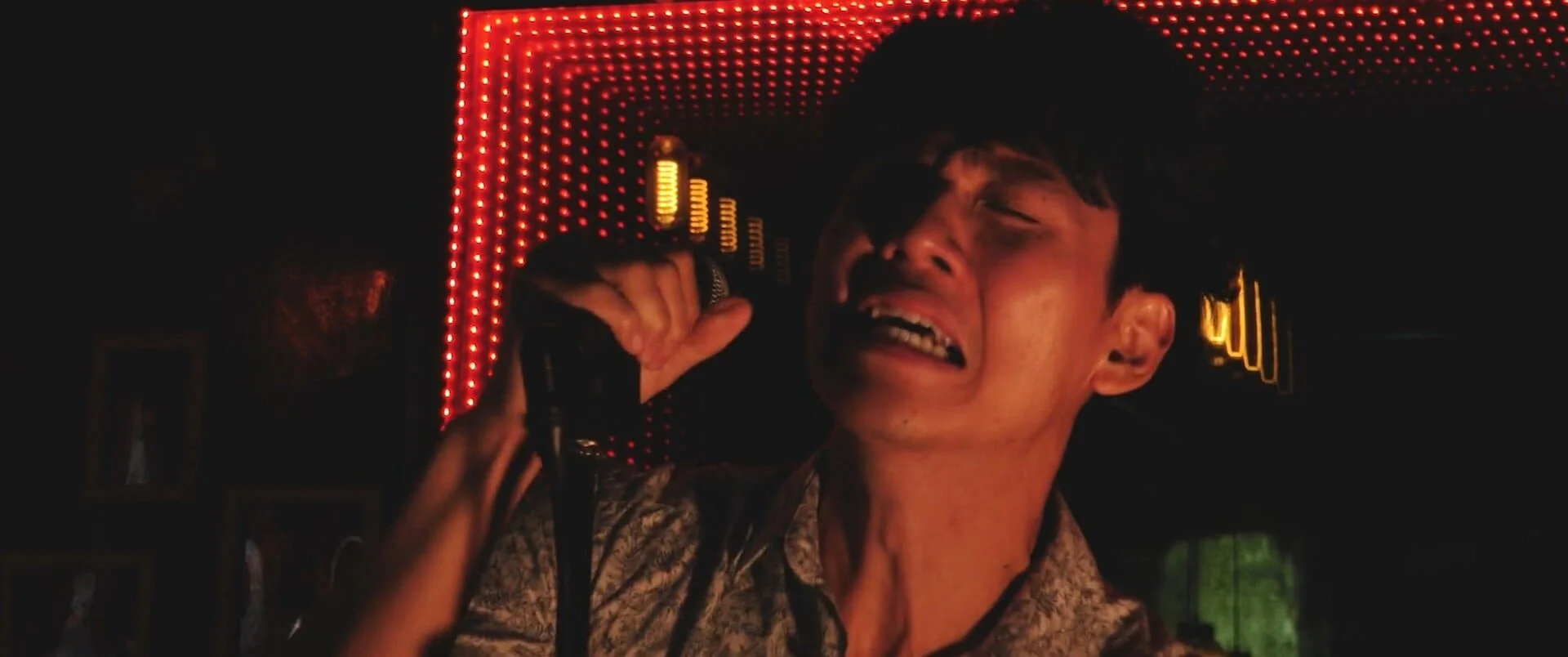
Blue
directed by Ethan Romaine
USA. 2026. 5 min.
Josh runs into an old friend.
by Jesse Knight
The story goes that while recording 69 Love Songs, the magnum opus concept album from American experimental pop outfit The Magnetic Fields, mastermind instrumentalist and principal songwriter Stephin Merritt adopted this phrase: “Or, it’s done.” It was a mantra to keep the process moving on such an ambitious project, but also to entertain the possibility that what already exists is all there needs to be.
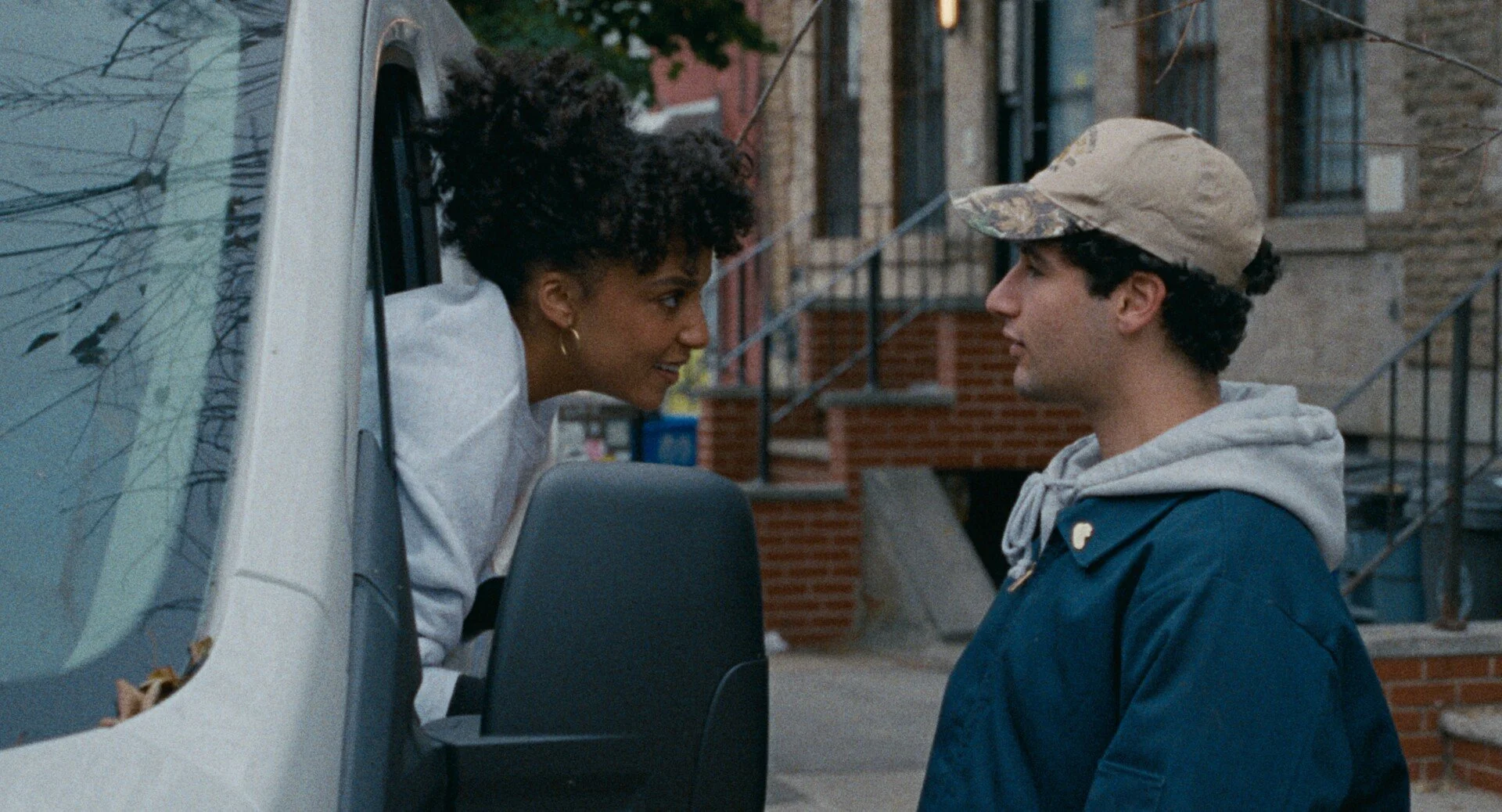
With a similar spirit and ethos, filmmaker Ethan Romaine’s festival hit and crowd-pleasing Blue is five minutes of dazzling and enviable wholeness. Shot in under 12 hours on a Brooklyn curbside, featuring two plucky actors generating stadiums of electricity, Romaine’s film is a blueprint-caliber example of “Or, it’s done” for the screen.
It’s neither the brevity of runtime nor the simplicity of premise that’s impressive, but how much blood it pumps from its gargantuan heart in such a brief stint. There isn’t even time to register how or why it functions as well as it does; we’re too caught up missing these characters as if we ourselves just ran into them in the street. The film itself may be a sprint, but the longevity of its imprint is a marathon.
You’ve talked about how you try something new with each film. What’s that approach, and what was new about this one?
Writer/director Ethan Romaine: Each time I set out to make a project, I have always given myself a set of challenges or a set of parameters. Blue was by far the tightest parameters that I had given myself: to make something that’s five minutes long and non-stop escalation. My previous shorts were this series that I made in my hometown in rural Appalachia. Those were a community project and were very much meant to represent an area that I felt hadn’t been represented, and that was really beautiful. That was early on and I was learning a lot, as I still am. With Blue it was much more technical, both from the writing and the execution. Simple, but technical.
How did you decide on those parameters for this project?
I had no money to spend on it. That was partially why I wanted to make something cheap, but something that should be made cheap. That’s the challenge when you’re making ultra low-budget film, to find the story that can and should be told for little to no money. I had to make something with nothing, so I’m going to shoot it on my street with a car that I have and a U-Haul that I did rent, but that was it.
And then it was just me and my cinematographer [Benjy Berkowitz]. It was all natural lighting. We used a Sony FX3. We went on ShareGrid and got a zoom lens that had a motor so we could do those long zooms. That was the one visual concept that I had. Because the whole thing is the clock of this countdown and getting closer and closer. I wanted to give the visual language that aspect.
“Each time I feel a little out of my depth, but I’m just trying to make it work. That’s also the point. That’s the good thing about low-budget [film] is you’re doing it to take a swing and to try something new.”
With each new film, if you hit on something that clicks, like a way of working or a way of storytelling, do you take that forward onto the next one, or are you fully resetting every time? How uncomfortable or challenging are you making it for yourself with each new project?
Blue was my fourth narrative short film. I am now finishing my fifth, so I feel like I’m still at a point where [with] each film I’m learning a lot, and that’s expedited because I’m giving myself these challenges. Blue was very parameter-heavy, very time limited, and that worked in a lot of ways.
The new one [Cosmic Boy] was my first time working with a child actor. I tried to make it all take place in two rooms of the same house, and it’s this cycle of him coming home every day, so it’s very contained. I did that, again, on purpose because I knew I also didn’t have a lot of money for it. Even with only a few things that were bigger than Blue was, it really was a totally different experience.
Each time I feel a little out of my depth, but I’m just trying to make it work. That’s also the point. That’s the good thing about low-budget [film] is you’re doing it to take a swing and to try something new. But the thing that drives it is always the story and what’s at the core of that story. Blue is this high-anxiety or high-pressure time-crunch situation, but I had the story first which was very time-sensitive. The challenge came out of the story, and it’s the same with the new one.
What inspired this premise, specifically, and why was it important for you to explore it?
This movie came out of a time in my life when I wasn’t particularly unhappy, since I’m always grateful that I get to make movies and I’m just building the life that I’m building, and that’s awesome. But a lot of stuff was happening in my life that was objectively really challenging.
I am a comedy person, and I think that says more than anything about how I look at life in general, but it got to a point where so much stuff was happening and piling on that it became funny to me. I would be in these moments when things were happening and I’d be thinking, “Man, this is hilarious.“ Either you laugh or you just implode and totally fall apart. Blue was: Let’s take that feeling and put it into the movie.
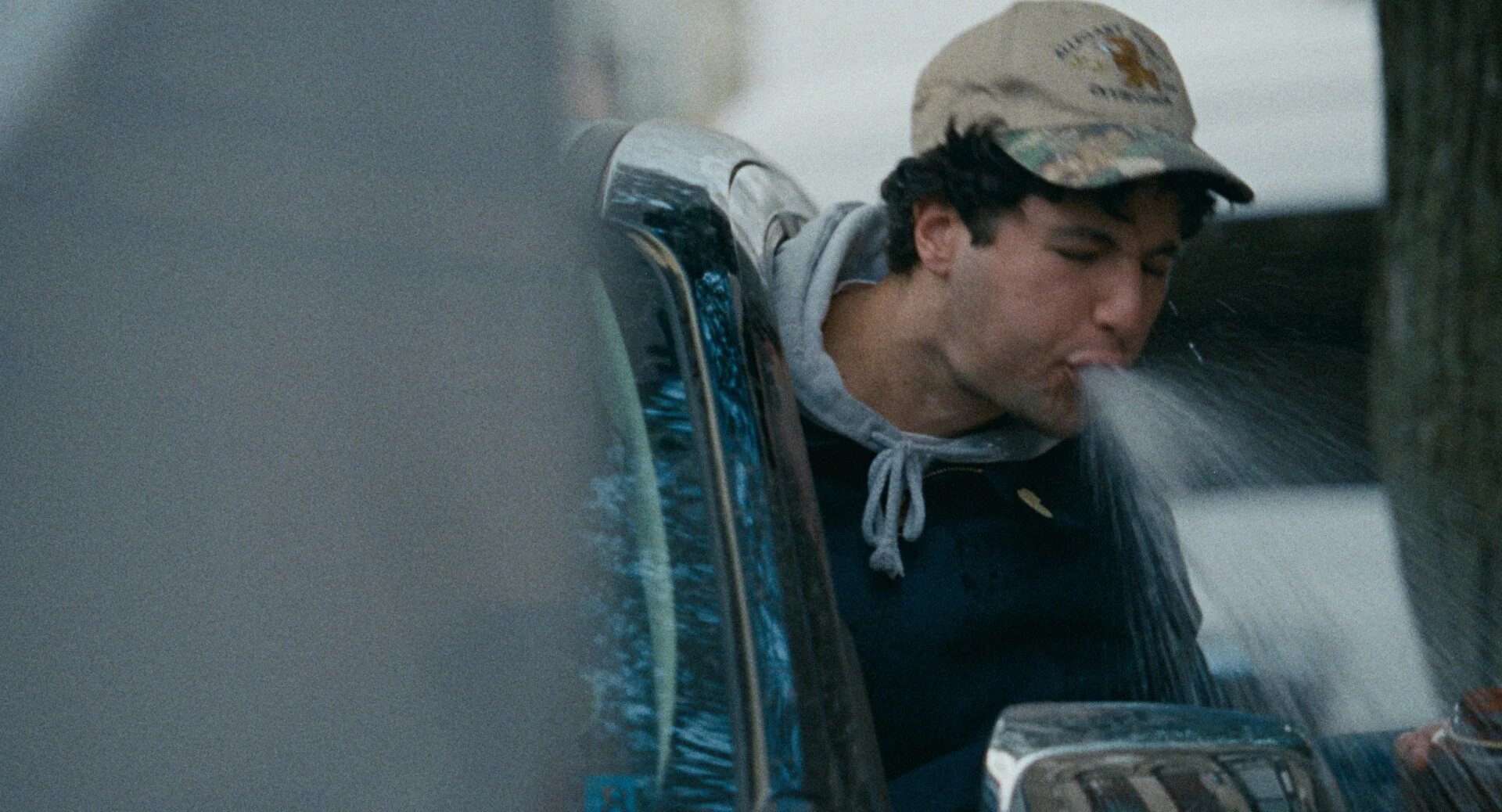
“I think a lot of filmmakers are this way, where we thrive in high-stress anxious environments. Maybe it’s because a lot of us have a baseline of high anxiety, and so when things are actually high-stakes and fast-paced, it operates better with our frequencies.”
I find it really impressive how it’s obviously a heightened situation, but there’s never a second where it doesn’t feel grounded.
I think a lot of filmmakers are this way, where we thrive in high-stress anxious environments. Maybe it’s because a lot of us have a baseline of high anxiety, and so when things are actually high-stakes and fast-paced, it operates better with our frequencies.
But maybe the fact that this film is set in one of those situations enables it to have the best of both worlds, where it is interesting and it’s quick and people are engaged, but also for people looking for more of a character piece or a quick way to look into a person they maybe haven’t before but can also relate to, it gives them that too.
“Either you laugh or you just implode and totally fall apart. Blue was: Let’s take that feeling and put it into the movie.”
These two characters are established so well that by the end of the five minutes, we understand them and kind of miss them after it’s over. That’s really rare. What were the challenges in the writing and maybe directing the actors to make sure all those moments hit and the characters come across so three-dimensionally in such a brief amount of time?
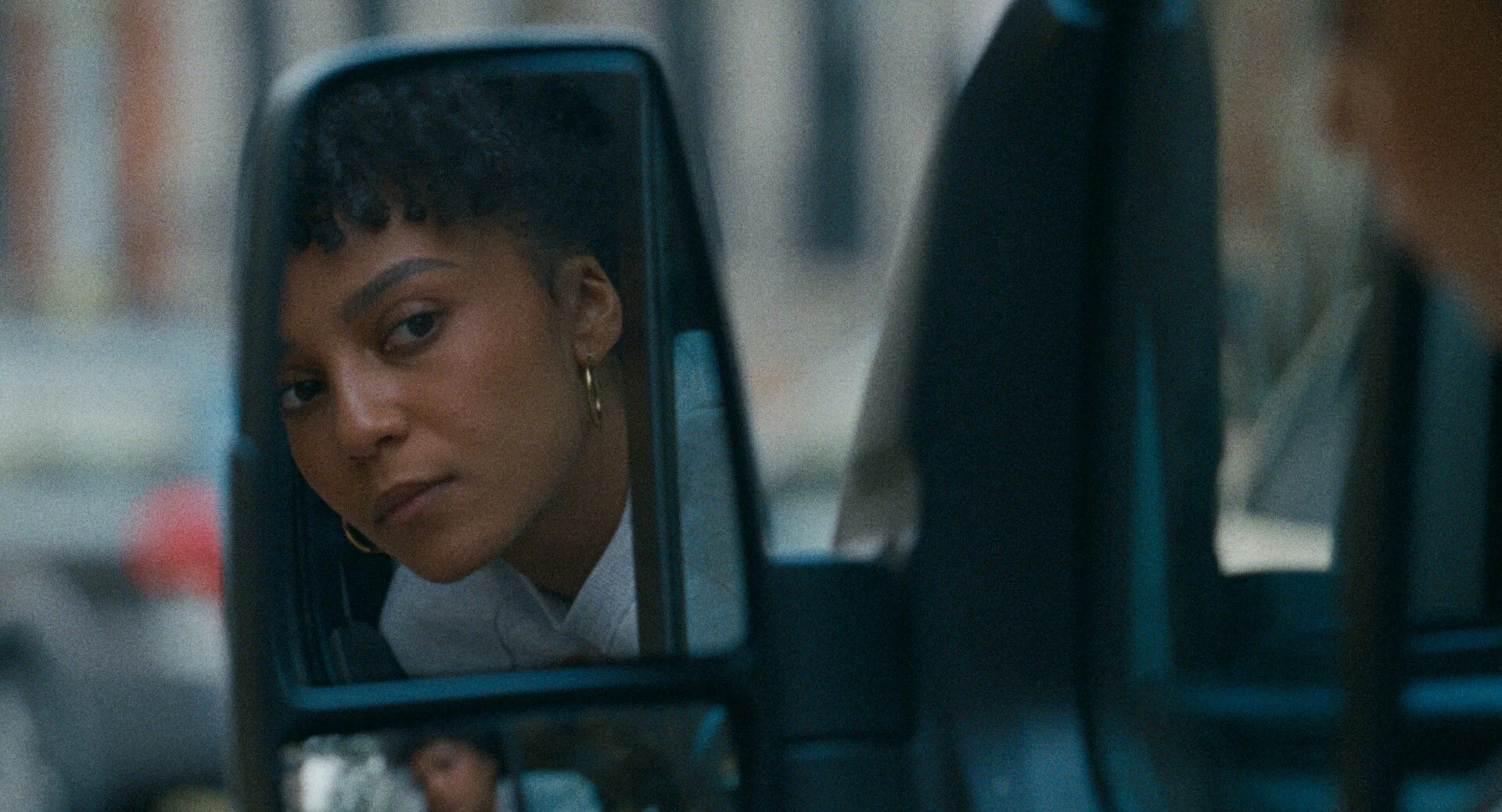
I have to give all the credit to the actors. They’re just really talented. I’d worked with Nathan [Vincenti] before. Jada [Delgado], this was my first time working with her. They brought this amazing dynamic. I knew that in order for this film to not just be a five-minute stress piece, you needed to have some real glimmers of hope and deeper relationship between these two characters, because that’s what would give it depth. It’s pretty much entirely unspoken, so you really need their chemistry to work.
When we’re in these incredibly stressful situations or have these chronically stressful times in our lives, we have breakdowns or we kind of let things out. That’s what I was hoping to accomplish with the characters. Those transcendent moments when you’ve been going through so much for so long that you finally see through something. The irony of this film is we see through it and then we take it away at the end, which again to me is very funny, but sad too.
I love actors and I love working with actors. I really want them to feel like they can take this character all the way, and that they have the reins when it comes to their character. This one really was just four friends on the street making a movie. You really want to create that environment as much as you can.
“If it’s just a guy going up to a girl trying to move a car, then it’s a sketch, whereas if it’s a guy getting a chance to redeem himself at an ultimate low point in his life and then struggling comedically, then it’s an emotional comedy.”
I’m always interested when filmmakers draw from personal experience, because they’re living in that headspace for so long. What’s the catharsis of going through the steps to make something like this and then release it into the world?
In my life as things are happening, whether I’m seeing it or it’s happening to me, I’m very quick to build a narrative out of it. On the personal side, I’m constantly practicing not doing that, and being a little more accepting of things as they come and thinking, “Hey, life happens. This doesn’t have to mean something.” But on the other side, I am good at telling stories about myself. That’s how I learned to tell stories. Most of the people that know me would see them and maybe be more embarrassed for me than I am. I don’t really experience that. Maybe it’s exposure therapy.
I do think sometimes it’s hard to make a movie out of a personal experience when you haven’t fully processed it. It’s the ability to both see the emotion of it, experience it, feel the genuine human aspect of that experience, but also know that we need to change it to make it a better movie. Not every experience is a great story, but if you can find the core of it, that’s a truth that you want to express, and then you can put that into a good story.
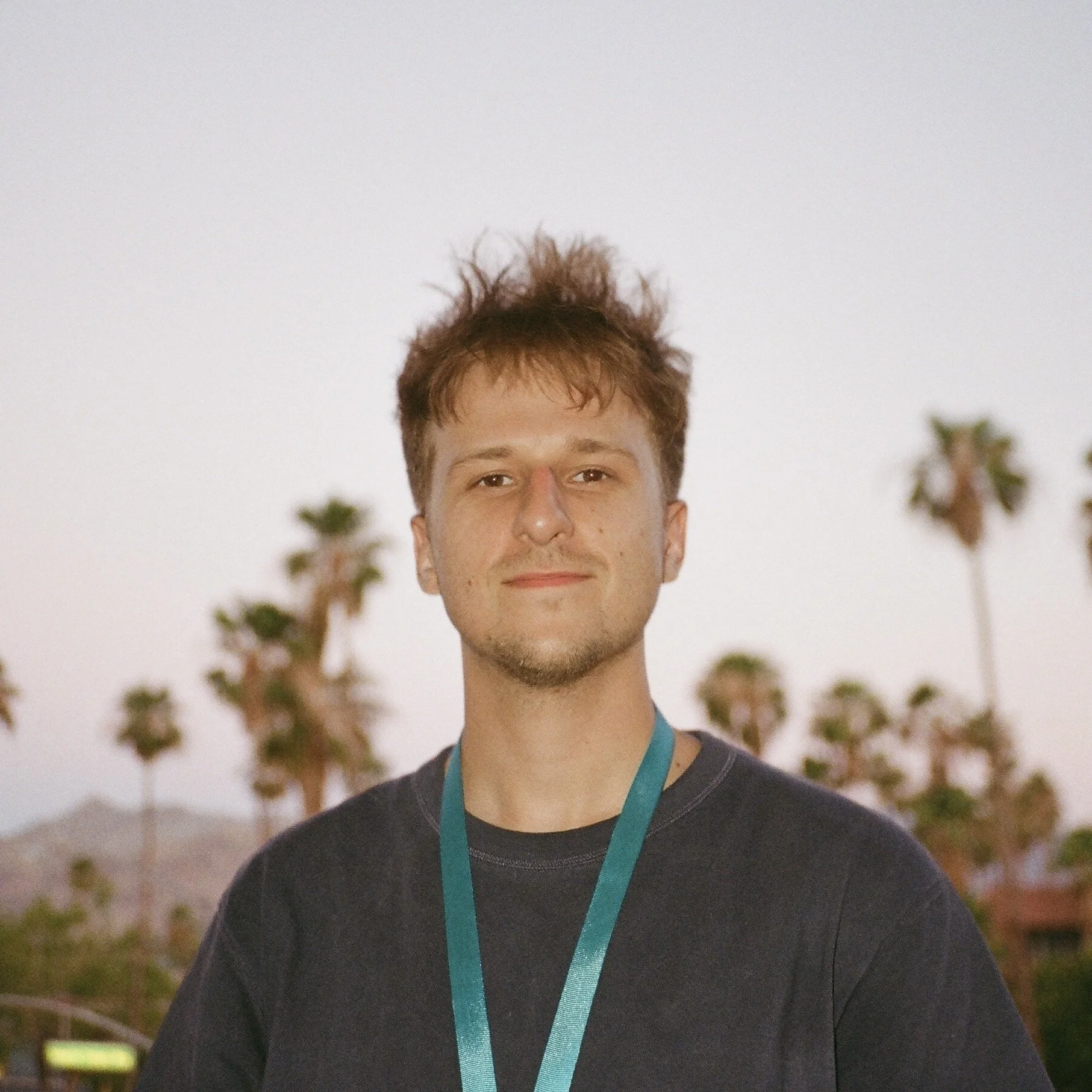
Born in the mountains, based in the big city, Ethan Romaine is searching for what makes us all hilariously human. His short film, BLUE, is a Vimeo Staff Pick, Short of the Week, and was an official selection of the Academy-qualifying Palm Springs International ShortFest, Calgary International Film Festival, and New Orleans Film Festival. DEVELOPMENT, Romaine’s feature version of BLUE, was a quarterfinalist for Antigravity’s Feature Incubator. His new short, COSMIC BOY, is currently in post-production, and 301 STORIES, his series about and produced in his native rural Appalachia, is available online. Ethan is a full-time filmmaker and has created content for clients such as Guinness and Mastercard.
You Might Also Like…
Moon & Back