
Min’s Day Off
directed by João Londres
Brazil/China. 2024. 7 min.
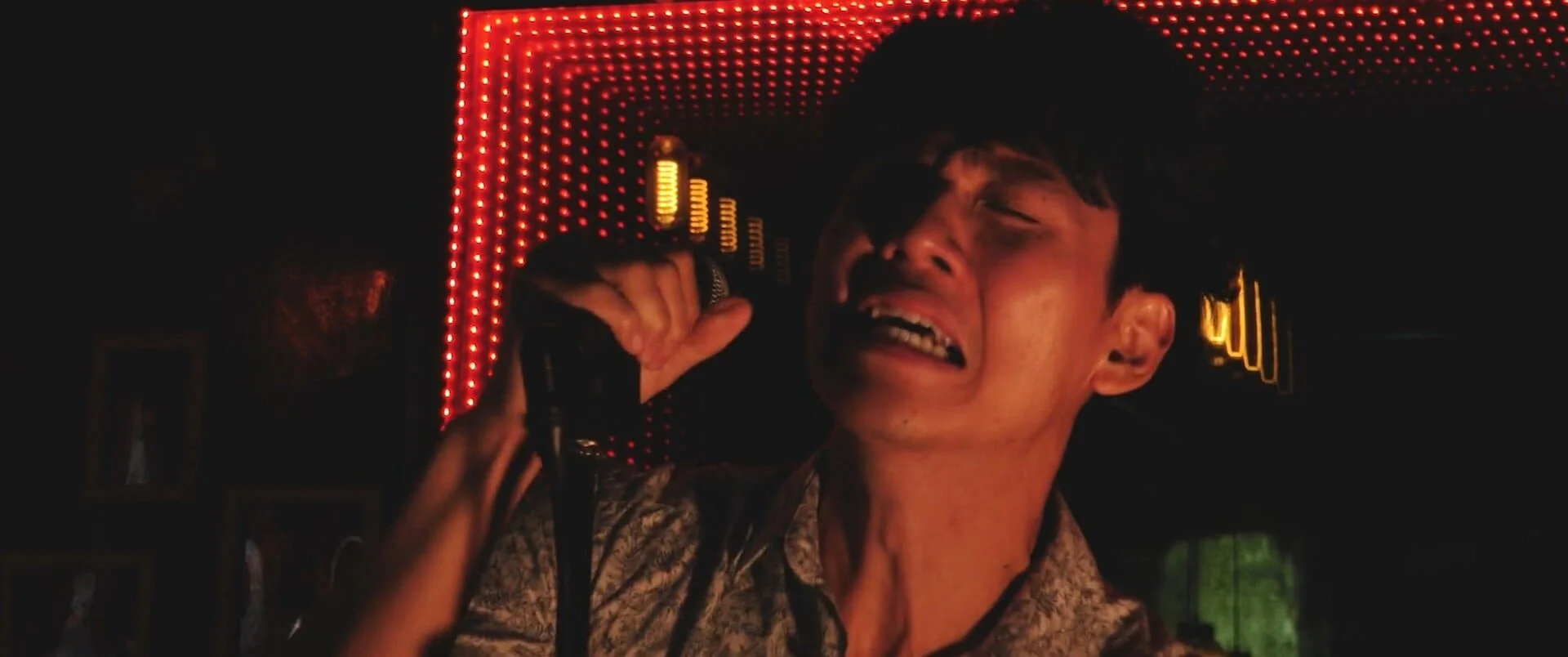
After an embarrassing night of karaoke, Min decides to take a day off.
by Jesse Knight
Same.
At the risk of revealing too much about myself up top, there’s something very relatable about this guy having an intense meltdown in the middle of a karaoke performance. What was the inspiration here?
Writer/director João Londres: It’s definitely something personal. I can’t pinpoint exactly what. There’s something embarrassing about making a mistake in public, but there’s something more embarrassing about having the confidence to go out there and then making a mistake, like for a little while you just went for it.
I was at a wedding a couple weeks ago, and some people were dancing in a circle. I wasn’t in the mood. Someone pulled me in, I danced for about two seconds, and then stepped out. My childhood friends took my camera out of my hand and were like, “Just go in.” And I’m like, “It’s all good, man. I’m just not in the mood.” And one of them said, “Uh, man, this is supposed to be a good vibe.” Then, after about two minutes, I thought, “You know what? I’m gonna pull out a dance move.” I went in, did it, and no one reacted. Not even a woo. So I went straight to the dessert table and pretended to be interested in the pastries.
That’s what this movie is about, having a pocketbook full of these little experiences.
What was the dance move that you pulled out?
I’m not going to do it. But it’s a dance move I’ve been doing for a while. It’s probably over now. I’m probably never going to do it again. It’s like when you wake up the next day and you’re like, “Did I say anything?” No, you didn’t. But then the dance move comes into your head, and you’re trying to shout it out of your mind in the shower. You’re just trying to… It’s horrible.
Why that song in the movie? Was it always that song or were there others you were considering for Min to sing?
I did a semester abroad in Shanghai, and at the time I was listening to a lot of music like that, and a lot of Stevie Wonder. I don’t remember exactly why I chose that particular song. I just really love it. It’s a wedding song here in Rio. That and Barry White and Diana Ross. It just brings me that vibe I like.
What were you observing about karaoke culture there that was different from Brazil or America or anywhere else that has some form of karaoke culture?
Rio is very similar to the U.S., where you see two girls coming up, bumping into each other, missing the words, laughing and looking at someone in the crowd. But in that bar in Shanghai, it was either someone singing really well, like Adele or Whitney Houston, or just a guy having the worst day of his life and letting it all out on karaoke. Those were really beautiful to watch.
“Memento for me would have been 100 times scarier if it was just a guy remembering things he did while drunk.”
So does the movie have a happy ending for you because this person doesn’t have to wake up and feel that shame? I have a friend who calls it a “shameover.”
I’ve never thought of that. That’s it. I do think it’s a happy ending. I think that’s exactly why we ended with that bittersweet piece of music, a little song Gabriel Amorim came up with. It’s a happy ending because he doesn’t have to wake up. That, for me, is honestly one of the worst feelings in the world, waking up after an embarrassing night. But Min doesn’t have to wake up, and his friend is there, and it’s like the tragedy didn’t happen. It was just postponed for one more day. It’s very peaceful. You’re right.
When you say you have a pocketbook, it’s of those moments and feelings?
Yeah.
Do you think that they earn that kind of feeling? Like, if I did what you did one night, would you expect me—
You would pull it off.
So it’s more like you tried to do something and you were unsuccessful.
Yeah.
But if I did it, if I attempted what you did and I didn’t pull it off either, would you expect me or someone else to feel the same amount of shame, or do you think this is something that’s amplified within you?
100% amplified. I’m very good at escalating things in my head. It’s impressive, I would say. I escalate things in my head like a pro. I’m very in awe of people who know how to brush things off. I try to learn from them. I see friends getting drunker than me, making much bigger fools of themselves, and then waking up the next day like, “Yeah, nothing happened.” I’m always in awe of that. I don’t know where it comes from, on either side, but it’s 100% a me thing.
I've been there. I get it because you wake up and you have to go through the list. You have to replay everything.
And the list doesn’t come all at once. You’re having brunch, hungover, and then you go to the bathroom and remember something. Or someone texts you, and it’s just the worst. Memento for me would have been 100 times scarier if it was just a guy remembering things he did while drunk.
“It was a very sad week of me in my office, editing my sad little karaoke movie and looking at pictures of dead people.”
Talk about the jump cuts at the end. The more you do it, the funnier it gets. How do you know when you’re good, when you’ve done enough?
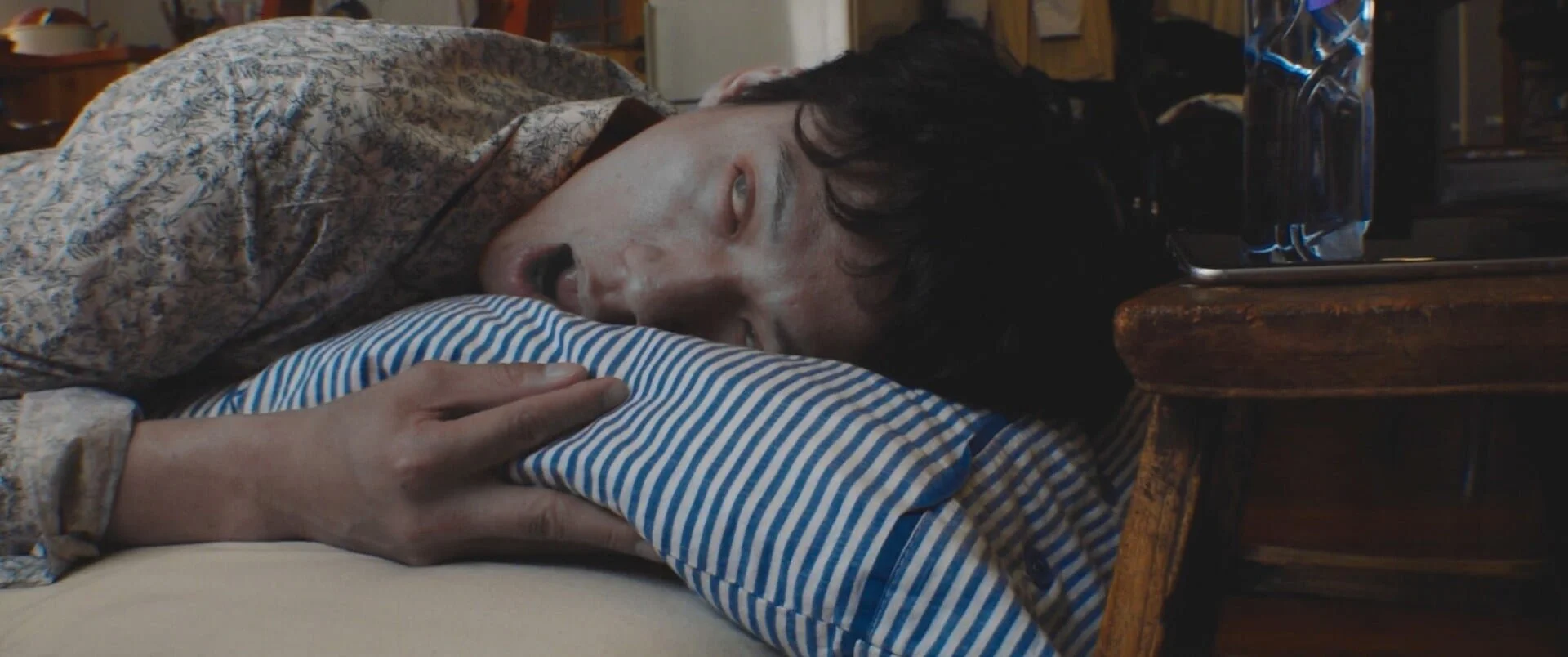
Once it looks like he saw the tape from The Ring, and his mouth is wide open and his eyes are like that, I think that was enough. The idea was to have a little bit of doubt about whether he was dead in the beginning, and then slowly ease people into realizing, yeah, he’s dead. He’s very much, clearly dead. I think we have six cuts in the whole film. That was it.
How are you achieving that corpse effect?
From the moment his friend leaves in the morning, the film is basically a slideshow. It’s a freeze frame. We got Jim [Liu], the actor, to lie down and make these faces, and I just froze the frames. I changed the curtains to make it look like it was 9 a.m., then midday, when everything is very bright, then 4 p.m. We added some noise and a tiny bit of camera shake. Very slightly. That was it. Most of the film is a slideshow. And then I threw these on After Effects and I looked at a couple of pictures of people frozen, that process they go through when they die. I forgot the name, but I tried to recreate that on After Effects.
You were using real rigor mortis for reference?
Yeah. I went through a couple of those references, then had to desaturate his eyes and make his face look pale. It was a very sad week of me in my office, editing my sad little karaoke movie and looking at pictures of dead people. Going keyframe by keyframe in After Effects.
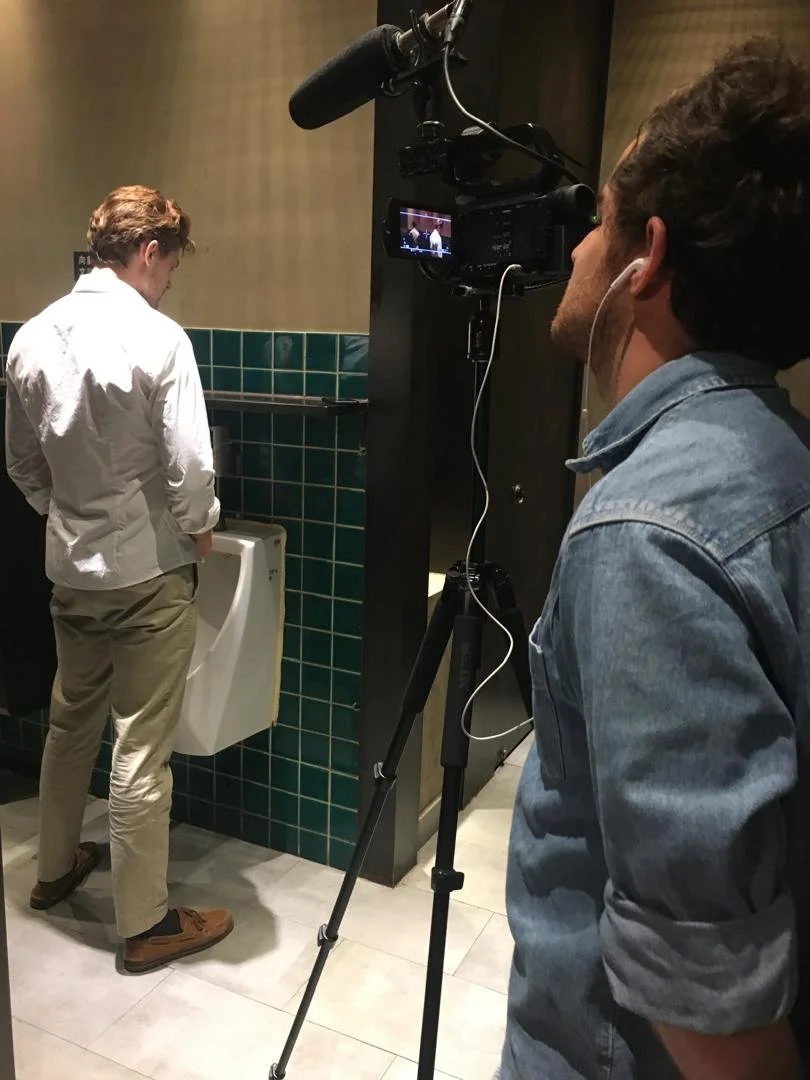
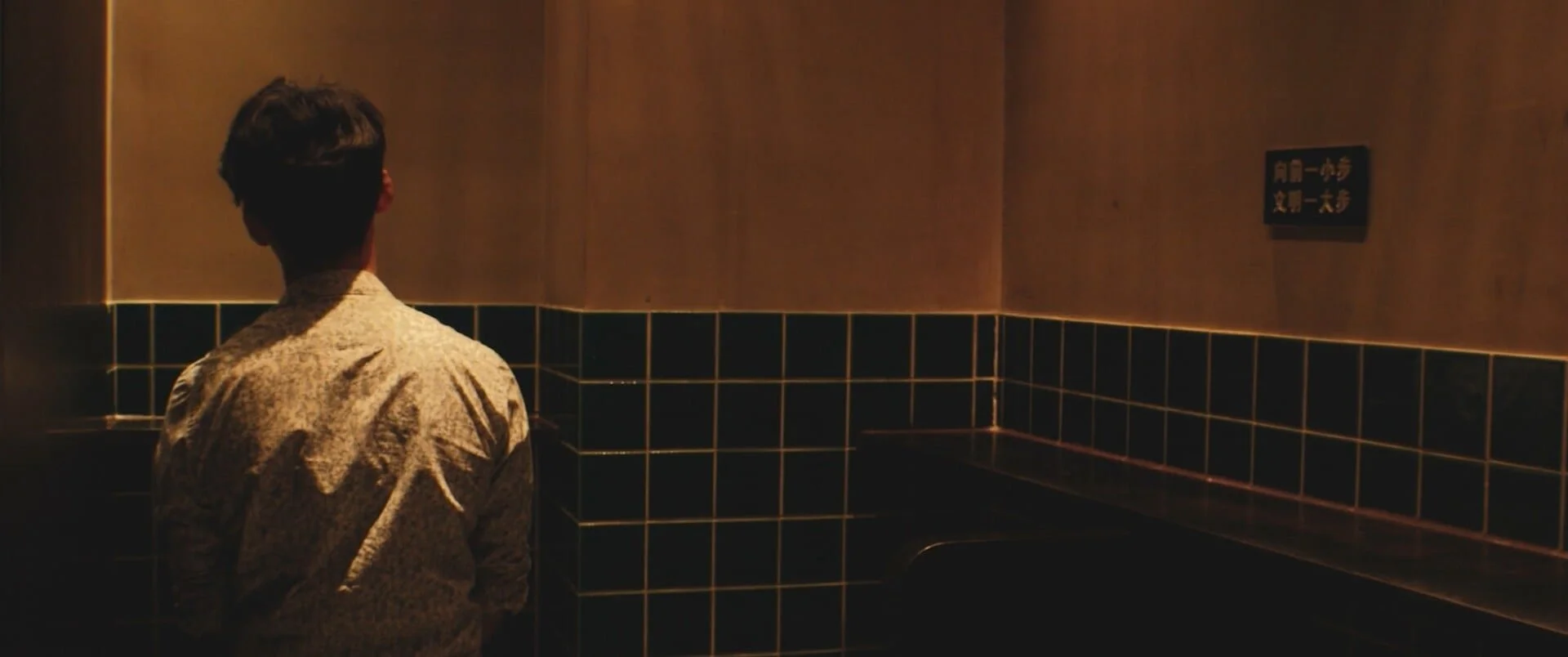
This was a movie I made with three people. It was me, the producer [Benny Weilun Zhang] who plays the friend, the actor, and this guy called William who lived in Shanghai. He plays the guy in the bathroom.
He’s an American actor we found on WeChat. I asked him, “Can you speak Mandarin with a bro-y, frat-y accent?” And he said, “I know exactly who you’re talking about. I know these people.” And he did it.
Later, I sent him the film and asked, “What do you want to be credited as? What’s your stage name?” He watched the movie and said, “Oh, you can just put William.” So that’s why there’s a guy named just “William” in the credits.
How many takes did you do of the karaoke scene?
Four, maybe. Three or four. I don’t remember which one we used, but Jim is a great actor. He was in Lulu Wang’s The Farewell. He knew how to sing, he helped me translate the lines. He’s a pro. And there was no one watching that karaoke scene. There were no extras. He had to sing his heart out at 10 a.m. in an empty bar and pretend he was drunk, at night, with 50 people watching. That’s a testament to Jim.
“There’s something embarrassing about making a mistake in public, but there’s something more embarrassing about having the confidence to go out there and then making a mistake, like for a little while you just went for it.”
Was the intent for the film always this simple, or did you have more ambitious ideas for it?
I’m trying to remember. It was like eight years ago that I wrote this. It’s hard to think about it now. It’s hard to think that it’s still relatable to me. But no, the idea was always [that] it’s funny that he can’t get his friends to listen to him. He can’t get his friends to just be like, “What’s up?” The whole ambition of the movie is: How far can you extrapolate that? He’s crying his eyes out. His friend is pulling him off stage. Then he’s drunk in the bathroom and he’s trying to say something. His friend’s just like, “Get your shit together.” And then the next morning he’s dead, and his friend is like, “You smell like shit.” Over the course of the day, he’s even deader, and his friend is not listening even more.
When his friend comes back, people are anticipating him finally finding out, and that’s the punchline: he doesn’t even care. He just goes to bed and complains about his day.
That’s also the more relatable element. You could be dead and people would still talk to you about their day.
That’s the movie. Exactly that. Min can’t articulate that. He has to get drunk and shitfaced and sing.
What's the secret? Like, no shame. Tell me, what's the secret?
What's the secret to no shame?
Yeah.
Remembering that nobody cares as much as you do. Nobody remembers this stuff. You’re the only one who remembers it. And even if they notice that you’re embarrassed, that’s kind of the most embarrassing thing, is when people notice, because then it makes you feel like you’re maybe a bit weaker than you want to present. But it’s okay to show vulnerability, right? If you pulled a dance move and your pants fell down or whatever, you have to be able to allow people to laugh with you rather than just be like, “Wow, that was embarrassing.”
Yeah. “I want to get out of here.” They see it on my face.
You gotta be above it.
You gotta be above it and not clearly trying to be out of it. They see it. My face gets red, like an animal.
That can be endearing. It’s like when you’re walking down the street and you trip, right? People do the thing where they try to pass it off.
They run a little bit.
Yeah. But you gotta be able to be like, “Yeah, I tripped.” It could happen to anybody.
Got it, got it. I'll try it. Next time I go to a wedding, I'll let you know.
João Londres is a filmmaker from Rio de Janeiro, Brazil.
His work has screened at Palm Springs ShortFest, the Austin Film Festival, and PÖFF Black Nights Film Festival. His most recent short, KLAUSTROPHOBIA, was nominated for the Grande Otelo, Brazil’s top film award.
You Might Also Like…
Blue